Purses Part 11: Finishing Up the Frame

Last time I created eight gauge bronze wire wire purse frame rings and fitted them to the purse frame, but now we have to hold it all together.

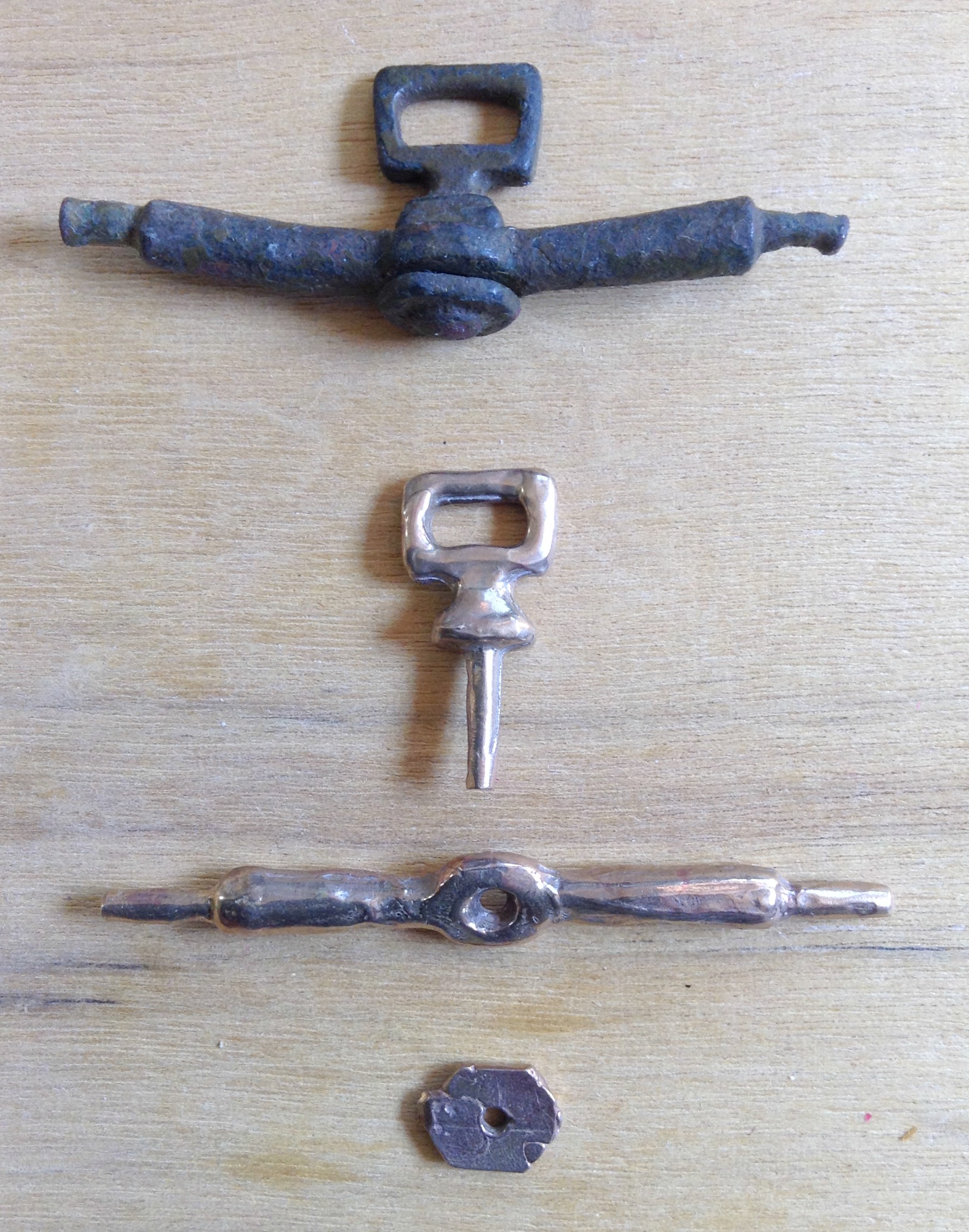
When I was doing my original research I noticed a number of purse frames that appeared to have some sort of washer on the end of the purse frame bars. I decided that I liked the look of the washer and that the washer would also make for a more secure anchor for the rings on the purse bar. So when I was creating the original waxes from the replica, I also created some round washers that I thought would look good on the purse bar. I admit I guessed at the size, based on the size of the purse, but when the time came to actually use them, they were the right size. Here is a quick picture of some of my original cast pieces, including the washers.
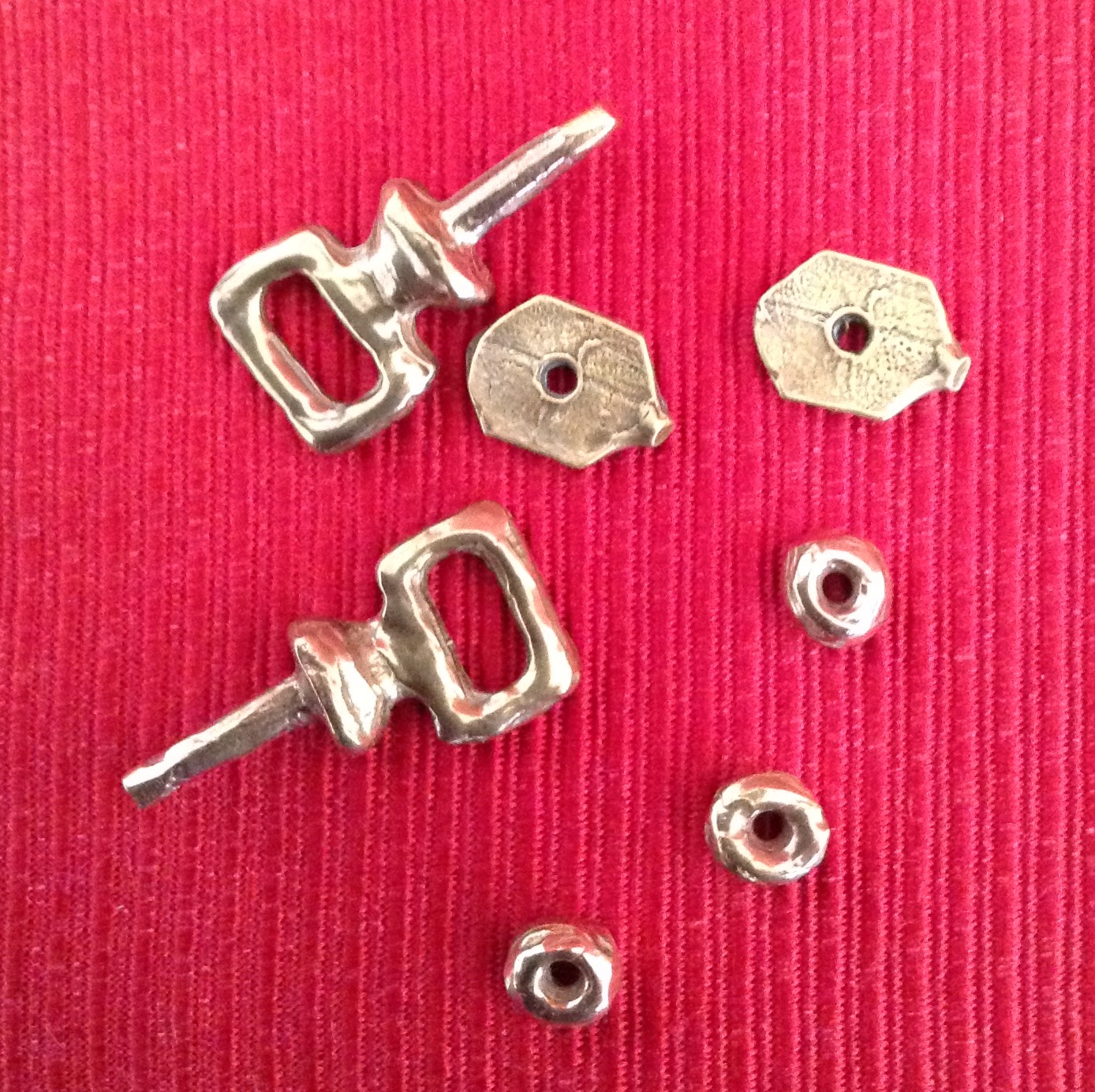
FullSizeRender(1)

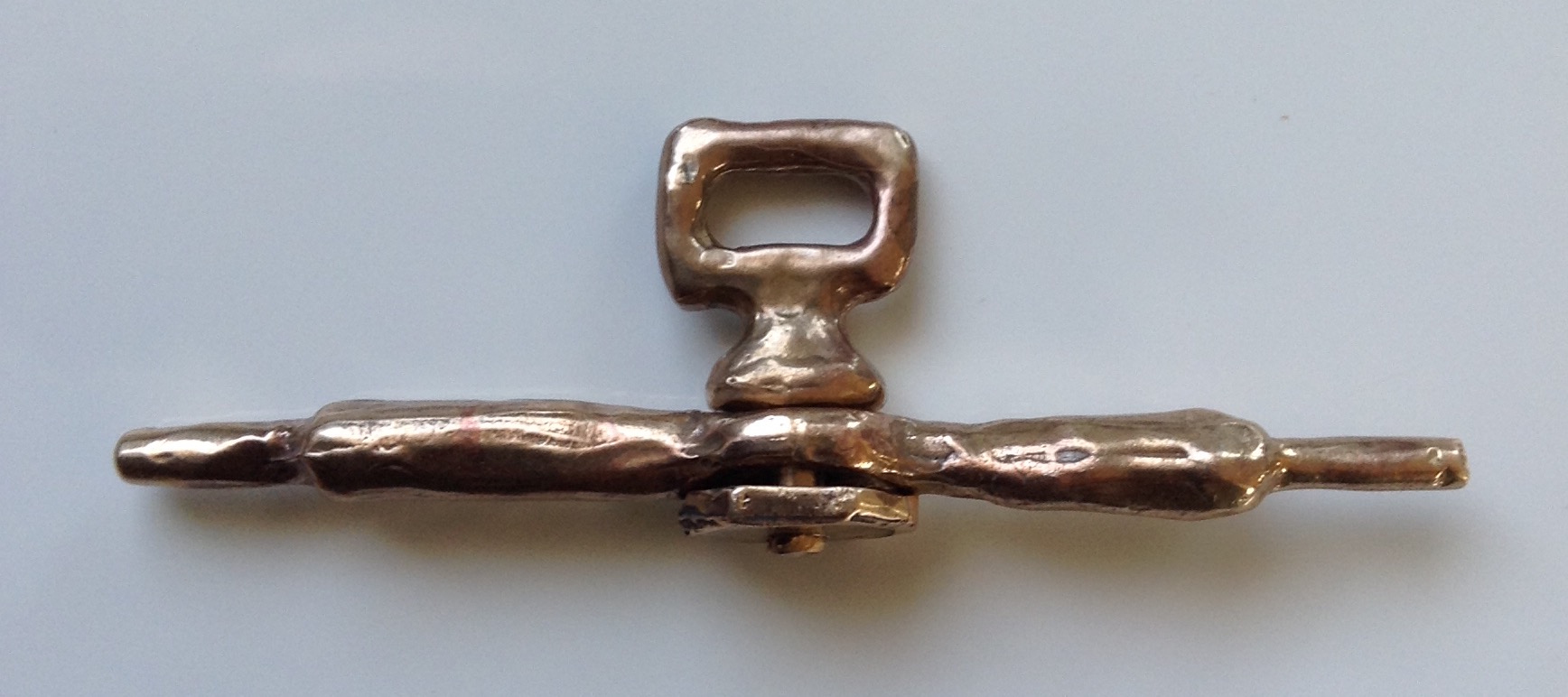
So I fitted the washers on to the purse bar, trimming the length of the purse bar end and smoothing it, and then riveted it together. And here is the result.
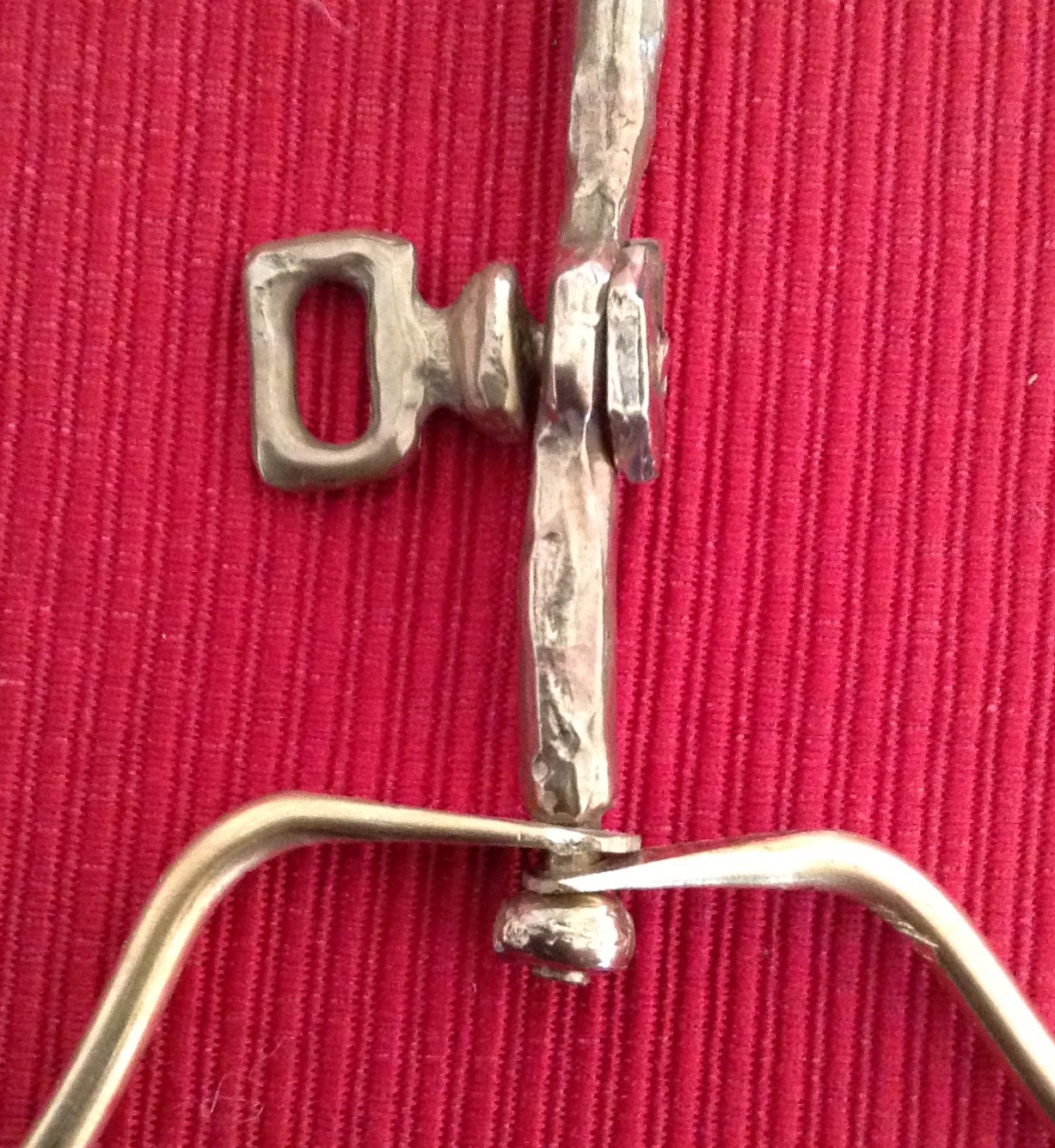
FullSizeRender(2)

The look of the washer was the perfect finishing touch for the frame.

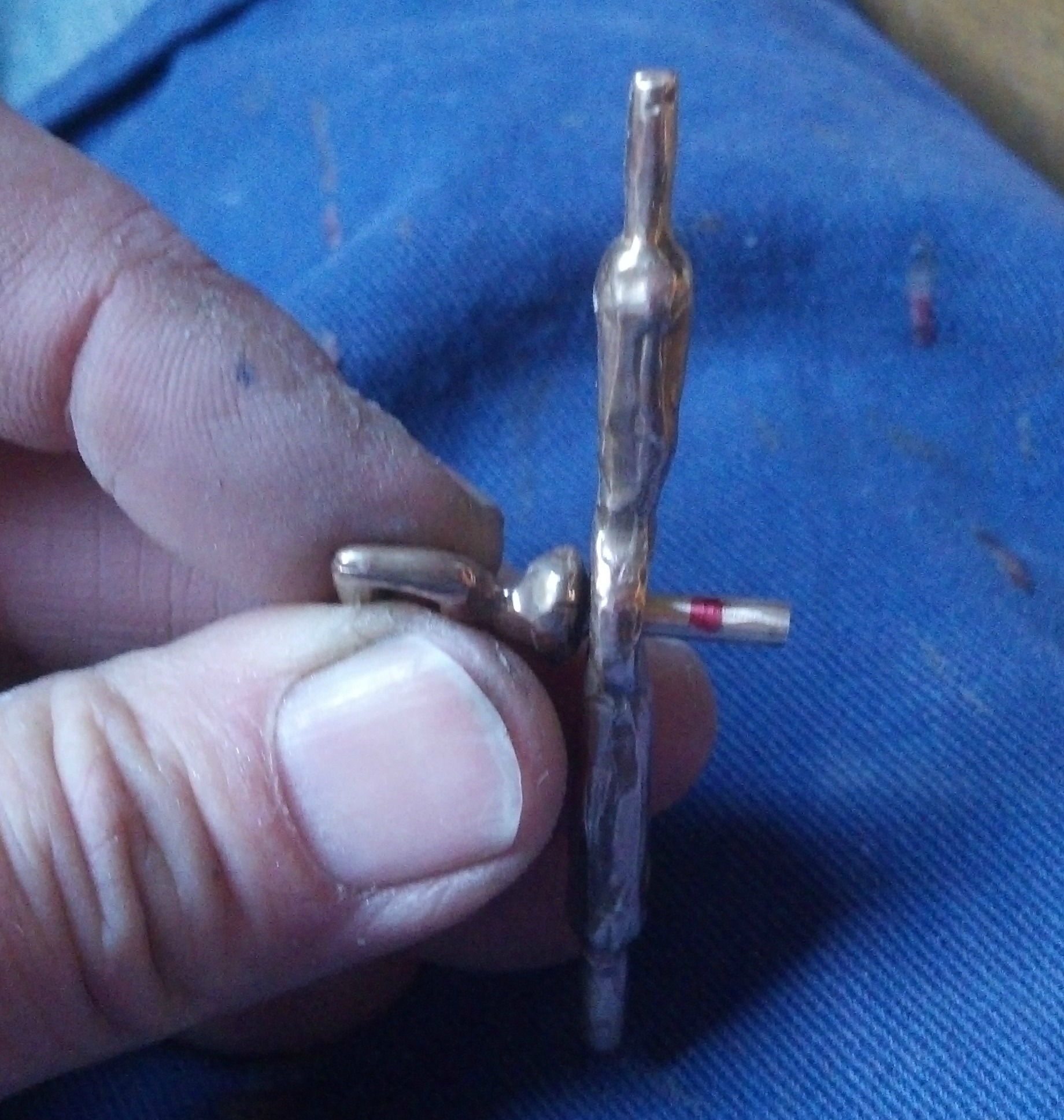
What I learned from the Riveting process. No matter how careful you are measuring and hammering, it doesn’t always work the way you want it to. I broke one pivot trying to rivet it, and I also broke a hexagonal washer by accidentally cracking it – the casting actually had a tiny crack in it that I did not notice. Having a hole in the washer that is too tight can also cause the washer to crack when it is riveted. The pivot will expand a little bit, and too much expansion can crack the washer. And then there is the purse bar itself. Yes, I broke one of those, too.
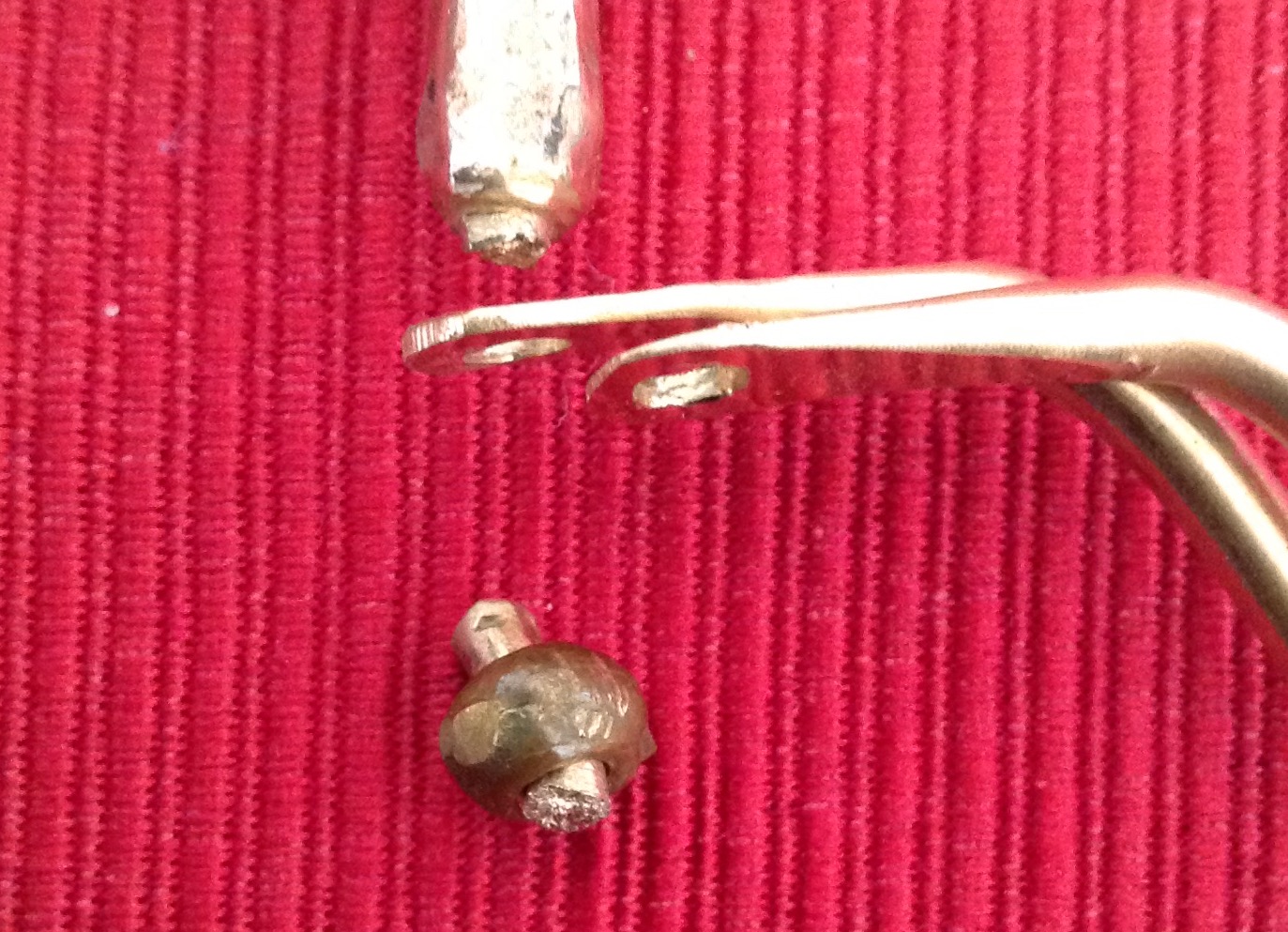
FullSizeRender(3)

So where do I go from here? I will be working to fine tune the purse bar pieces. For a first try they are fairly close, but I will be modifying the pieces to make them a tiny bit sturdier, and I also want to improve the fit a little. Once I am pleased with the final look of the purse frame, I will be recasting it, and then I will be experimenting with casting purse frame rings. I really want to have the strength and stability of the “L” shaped purse ring and the ability to easily sew the purse bag onto the frame. And then what? I have a much larger broken purse frame bar that I think would make a really awesome larger purse…

Next time: How were purses used in period?
Purses Part 10: Time for Purse Frame Rings

Last time I put together the purse frame bar and pivot, so now it is time to add the purse frame rings.

First a confession – I am cheating by using 8 gauge bronze wire. I have seen purse frames, usually the lowest quality ones, that use plain old wire rings. I was faced purely with a time issue. With all of the events that I am currently doing there was simply no time to be able to cast the type of “chevron” shaped ring that I wanted to use, so that project will happen in the future.

Why is the chevron shape important for better quality purse rings? The previous “L” or “chevron” shaped purse rings that we looked at used part of the “L” to provide a location for holes to sew the bag of the purse to. Although this is an important benefit, it is possible to simply wrap the material of the bag around the ring and sew it in place. So why is the shape so important? Strength. A plain round wire will bend much more easily, even if it has been hammered to make it harder. The basic structure of an “L” shape makes the ring much more stiff and less susceptible to bending.

So back to my process. I looked at the purse frame from the Museum of London that had a surviving ring.

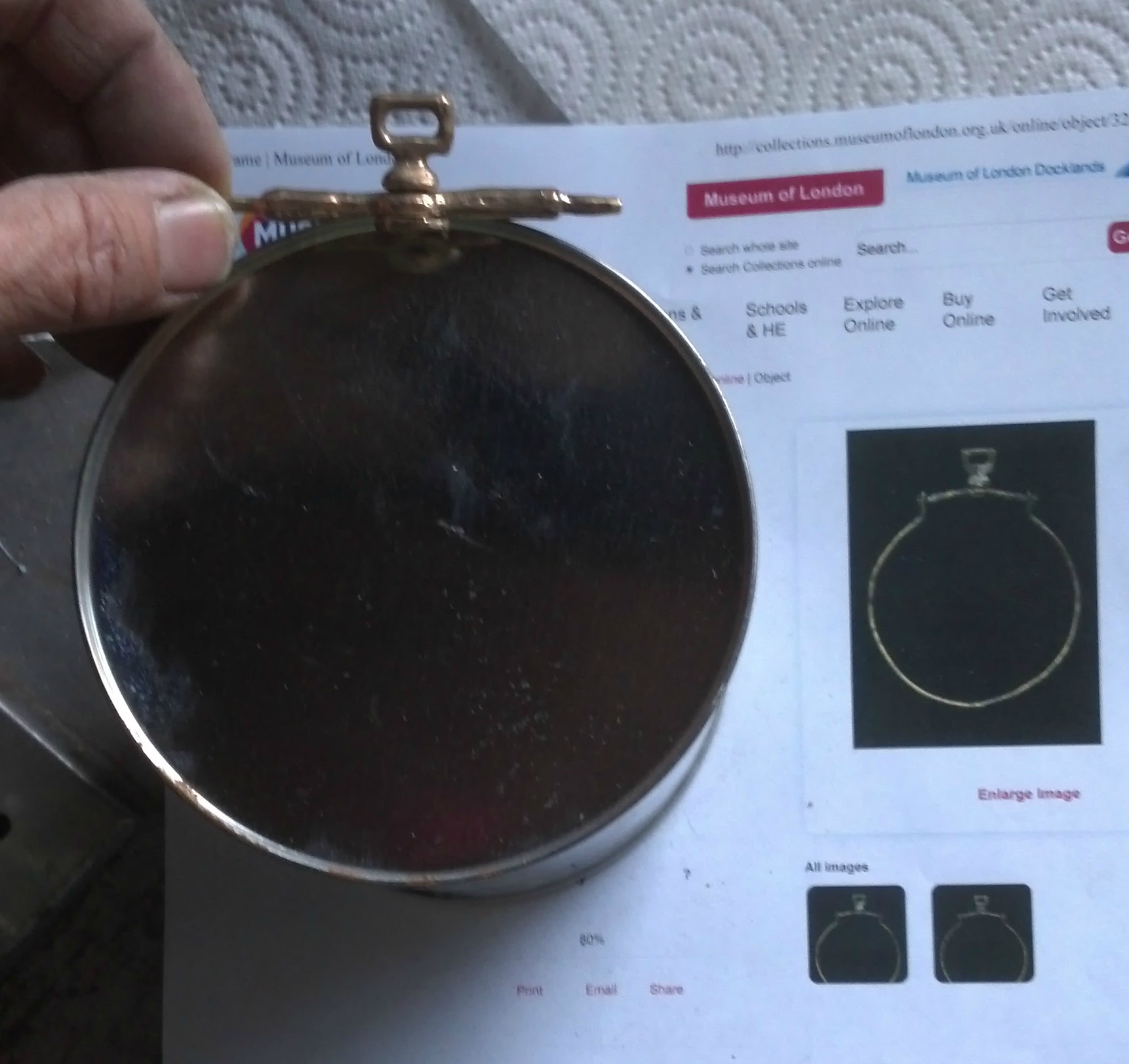
What I was looking for was the shape of the ring and the proportions of the ring to the purse bar. So I went in search of a round item that was the correct size. And here it is, a small paint can. The picture compares the can and purse bar to the picture of the purse frame at the Museum of London.

shaping the rings

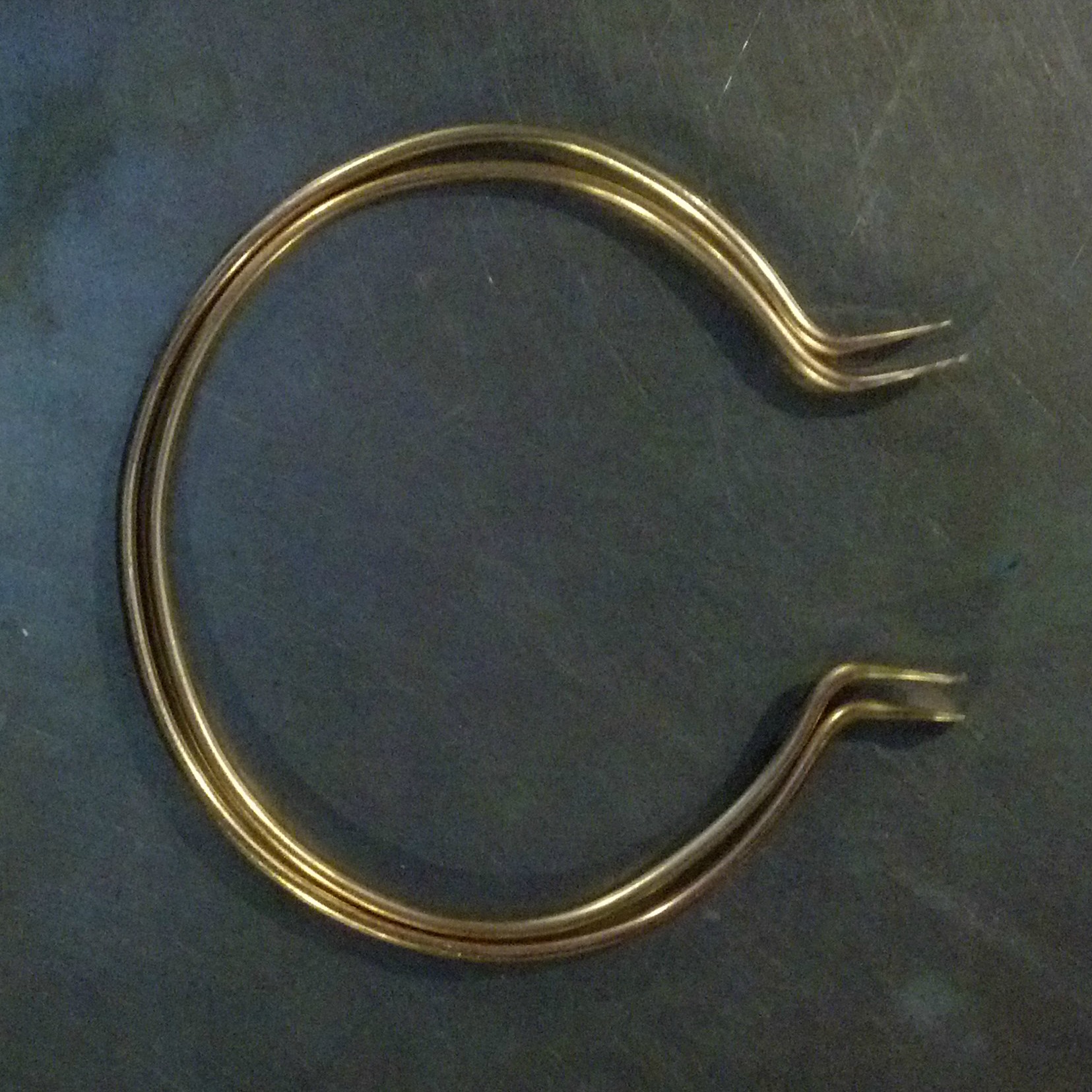
Pretty darn close. So I wrapped the 8 gauge wire around the can and started forming the tabs that will go up to the purse bar. Here they are, fresh off of the paint can with the purse frame .

freshly bent wire rings

So now it was time to adjust the rings so that they actually nest inside of one another and the tabs don’t interfere with one another. A little work with a pair of pliers accomplished that, and then it was time to flatten the ends of the wire rings. Here they are in progress.

ends of tabs


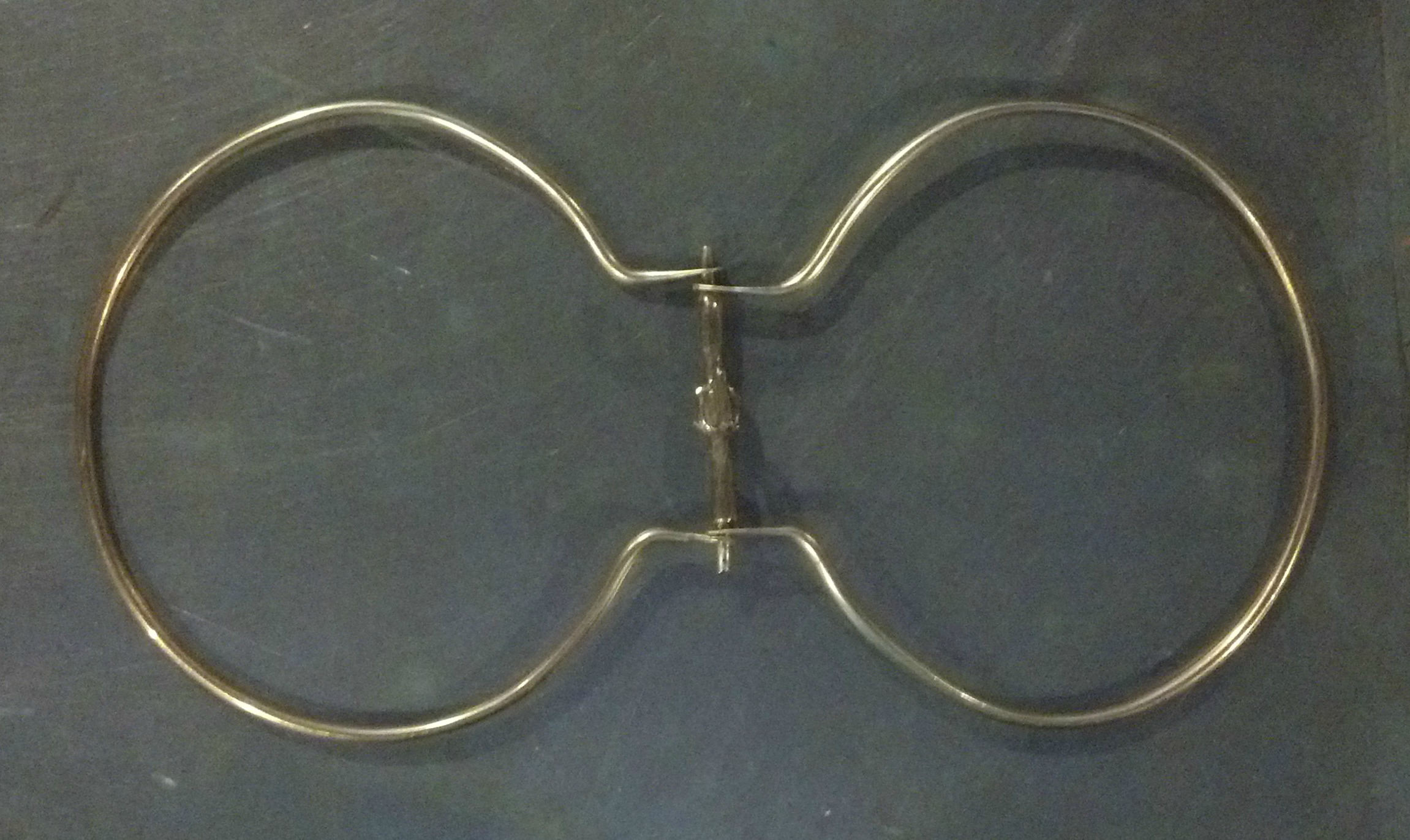
Once they were flat enough I cleaned off the rough spots with a file. And checked the fit of the rings one more time.

nested rings with tabs


Almost perfect! One of the tabs on the inner ring is a little too long, so I re-trimmed it and filed it again. Then it was time to create the holes that would allow the rings to fit onto the purse frame bar. Mark the location of the holes with a punch, so that the drill bit will not slide around. Then drill the holes and smooth off any burrs with a file.

And what do we get when we put it together?

first ring fit on frame

We get something that looks a lot like a purse frame with rings. The fit is pretty close, just a little work with a pair of pliers will make it perfect.

Next Time: Finishing up the Frame

Purses Part 9: Time For Metal!

Last time you saw the molds for making wax replicas of the purse pieces. Well the next obvious step is to turn those wax replicas into metal.

I cast metal (bronze, sterling silver, and pewter) on a fairly regular basis. Bronze and Sterling are what I think of as “hot” metals – they require temperatures of over 1700 degrees Fahrenheit in order to melt and become liquid. Pewter, on the other hand can be melted on a camp stove (500 to 600 degrees depending on the alloy).

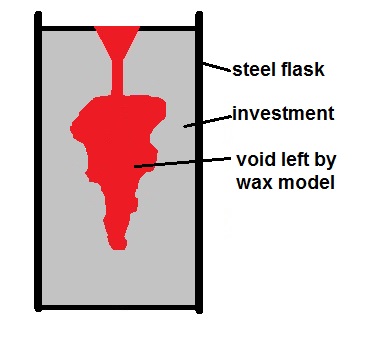
The technique that I use for casting most of my “hot” metal is called Lost Wax Casting. A basic summary of how this works is that the waxes are anchored into a stainless steel flask, a plaster like substance, called investment, is poured into the flask and allowed to harden. The flask is then turned upside down and heated. The wax flows out, and in the later stages of heating (over 700 degrees), burns away completely. The investment is now the mold into which the molten metal will be poured. The image below shows the basic layout of the stainless steel flask, wax and investment. This flask is ready for the molten metal to be poured in.

Lost Wax Casting Flask


So, I put my waxes into flasks, invested, heated, and poured my metal. And the result? This picture shows the original artifact, and the newly cast, and cleaned up, bronze replicas.metal purse pieces

So what happens now? Well, I spent a bit of time filing and fitting the pieces together, and removing any rough spots. I wanted the pivot to spin easily, just like the original artifact does.

Once I had the pieces fitting together well, I needed to measure exactly how long the pin on the bottom of the pivot needed to be. If I cut it too short there will not be enough metal to peen over to hold the frame together, and if I cut it too long the fit of the frame will be super loose, and probably bend when I try to rivet the end. The fit on all of the period frames that I have seen is always fairly snug. So I marked the pin with a magic marker with the washer in place. This picture shows the marked pin with the washer off. I couldn’t find a smaller tipped marker (the Studio elves must have borrowed it again), so I knew that I needed to make the cut about half way across the ink mark.

purse frame pivot marked

I cut off the bottom of the pivot pin, smoothed the end, made sure that the end was at a right angle to the pivot pin, and reassembled the purse frame. The assembled purse frame was then put into a machinists’ vice and the end of the pivot pin was peened over with a hammer. And here is a picture of the result!

Riveted purse Frame

Next Time: Time for Purse Frame Rings