The Way That I Cast: The Lost Wax Process Part 2

Last time we discussed the basic processes for creating waxes for casting. And then we asked: So now that we have waxes, what next? We turn the waxes into a mold.

The waxes are “glued” to special rubber bases using melted wax. The process is called sprueing. Here is a picture of the rubber bases, just after they are done being used.
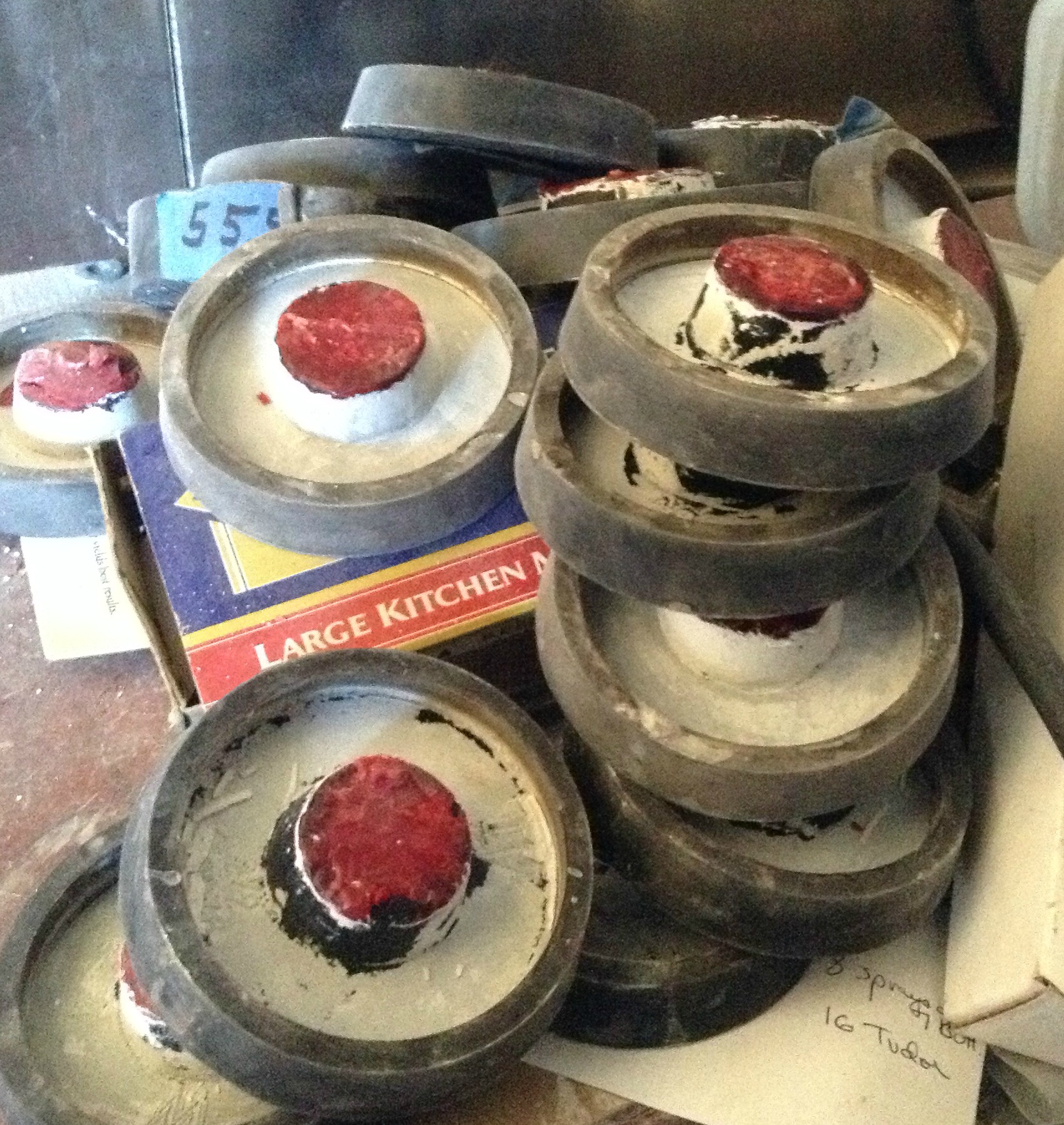
Rubber flask bases

The red area in the center of the bases is wax and the white substance on the bases is investment (we’ll talk about that latter). You can see a number taped to the side of one of the bases in the back of the pile – that is the weight of the base when it is clean (in grams) and has no wax or investment on it.

These bases, with the waxes in place, are slid onto the bottom of stainless steel flasks, which are basically just large sections of stainless steel pipe. Here is a picture of some of the flasks waiting on their shelf to be used. The blue board on the wall is a production board with all sorts of production details for a variety of projects. The strange looking black thing on the left side of the shelf is an old graphite crucible (it is upside down). I sometimes use it to measure the scrap metal that I am going to re-melt in my small melting furnace to make sure it will fit in.
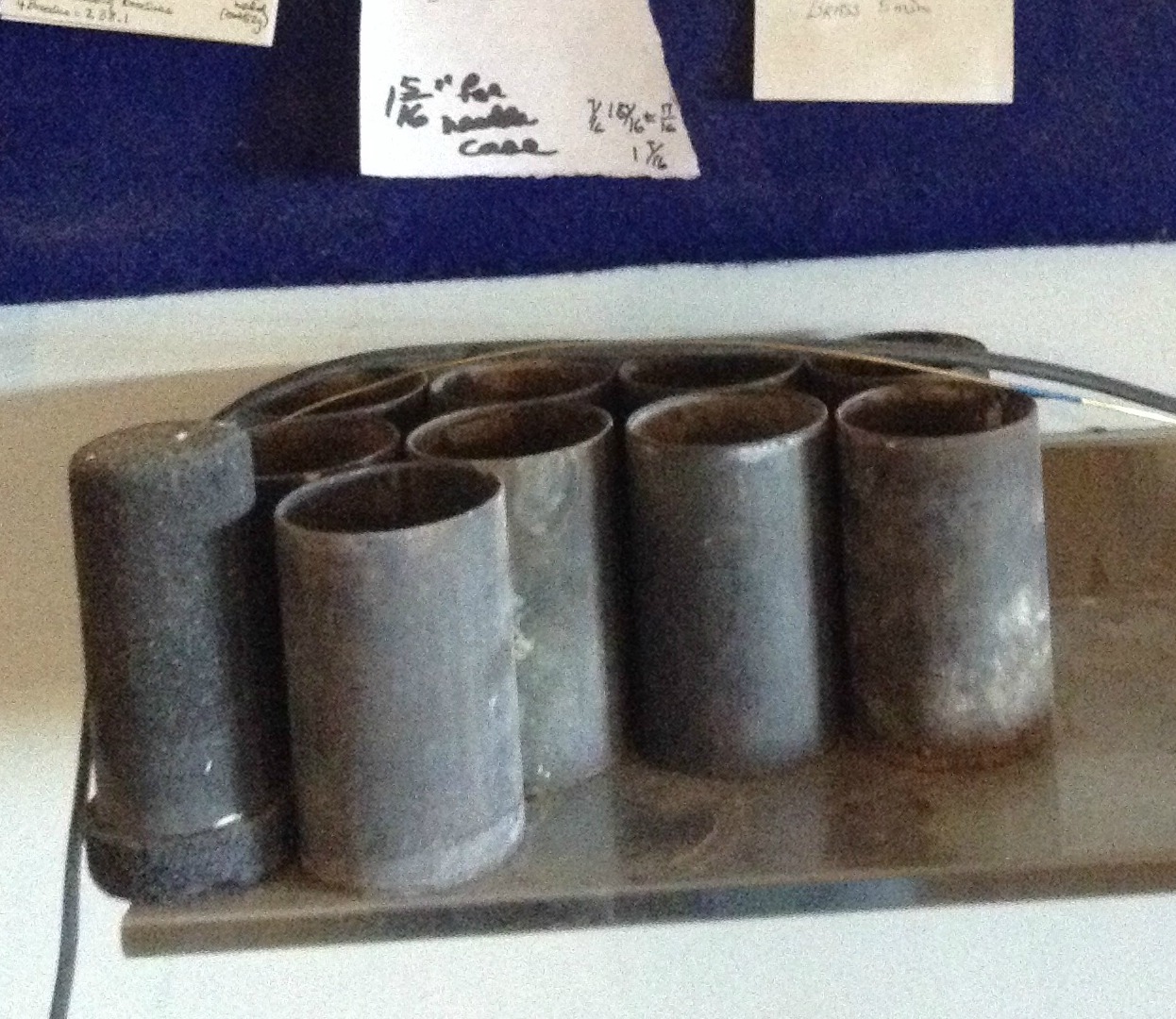
Flasks on shelf short version

Once the base is on the flask it forms a container for the investment. Investment is just a high temperature material, containing silicon, that looks like Plaster of Paris. It is mixed with water in precise quantities to form a slurry. This is how I buy my investment, in 100 pound plastic boxes.
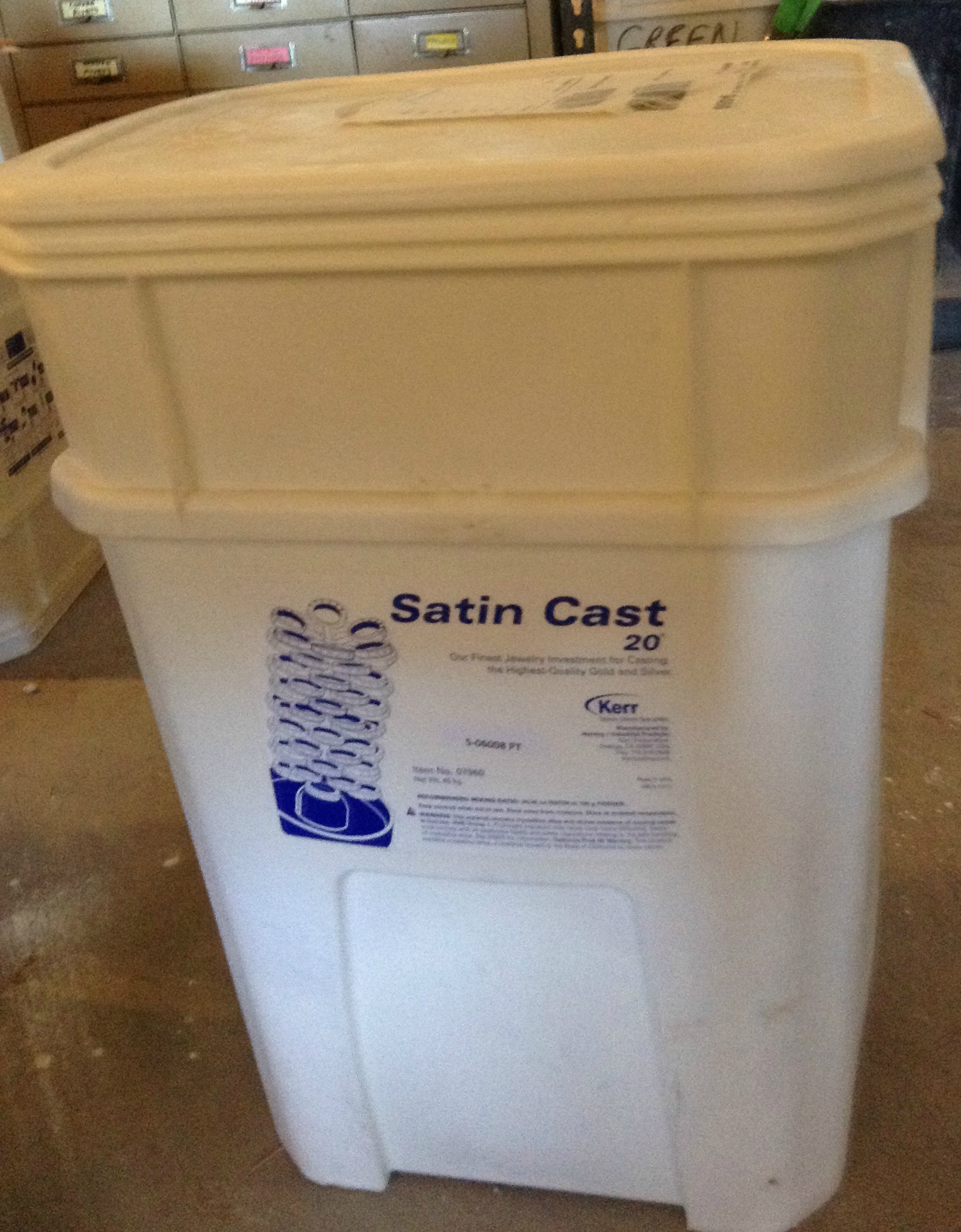
Satin Cast box

Here is my messy bench, just after weighing the investment. No matter how careful you are this stuff gets everywhere, just like flour. Because the investment contains silicon, which is bad for you if it is inhaled, it is important to wear a good quality dust mask. The upside down rubber bowl on the left is used for mixing the investment with water.
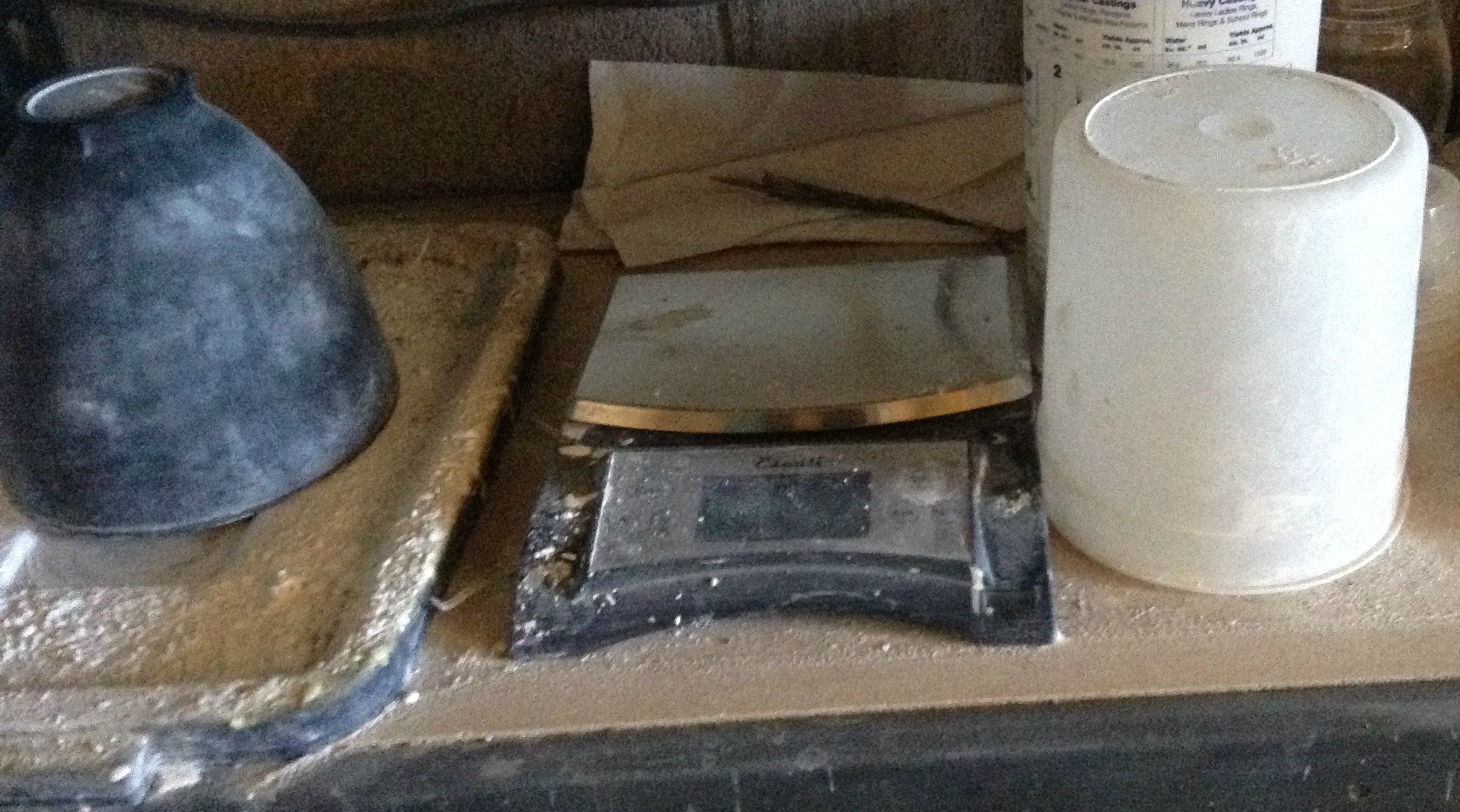
investment weighting

Once a lump-free slurry has been created it is placed in a vacuum chamber to remove air bubbles. The square plate on the top of this vacuum machine has a rubber mat that creates a good seal for the plastic dome that you can see on the left hand side of the machine. It allows the user to create a vacuum chamber that removes excess air that has been trapped in the liquid investment during mixing. Bubbles weaken the structure of the investment and also create lumps on the outside of the cast piece.

Vic 9

Once the investment has been vacuumed it is allowed to harden, the bases are removed, and the flasks are ready to be turned into molds. The stainless steel flasks are placed into a de-waxer, a machine which heats the flasks using steam and allows most of the wax to melt out of the flask. Here is a picture of my de-waxer.
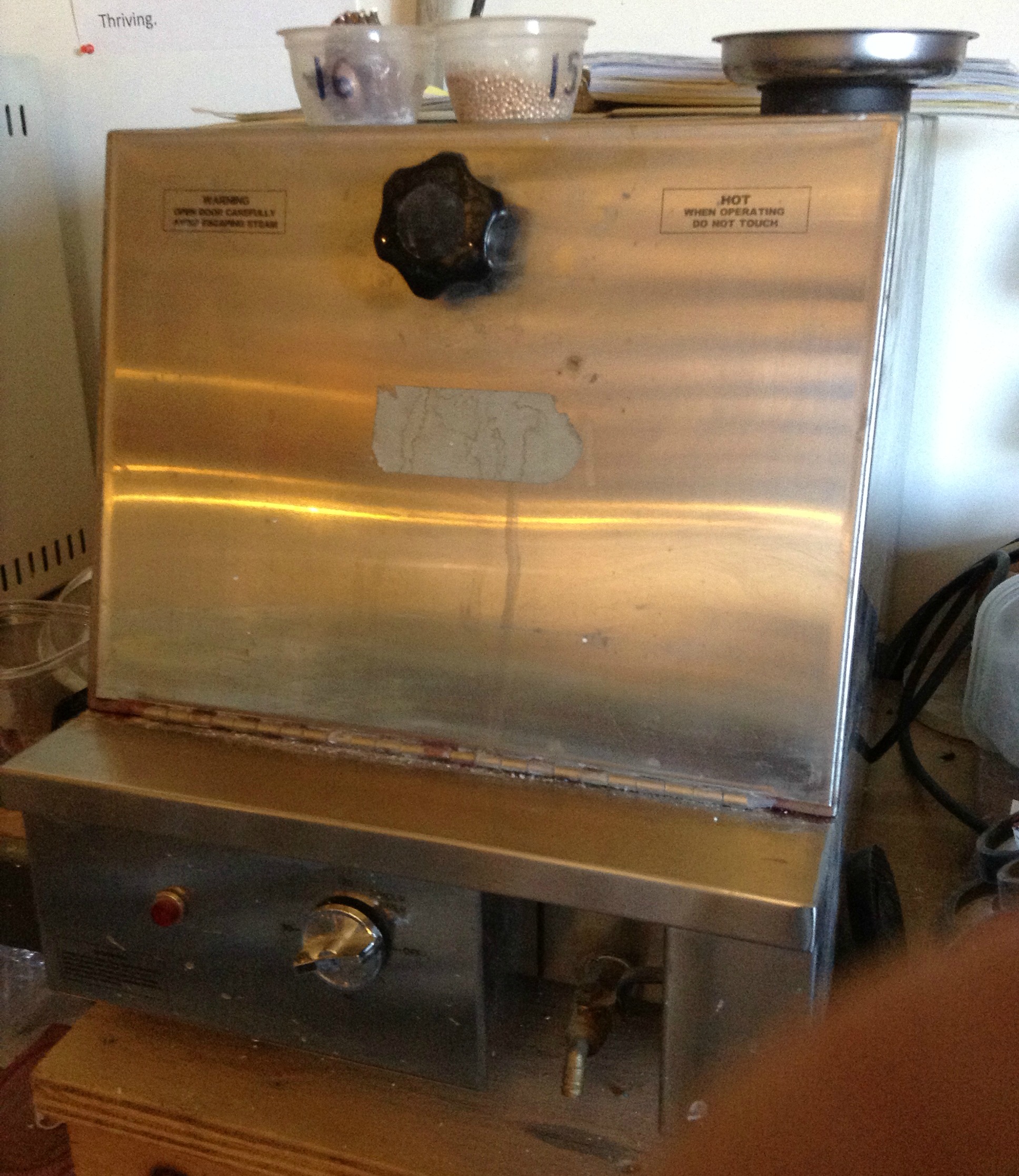
Dewaxer

This step is where the process gets its name from – Lost Wax. Removing the wax creates a cavity in the investment that is shaped exactly like the original wax.

What Next: Heat, Heat, and More Heat!
SCA 50 Year Merchant List

Shopping is just one of the many exciting opportunities at SCA 50 Year. You’ll be able to find a very wide range of goods for sale, from supplies to “make your own” to fine finished goods that can only be found at larger SCA events. Whether you are looking for buttons to finish off an accurate piece of period clothing, complete ready-to-wear clothing, dress pins, armor, looms, chairs, jewelry, or any of thousands of other items to complete your kit or camp, chances are Merchants have something for you. Looking for a present for a pet sitter or one left at home – 50 Year Merchants can make your experience complete.

Amicia’s Amenities
Another Time Jewelry
Argent Fox
A’s Round Pottery
Ash and Griffin Pottery
Auntie Arwen’s Spices
Badger Creek Studios
Blue Dragon Glass
Board and Basket
Bucky Stuffe
By My Hand Designs
Calontir Trim
Celtic Wolf
Cloak and Dagger
Costume Ladies
Crimson Chain Leather Works
Darkwood Armory
Drachenstein Treasures
Dragon Scale Jewelry
Egill’s Woodstuffs
Elk Ridge Archery
Eriksen Exclusives
Fire Horse Pottery
Firedryk Steel
Four Seasons Tentmasters
Fudge Haven
Garb by Gwen
Giggling Wenches Handcrafts
Glier Meats
Good Girl Gone Bead
Green Mountain Leathercraft
Grey Goose Bows
Gryphon Furniture
Gulf Wars Bakery
Hammer, Fordge & File
Hannish’s Dreck
Hero’s Haven
Historical Glassworks
House of Avalon
Ice Falcon Armory
Irontree Works
It is What it Is
Jacob Gansneder
Jadi’s Silk Road
Jondalara’s Designs
Known World Treasures
Livingston Jewelers
Mostly Middle Eastern
Munitions Grade Arms
North Star Armoury
Odyssey Coffee- Food Vendor
Palmyra Traders
Past Tyme Perfumerie
Raymonds Quiet Press and Boots by Boheomond
Renaissance Arts and Design
Renboots
Revival Leather
Sartor
Snow Hawk Crafts
Starlit Studio
Tea & Comfort
The Amber Fox
The Basketman
The Haunted Bookshop
The Silk Shop
The Treasury
TLC Leathercraft
Tomas the Lapidary’s Jewelery
Traders of Tamerlane
Viking Archery Supply
Violent Discord LLC
White Wolf & The Phoenix
Wood and Antler
Ye Olde Soap Box

The Way That I Cast – The Lost Wax Process

I have had several folks ask me questions lately about how I cast my pieces for my shop, so I decided that it was time for a brief explanation and some pictures of my shop.

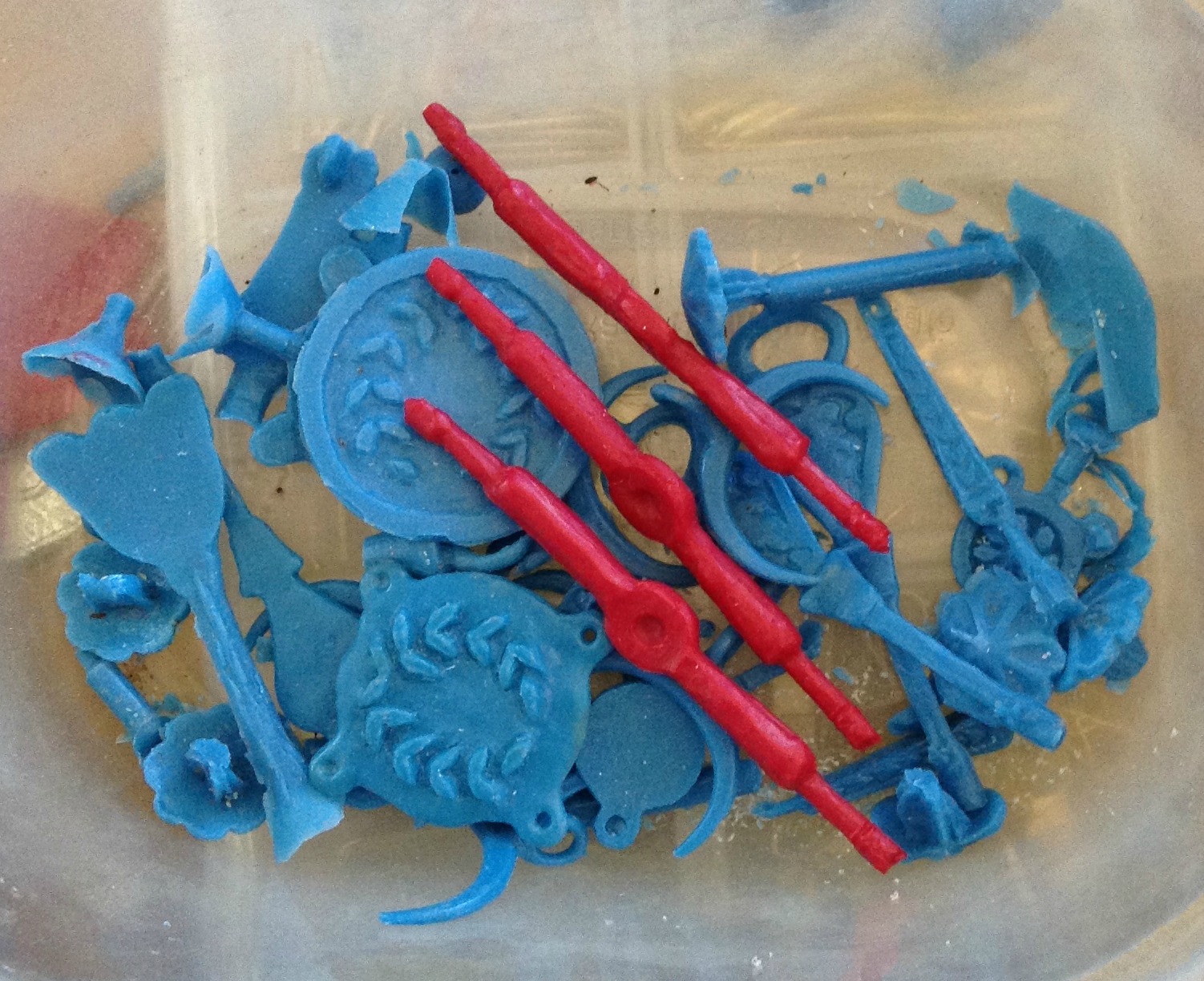
The process that I use for the majority of my cast pieces is called Lost Wax. It all starts with waxes. The picture below shows a few waxes that have been molded and could be turned into metal pieces. The different color waxes indicate that the wax has different characteristics. The blue wax is more brittle, but it is much better for carving. I often use this wax if I am going to repair a wax that was created from a mold of an original artifact. The details on the original may have been damaged by the ravages of time, and need some fine tuning, or there may be a broken loop or other needed repair.

waxes

These waxes were created by injecting wax into an existing mold. They can also be made by carving a piece of wax to create an original master. I rarely use a wax master  when I cast. Instead I make a mold of that wax and use the mold to create copies of the master. This avoids the problem of having a failed casting attempt destroy your wax master, which usually takes quite a while to create. Here is a picture of the wax injector that I use for most of my wax casting.

Wax pot and molds

As you can tell from the drips, this wax injector contains red wax. It requires an air compressor to provide the “push” to inject the wax into the mold. The wire shelves contain an assortment of wax molds. The differences in color indicate that they are made out of different molding compounds. The green molds are made using RTV – Room Temperature Vulcanizing Silicone. That compound will harden to form a mold at most normal room temperatures. The tan molds have to be cooked in a special machine, called a Vulcanizer, in order to harden. The odd looking contraptions on the table to the left of the wax injector (with handles that look like drawer pulls) are special mold clamps that provide a reliable and steady amount of pressure on the outsides of the molds for when you want to inject them with wax. An improperly clamped mold will allow hot wax to squirt out all over. Since the wax is between 150 and 160 degrees Fahrenheit, this is both messy and a bit painful to get on your skin.

This is a picture of a Vulcanizer. The mold material, with the metal model inside, is placed in a frame between two sheets of metal, and clamped between the jaws of the Vulcanizer. The thermometer is used to double check the exact temperature of the jaws before the mold compound is put in place. The mold is allowed to cook for between 20 minutes and several hours, depending on the thickness of the mold and the type of molding compound being used.

Vulcanizer

Next Time: So now that we have waxes, what next? We turn the waxes into a mold!