Lies My Docent Told Me: Part 4

So we have discussed improperly trained docents, bad labels, out of date digital collection entries, and clerical errors in digital entries. But where does this leave us as researchers?

Simply put, you have to educate yourself. The days of just accepting what we read in a book or see in a museum have to end. They really never should have existed, but before the internet researching really was a lot more difficult. It is our job as researchers to know at least the basic science behind the artifacts that we are looking at, so that scientifically based errors will jump out at us. and it is also our job to know as much as we possibly can about a culture so that mistakes relating to cultural artifacts will stand out. And believe me, I do know how difficult this is. When I am in the shop I often get questions about some fairly obscure cultures, and sometimes I really can’t be very helpful, but I don’t make up answers.

An excellent example of why you should try to know as much as you can about a culture and its neighbors comes from several articles that I had run across many years ago. They were all excited about a female Anglo Saxon grave in England. There were whisperings of magic, you know, the standard “high priestess” stuff that we usually see in Russian news articles from Siberia. Well, let me say that there are generally no specific items that instantly made the grave anything other than a high status grave. The single exception to this that I am aware of is the presence of an iron staff in Scandinavian graves. That is legitimately thought to be something of extreme significance. But getting back to our Anglo Saxon woman. She was buried with a “magic spoon and a crystal ball”. Now she really was buried with a crystal ball – literally a piece of rock crystal in the shape of a ball – as I recall it was about 1 1/4 inches in diameter and held in a crude silver suspension loop. These crystal balls were traded all over Europe and would definitely have been a prized possession. Could they have been used for magic? Sure, why not? But it is not something that we have anything factual about. But the clincher was the spoon – obviously used for magical rites. Umm, maybe, but if you had any knowledge of Roman culture you would have instantly recognized it as a wine strainer – designed to keep the chunks from the bottom of the wine container out of your glass. The Anglo-Saxon’s used them, too, and in fact there are a couple of wine strainer spoons with Christian words and symbols on them. In fact here is a picture from the British Museum of a nice wine strainer with a chi rho and the link to the artifact record.
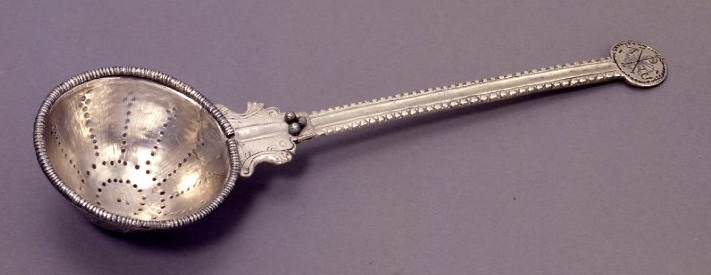
Chi Rho wine strainer

Aside from education, you really have to keep good records of the research that you are doing. A lot of folks are now using Pinterest as a way of organizing photographs of artifacts that they find and want to keep a record of, but there are other ways to save information, including plain old Word documents. My oldest research is located in physical file folders in a filing cabinet, but most of my newer work is organized in Word documents in folders. Starting in November of 2014 I did a eleven part blog series called “Researching on the Cheap”. The series covered all of the tricks and hints that I could think of at the time to help people research online, and keep track of their results. Here is a link to the first blog in the series. If you feel that knowing how to do better research would be helpful, I highly recommend that you read the series.

I hope that this blog inspires you to question, and then seek correct answers. That is the best that any of us can do.
Lies My Docent Told Me: Part 3

Last time we talked a bit about museum labels and digital collections. Tuning in to the details of a museum’s digital collections can really help you with your research. This record for a body chain from the Hoxne Hoard in England is an example of the best of the new British Museum artifact records. The record has good quality digital photographs, actual research data with references, and a history of the piece at the museum, including when it was purchased and when and where it has been exhibited. Unfortunately there are still many artifacts that have not been photographed, or that are represented by “old style” artifact entries. This entry is fairly typical of one of the artifacts  that does not have a picture available. And this entry is typical of one of the older records. There is no photo, only an “artists rendition” and the amount of information about the artifact is minimal. This is also an “old style” record for a Roman coin that contains really minimal information about the artifact.

It is important to be aware of what the “new” verses “old” entries in a museum data base look like. The new ones may have mistakes, but they are much more likely to be more accurate and have good photographs and references associated with them.

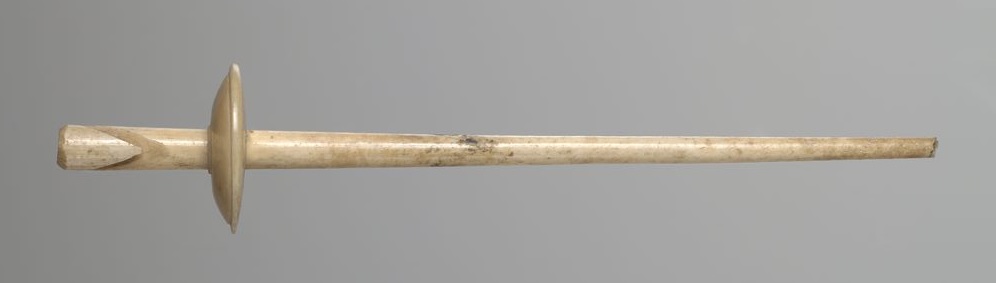
And lest you think that I am picking on English Museums, let me tell you about my adventures in Boston. I was in Boston on business and I had a few minutes to waste before I had to be to a meeting. I noticed that a nearby office building had small displays from the Harvard Museum collection, so of course, I went to take a look at them. The displays were in nicely lit Lucite cases on the landings of the building. There were multiple cases with collections of ivory pieces from Rome – hair pins, writing stylus’s, and small carvings. I was thoroughly enjoying looking at the well lit pieces until I noticed a carefully labeled piece – “ivory hairpin”. And there before me sat a perfectly lovely top whorl ivory spindle. It was almost completely intact, with only a tiny piece broken off of the very bottom of the shaft of the spindle. And it was labeled as an ivory hairpin. So I went to the lobby and asked who I could contact about the display of Harvard artifacts. They easily gave me a name and phone number. A couple of days later I started trying to actually track down a real person to talk to. To cut a long story short, I probably made at least 20 calls over the following month and a half, and left a couple of dozen voicemails. I called the number that I had been given, and I went online and called other numbers. I never received a single call back, and I finally gave up. I decided that if Harvard wanted to look stupid, I guess they were allowed to. And believe it or not, I found a picture on the Harvard Art Museums website – of a top whorl ivory spindle, the very one that I had seen. And it is listed as a top whorl spindle.

top whorl roman spindle

Next Time: Where Do We Go From Here?

Lies My Docent Told Me: Part 2

Last time I mentioned a “docent fumble” and then promised some insights into looking at museum exhibits.

While I am picking on the Victoria and Albert Museum, let me bring up an issue that all museums deal with. Your labels and information about artifacts are only as good as the people who make those labels. At one visit to the V&A I was scrounging through the old Bronze gallery (the gallery has since been redone). The labels in the gallery had been typed on a typewriter, heaven only knows in what year. (This is a giant “red flag”.) The label on one of the large bronze jugs stated. “There are letters on the jug, but we don’t know what they mean”. The letters? “A M G P”. Probably one of the most common magical incantations of Medieval times – Ave Maria, Gracia Plena (Hail Mary Full of Grace). And to make it worse, some of the other jugs correctly identified what “AMGP” stood for. Consistency folks, consistency. Here is one of my old pictures from the Bronze Gallery – note the wrinkly old typed card.

V&A Jug

If I go to a digital online museum collection, almost all of them now have a “let us know that there is a problem with this record” link. Several years ago I started noticing some very serious clerical mistakes at the British Museum website. What I mean by “clerical” is that there might be six pictures associated with a specific artifact, and five are correct, but picture number six is a picture of a different artifact. Sometimes it is super obvious, the item in the picture has a different number on it than the artifact number in the record, or the artifact record is for a piece of pottery and one picture is a piece of jewelry. But sometimes both of the artifacts are of the same type. I remember discovering several clerical mistakes and trying to figure out how to contact someone. Sometimes I found some sort of contact person and sent them an email, and sometimes I finally gave up in frustration. I never received a single reply to any of my emails, not even an auto-responder message.

It really bugged me to see mistakes, so I kept sending messages. My one and only reply came from the Metropolitan Museum Of Art. I was looking at Middle Eastern beads online and I discovered a record for a “necklace”. One look told me that it was a Subha – a prayer bead strand. I found a random contact name and wrote a polite note about the piece. And about a week later I received a very nice email back, thanking me for pointing out the information and assuring me that I was correct, and that the museum was in the process of updating a bunch of records and that this one would be updated to reflect the additional information. It felt so good to know that I had actually reached a person and that the record would be updated!

It was not long afterwards that I started noticing what I think of as “Ooops” buttons, on a lot of museum sites. Links that let you report mistakes to museum staff. I am sure that I was not the only one out there to notice mistakes. I like to think of these buttons as “crowd sourcing corrections”. The more eyes that see a piece the more likely mistakes, or additional information is likely to be discovered.

Next time: Tuning in to Your Museum’s Listings