
Event Strategies – Fun or Not? Part 3 – Distances & Other Challenges

I was listening to a conversation on Facebook the other day about handicapped accessibility and transportation at an event. One of the people who requires occasional transportation stated that they were told the site was “extremely compact” and it would only be about “1/2 a mile” from where she was to be camped to the main activities area. But for a lot of people, old and young, 1/2 mile is just too far to walk. You are the only one who can make that decision. But get real about it. A cane, a walker, a small portable stool for rest breaks, or an electric scooter are all possibilities at events. I was once confronted by someone who told me that our small baronial event (usually less than 400 people) should provide a golf cart for transportation for those who can’t walk. I was blunt and said it would not happen. It was just not likely to ever be in the budget.

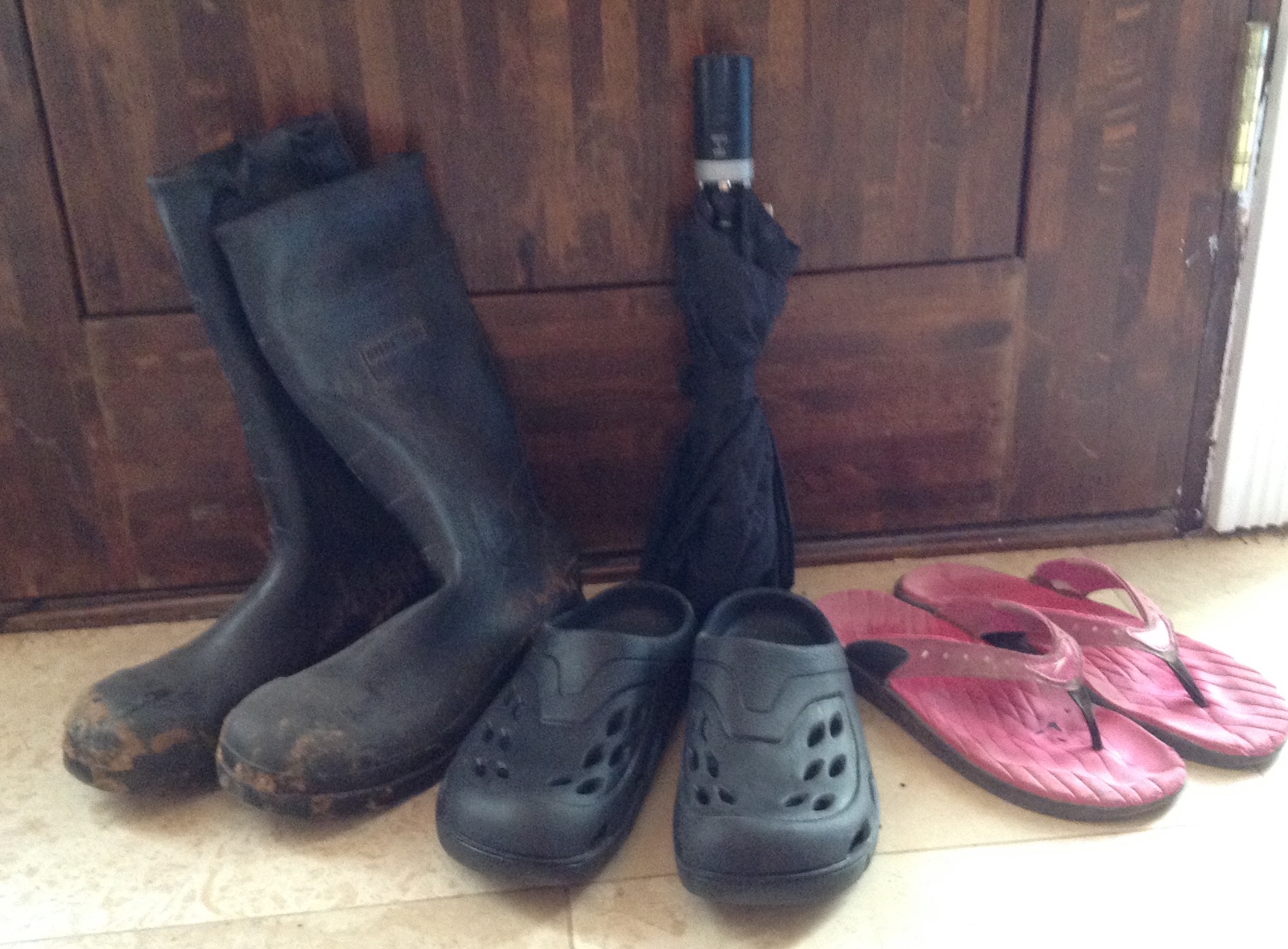
In the past when I have recruited a helper for my booth at Pennsic I have warned any prospective folks that it is a comfortable twenty minute walk from our camp to my booth. We are by no means the farthest away camp, and our walk does not include any large hills. If you are planning to go to an event you really need to try to understand just how much walking you are going to be doing. I always told my helpers to make sure that they had at least two, and preferably three pairs of shoes with them so that they could trade off shoes if their feet got sore, and so that if their shoes got soaked from rain and mud, they would have dry footwear. I have even been known to change into flip flops or rubber muck boots  to keep my shoes dry. Several of my friends who have rather sedentary desk jobs start a walking program a month or two before Pennsic to build up their stamina. Sore feet or exhaustion from too much walking can really spoil your fun. And this doesn’t even count the weather. This is just a small portion of our “just in case” collection.
FullSizeRender(7)

For a solid month before I attend a camping event I add that event location to my weather.com feed and check the weather there every day. I also look at the national forecast to see if there are any trends or major weather events that are likely to impact the area that I am camping in. Two years ago the forecast for Potrero war was cold and foggy. It had been that way for two solid weeks before the event, and it was forecast to be that way for the event. And yet people were totally shocked when it was cold and foggy. I warned my helper to bring her long johns, because it was likely to be cool. We were fine, but a lot of people were totally unprepared. No cloaks, no warm socks, and not enough bedding = less fun.

Next Time: Keeping it Real and Being Honest With Yourself

Event Strategies – Fun or Not: Part 2

So last time we were talking about timing your arrival at an event in order to get the most out of the activities, and understanding the difference between the mindset of longer and shorter events.

At shorter events most people set up a fairly minimal camp because the attitude is “it is only for a few days”. At longer events, like Gulf Wars and Pennsic, people will take the time to set up much more elaborate camps, complete with gates, walls, showers, and other amenities. Some larger households have “teams” that come for set up and spend several days just building the infrastructure for the rest of the camp. As someone who has been a part of one of those teams, I can tell you that for the folks who come in later  it is almost like “hoteling it”. All you have to do is set up your own tent and all of the communal facilities are already in place. But none the less, whether you are with a larger household, or a small encampment, if you are camping you have this “base of operations”. A place that you can go back to on site, that has some comforts like cold water and a snack, and a comfy chair. You can decide to take a short nap, or do some crafty thing, and if you are camping with others, there is a significant chance that you will bump into a camp mate and have someone to chat with.

Hoteling it without an onsite base of operations means that you have to haul everything that you need with you at all times. If you drove to the event you can still bring a fair amount of “stuff” with you – like  chairs, a cooler, and a wagon to haul it all in. You can use your car as a storage locker, which obviously has  its issues if it is particularly hot, or if the security at the site is not great. Parking is also often “out in the north 40”, which can make those trips back to the car a serious chore.

If you fly to an event you either have to rely on the good will of friends who are at the event, or buy things that you will leave at the end of the event, or do without. As you can imagine, all of these options have issues. If you have a rental car you can still use it as a storage locker to keep spare drinks and crafty bits so that you don’t have to carry everything all of the time. But again your parking spot may be a long distance from where you want to be for activities.

Next Time: Distances and Other Challenges

2013-07-23_18-37-01_677

Event Strategies – Fun or Not?

The best SCA event that I have ever attended…Very Disappointed…

Well certainly these comments must be referring to two different events! Nope!

I often follow what is going on at events that I can’t attend because I am curious and I have friends there. And the variations in response to a recent event made me think about why folks were having such a different response, and what I might be able to do to give people a clue for happier future events.

All of the people that I was “following” are the sort who usually have a good time at events. They are not whiners, and they always find fun things to do at an assortment of events. But I was seeing some wildly different responses to the same event, and tracking down the issues was not initially straight forward. And then I realized what the biggest difference was – “hoteling it” vs. camping.

Now I have to admit, unless an event is happening at a hotel, I don’t usually prefer to “hotel it”. I like to get to an event, get my camp set up, and change into garb. I then stay in garb until it is time to break down and go home. At long events like Pennsic we almost always stay in garb when we go into town. We prefer the “immersion” approach to SCA camping.

So the people that I talked to were hoteling it, because they had flown to the event. When they arrived all they had to do was change into their garb and show up at the site. And they arrived on one of the first days of the event, when everyone else was in the process of setting up their camps and getting themselves organized for an extended camping event. So there was nothing to do. There were not a lot of things on the schedule to start with, and some of them were canceled because people had not arrived yet.

BIG CLUE! Check the event schedule. If you have any doubts about there being enough going on at the beginning of the event, then come a little later. If the schedules are not being published early enough for you to be sure what is on them, come a little later. Statistically there will be more happening in the middle and near the end of an event than at the very beginning. For instance, at past Pennsic Wars ordinary people were allowed on site on Saturday. A&S classes don’t start until Tuesday. So, if your main goal is to attend A&S classes, and you can only be there for a portion of the event, come later in the event. Now this may seem obvious, but if you are accustomed to mostly four or five day events, it may not be obvious. The shorter the event the more people tend to “hit the ground running”. Classes and activities start almost instantly, because if they don’t there will not be enough time for them.

Next Time: The Long Event Mindset

Pennsic Schedule