Choosing Which Metal To Use

I often hear conflicting complaints from historic re-enactors and SCA folks alike:  “the problem with my group is too many authenticity Nazis” and “why can’t people at least make a more accurate attempt at their clothes?”

As a professional jeweler and merchant at SCA events, I frequently wrestle with the disparity of these sentiments. Some of the choices are difficult, but some are easy from my perspective. I make many of my items using a copper alloy known as bronze. Some merchants choose any old copper alloy without regard to what would have been used historically. But using true bronze gives my pieces the look and feel of the originals that they are patterned after.

Bronze was used to make weapons, armor, knives, brooches, hooks, crosses, and many, many, other items. It’s a ubiquitous material throughout Medieval history, and much earlier. Bronze is a remarkable alloy with multiple formulations. The first bronze included copper and arsenic (yes arsenic). Fortunately for real sticklers for accuracy, arsenic bronze was largely replaced by a tin and copper formulation that we recognize today as true bronze. A bit of good news for authenticity fans – true bronze became the primary bronze from the 3rd millennium BC.

There are very few places on the earth where copper and tin are found together (one site each in Thailand and Iran), so true bronze is reliant on trade. Great Britain was the major source of tin in Europe, which can explain some of the unusual trade goods found in Britain.

Copper alloys are truly remarkable. They can be harder than wrought iron, be sharpened for cutting edges, and the alloying process is comparatively easy. Depending on the alloy (tin, zinc, lead, silver and other additives) the metal can take on many different hues. Each formulation has unique characteristics, and in our modern society they have very specific names – brass, yellow brass, and nickel silver, to name a few. Some alloys are malleable, others are hard and brittle, and still others have differing degrees of chemical resistance.

Are there any other practical reasons for me to want to use true bronze instead of some other bronze alloy? Yes. True bronze can be enameled. Now some of the other alloys can be enameled, too. But the problems with enamels changing color because of the zinc in brass, for example, can be difficult to overcome. True enamel is a form of ground glass that is melted and fused to the metal. If you are interested in more detail about enamel and enameling, just visit my enamel blog.

Handled ewer. Copper alloy with champlevé enam...

Handled ewer. Copper alloy with champlevé enamel, Late Roman work. (Photo credit: Wikipedia)


Today we know that iron replaced bronze for knives, weapons, and many other larger items, as iron working skills matured. Iron could maintain a sharp edge longer, withstand greater bending forces, and eventually could be made into steel. The transition to iron seems to have been encouraged along by a tin shortage. Around 1200 BC the shipment of tin around the Mediterranean plummeted – coincident with population migration. There’s no definitive proof of the link between migration and the tin shortage, but some archaeologists believe that there is a causal relationship between the two.

But are there any other metal choices that we need to make for period reproductions? We’ll talk about that next time.

A Pennsic Pottery Kiln Interlude

I am not sure how many years they have been building a pottery kiln at Pennsic, on Long Way between Fosse Way and Wroxeter road (across the street from N31). Our household has been in its current location (N30) for over twelve years. I walk past it every year and I don’t remember it not being there. Every year I watch for the arrival of “the tarp”, and I try to get at least a couple of pictures of the process of building and using the kiln. This year my hubby took a bunch of pictures, too, so between the two of us, we have a fairly decent chronicle of the building and use of the kiln. I have never had the opportunity to actually participate in the firing process. But I am none-the-less fascinated by the kiln and I wanted to share it with all of those who may never have seen it, in the hopes that others may consider creating a similar endeavor at other locations.

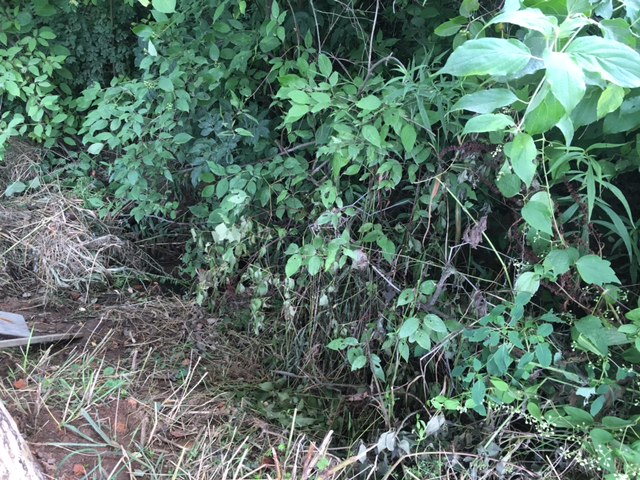
This is the view of the kiln area from the street.

IMG_0134

But when the process starts, this is what the area looks like.

IMG_0123

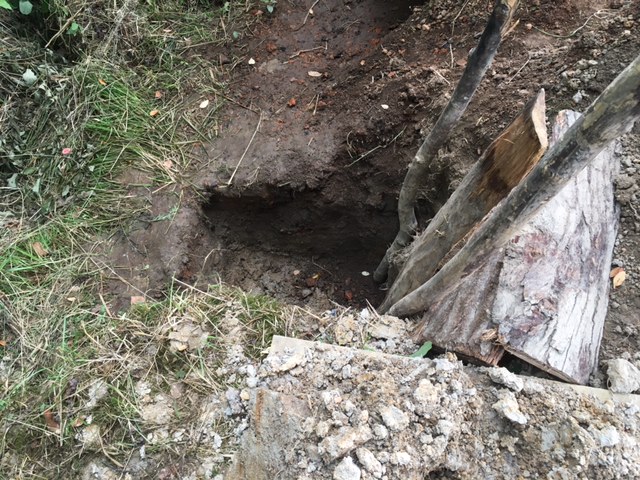
The kiln is right along the edge of a small stream and takes advantage of the naturally occurring clay in that area. One of the first things that has to happen is the digging clay and the air tunnel.

IMG_0126

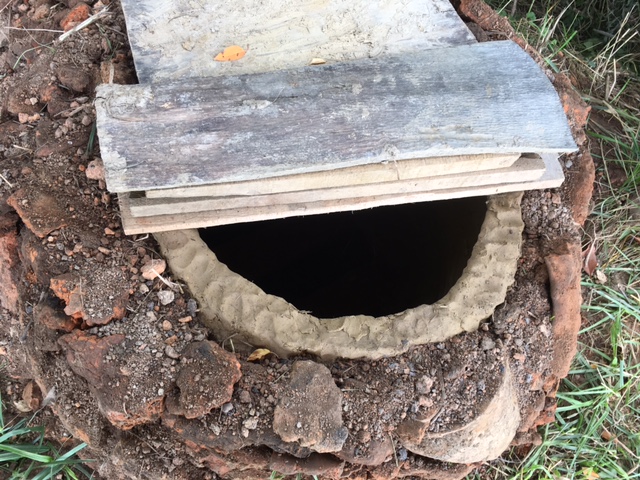
Once the air tunnel that provides a solid draft for the kiln is dug, a clay liner is created for the kiln.

IMG_0131

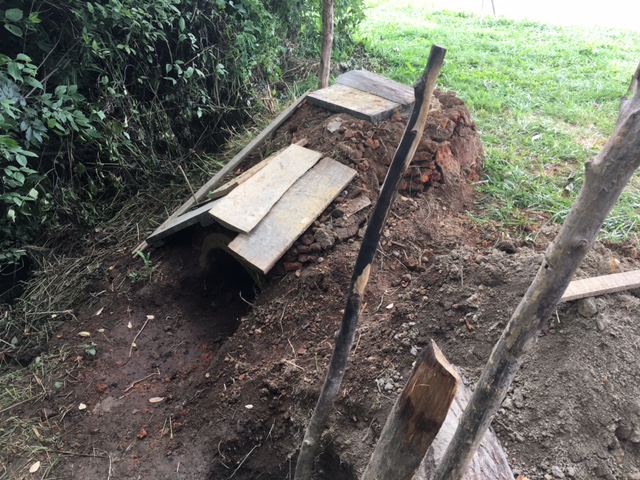
Here the fresh liner of gray clay has been surrounded by a combination of dirt and pieces of baked clay that are left over from previous kilns (the reddish chunks and lumps). The air tunnel is also covered with clay and then dirt and baked clay lumps, and it winds up looking like this.

IMG_0128

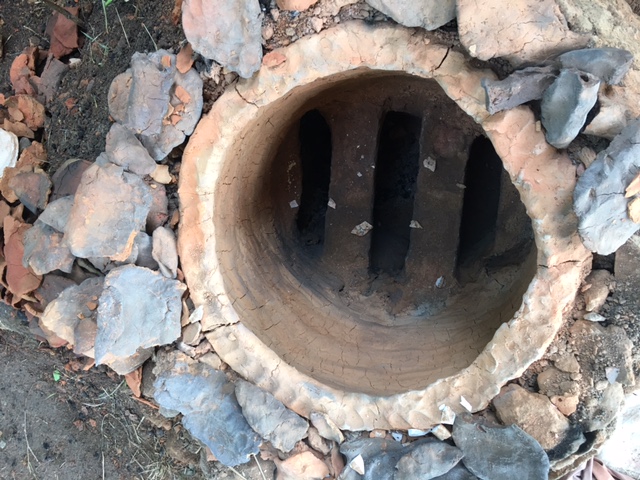
The kiln after the first firing. You can see that the liner is now completely dry. The dried pottery and tiles will be stacked inside this area for firing.

IMG_0149

After the first firing the kiln is ready to be loaded and fired up for a considerable number of hours. I had hoped to get a picture of the kiln in full firing glory this year, but they fire it overnight, and I fell asleep.

According to the description in the Pennsic gatebook, this is an English style pottery kiln. The number of firings that they manage to accomplish during Pennsic depends largely on the weather. According to the Pennsic Independent, in 2011 there were at least three firings during the war. Master Simon de Okewood teaches a class on kiln construction and then follows it up with a class on firing in a Medieval Pottery Kiln. The tiles and pottery from the children’s pottery classes are sometimes fired in this kiln, too. Allowing folks to actually take home finished pieces that they have made at Pennsic creates one of the coolest souvenirs that I can possibly think of.

Hmmmm. I guess I am going to have to move this set of classes much further up my list of things to do at Pennsic for next year. Taking a closer look at the process has made me want to take the classes even more!

My Casting Process Up Close – No It Is Not Instant!

I have been chatting with several customers lately at events, and it has become painfully obvious that some of them think that the casting process is almost instant, and that the cast pieces arrive looking as lovely as a shiny new penny.

Not really.

I was trying to figure out where they may have gotten this impression from. Maybe they watched an edition of “How It’s Made” where a giant machine spits out polished pieces, or maybe they have seen pewter casting.

So I thought about the Pewter Casting for a while. I do a little pewter casting for some of my reproduction spindle whorls. The originals were lead, and I am just NOT going to go there, so I use lead free pewter. I also make a few Pilgrim’s badges in pewter and bronze.

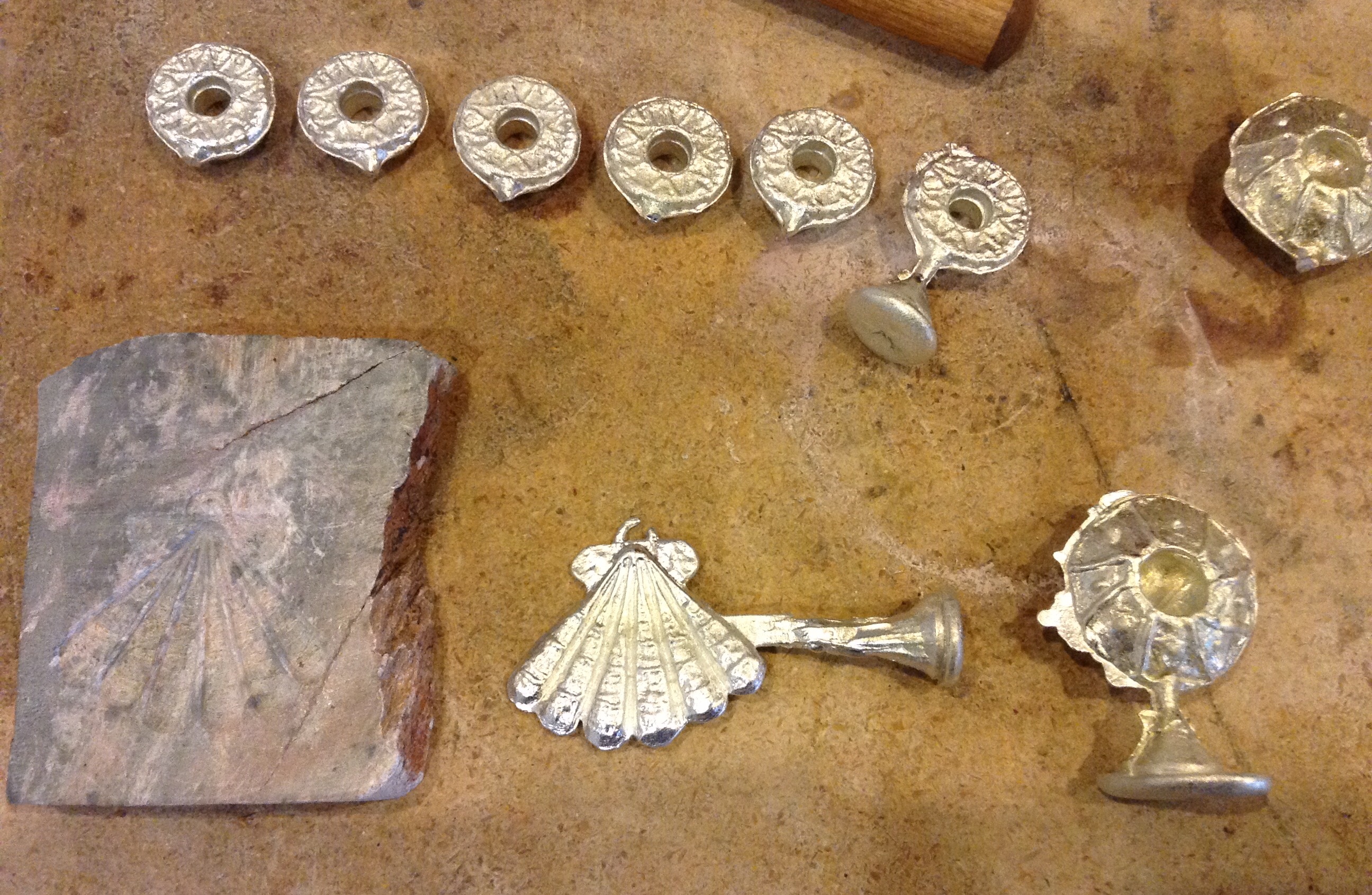
Cast Pewter pieces come close to looking like that new penny that we talked about, at least a lot closer than bronze or silver do when they are cast. This picture gives a nice perspective on casting simple pewter pieces. The original soapstone mold that I created for the scallop shell pilgrim’s badge (Santiago de Compostela in Spain), is on the far left. An “almost” cast ( the loop is incomplete and the “wings” on the top of the shell are not squared enough) shows what a fresh casting might look like. Above this is a row of six small spindle whorls, one of which still has it’s sprue intact. The larger spindle whorls on the right side show what flashing looks like (that wobbly bit sticking out on the edge of the spindle whorl).

pewter casting

OK, so let’s look at the process objectively. The mold is clamped, and the molten pewter is poured into the mold and allowed to cool. After three or four minutes the cast piece can be taken out of the mold. It will still be hot, especially if it has some bulk, like the spindle whorls do. Depending on the temperature of the room and workbench, a five minute wait is probably a good idea. Then I use a pair of sprue cutters to cut off the sprues. You can see where the sprues have been cut off on both the large and small spindle whorls. I then remove any flashing around the edges of the piece, either with a file, or a wet sanding machine. During this process the remains of the sprue are also removed. I then check any interior “holes”, like the interior of the loop on the scallop and the center hole on the spindle whorls for flashing, and remove it. Now the piece is ready for a quick polish. Twenty minutes in a tumbler with steel shot and burnishing compound will remove any oxides and give the pewter a nice sheen.

polished pewter

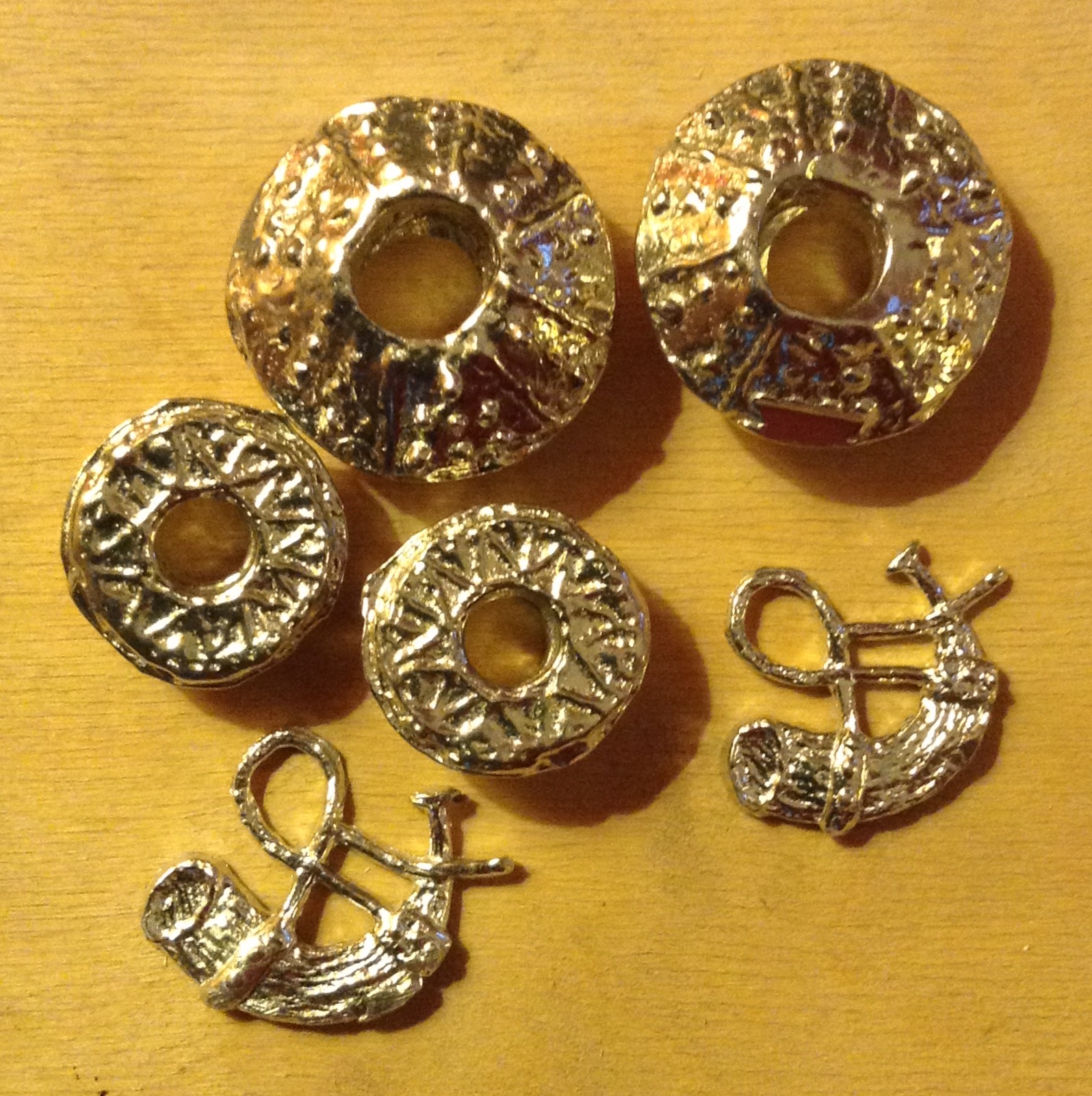
Shiny! This is what the polished pewter looks like. It is really not a complicated process, but even something as simple as pewter casting is definitely not instant.

Next Time: What Happens When We Cast Bronze