The Treasury 2nd Opinion Poll & Giveaway!

Back at the end of July we did our first opinion poll and reproduction artifact giveaway at The Treasury. We all had so much fun talking about the artifacts and what people would like to see happen that we decided to do it again. But this time it will be even bigger. So here are the rules.

  1. Take a look at the eight pictures and descriptions below.
  2. Choose two items: your first choice and your second choice for the items that you would like to see reproduced and available in the shop at The Treasury.
  3. Send me an email at eirny@eirny.com with the number of the two items that you want. Make it obvious which is which by saying something like first: # and   second: #
  4. The poll will remain open until October 31st. At that time I will count up all of the entries from the shop and from email, and your votes will have chosen two items. A winner will be drawn from each group of people who voted for the winning items. That winner will receive a reproduction of the original artifact for FREE.

And here are pictures and brief descriptions of the artifacts. If you have specific questions about any of the items, please contact me at eirny@eirny.com

item # 1. A Bronze Dice. About 14 mm on a side.
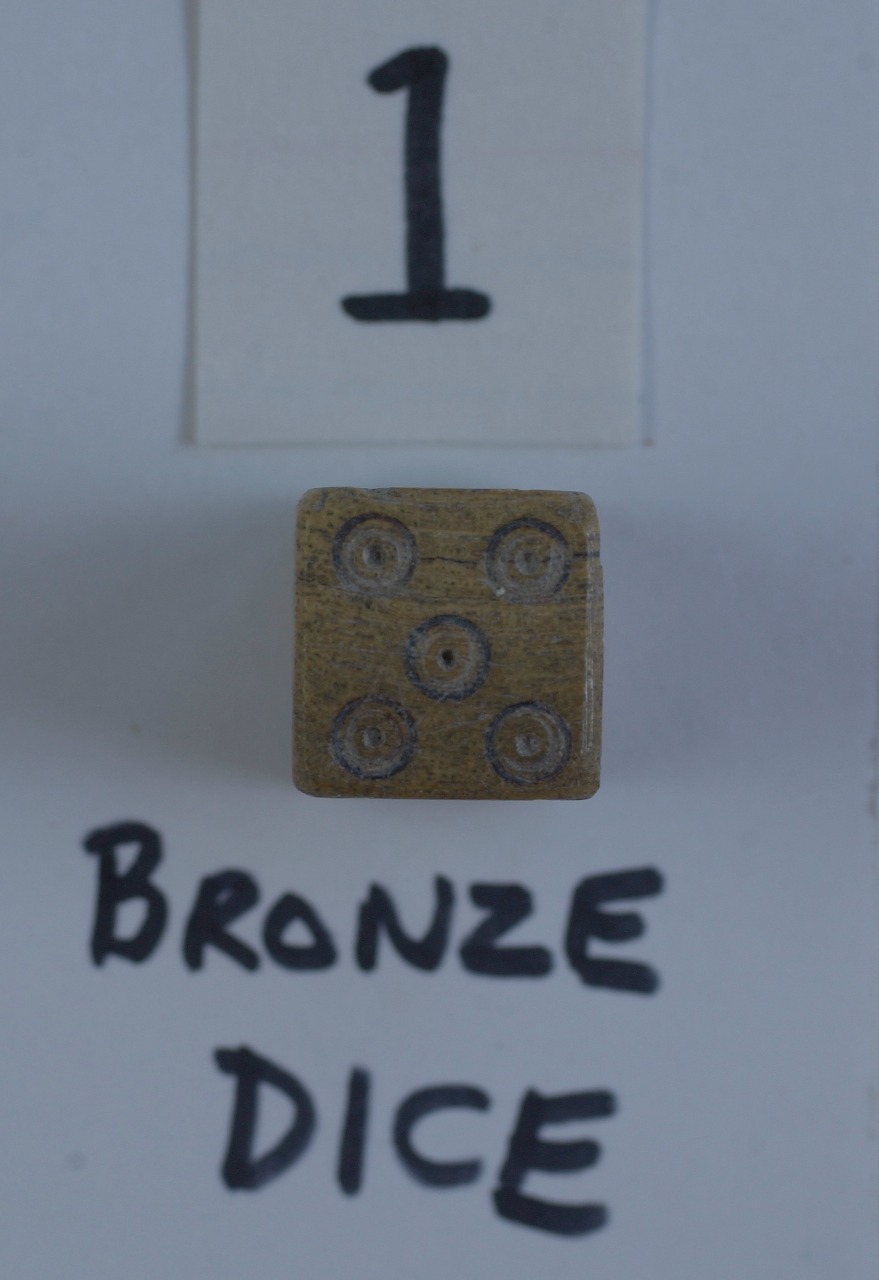
Dice 1


item #2. A Roman Lunula. About an inch wide by an inch tall. This artifact has been repaired, which is why it is a bit crooked. But I will fix that before I cast it.
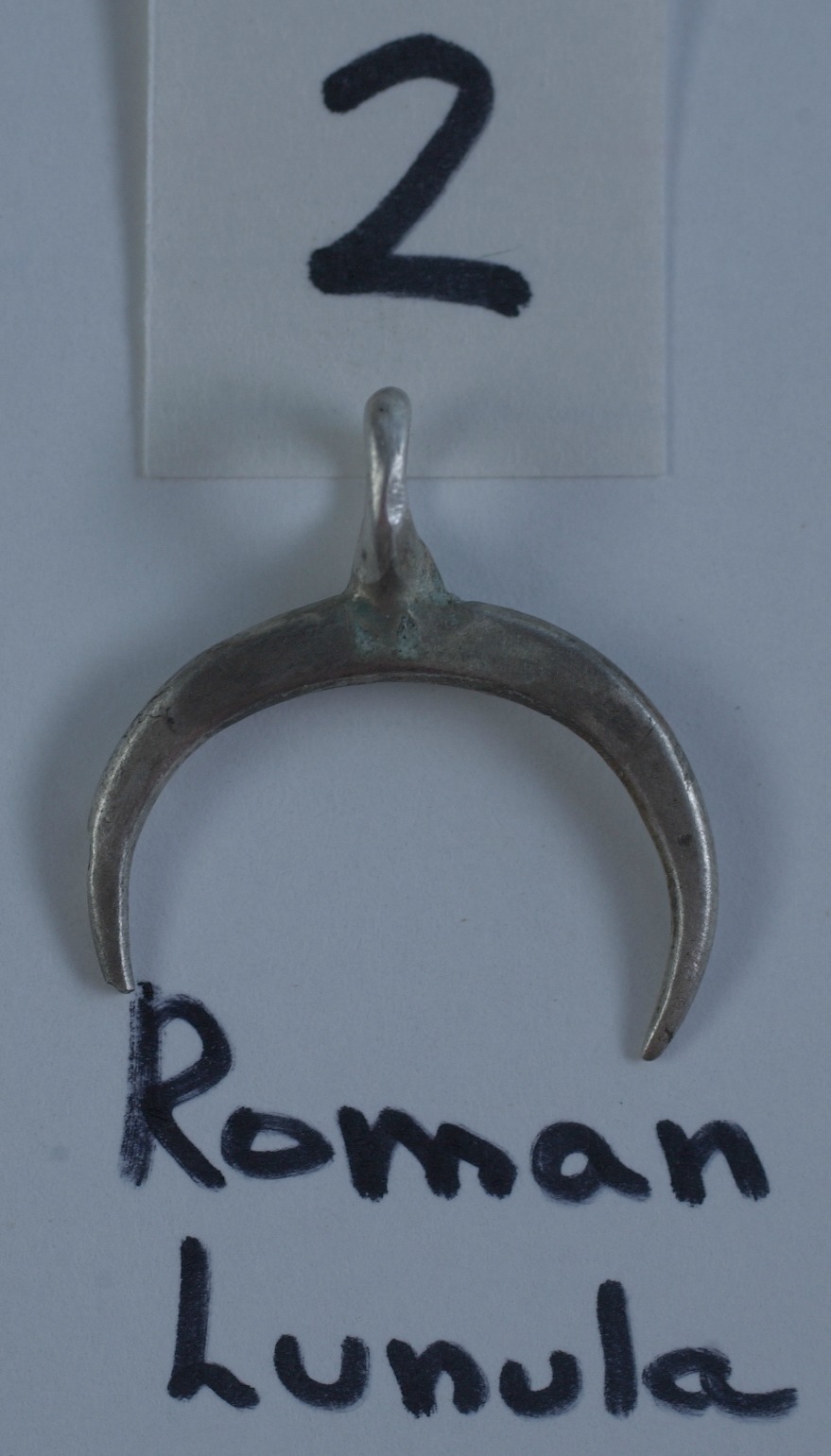
Roman Lunula 2


item #3. Celtic Toggle. About 1 1/2 inches long. The round part of the toggle is about 1 1/8 inches in diameter. The toggle is about 1/2 inch high.

Celtic Toggle 3


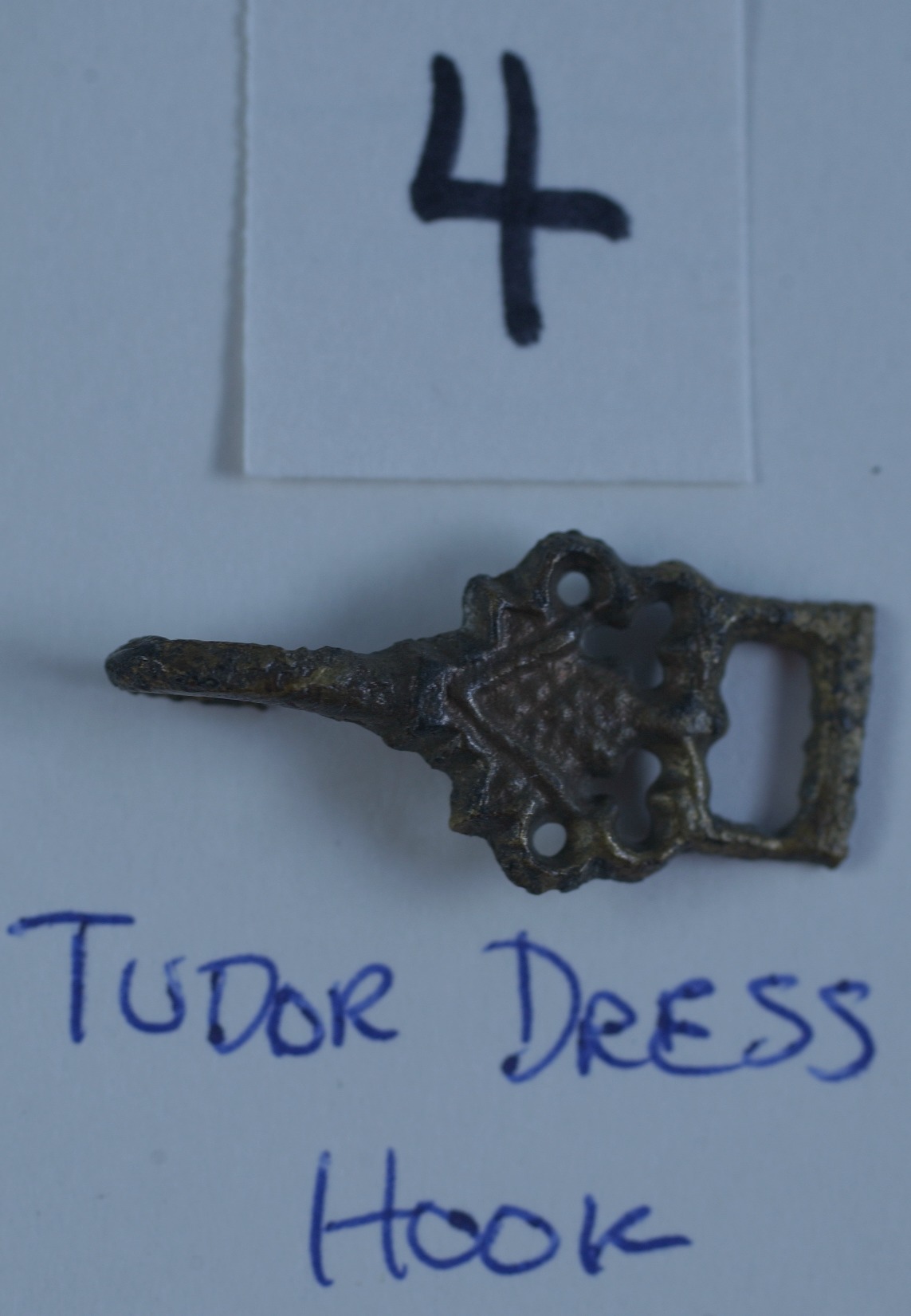
item #4. Tudor Dress Hook. About 1 1/4 inches wide and  a little less than 5/8 inches tall. This is a sharp hook and is not meant to be used with an eye.
Tudor Dress Hook 4


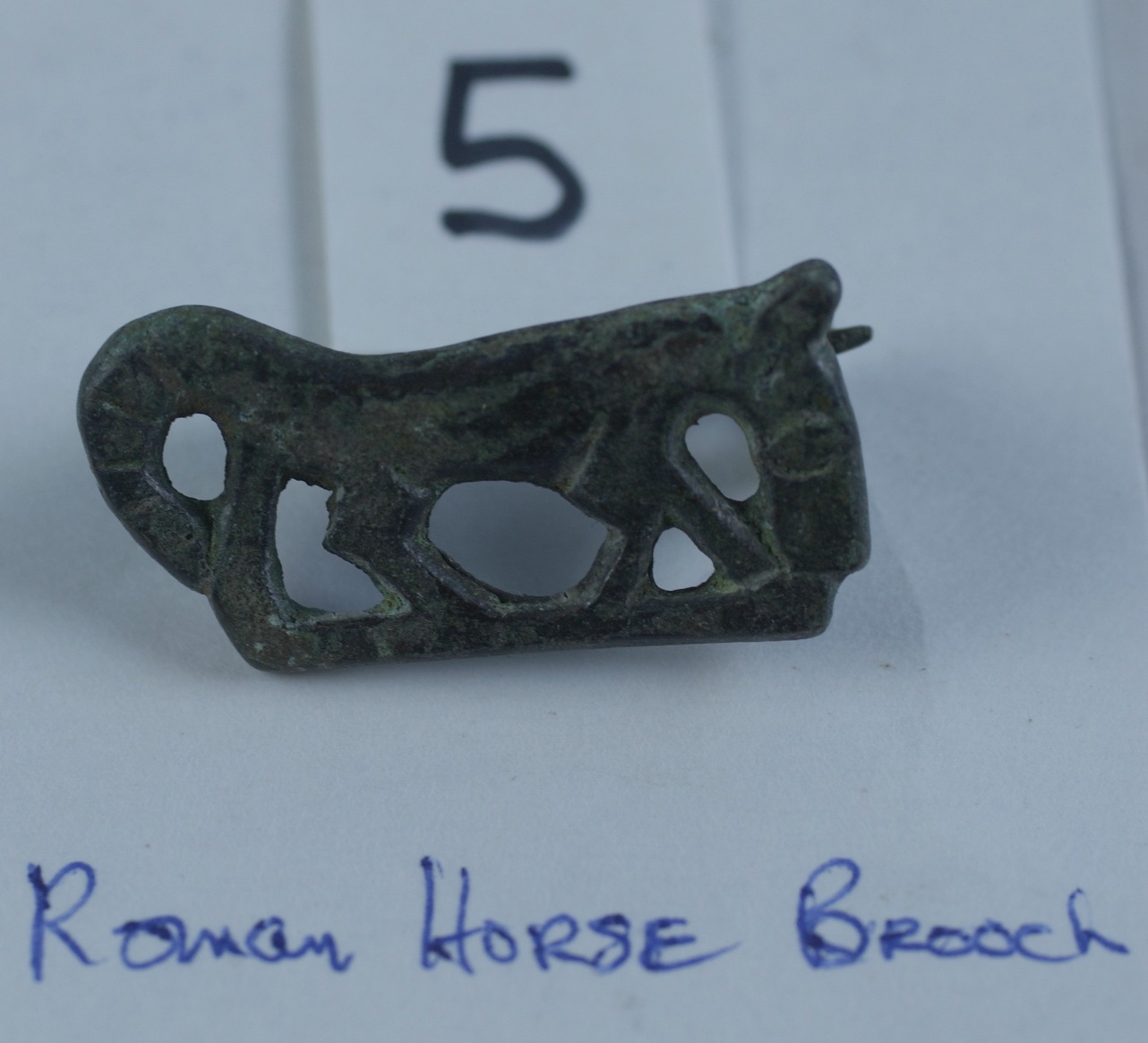
item #5. Roman Horse Brooch. About 1 1/2 inches wide and 1/2 inch tall , and 1/2 inch thick.
Roman Horse Brooch 5


item #6. A Roman Amulet. About 1 5/8 inches long and 3/8 in diameter at its widest. The horn like projections at the top are actually a broken loop. I will repair the loop in the cast piece so that it can be hung the way it was intended to be.

Roman Amulet 6


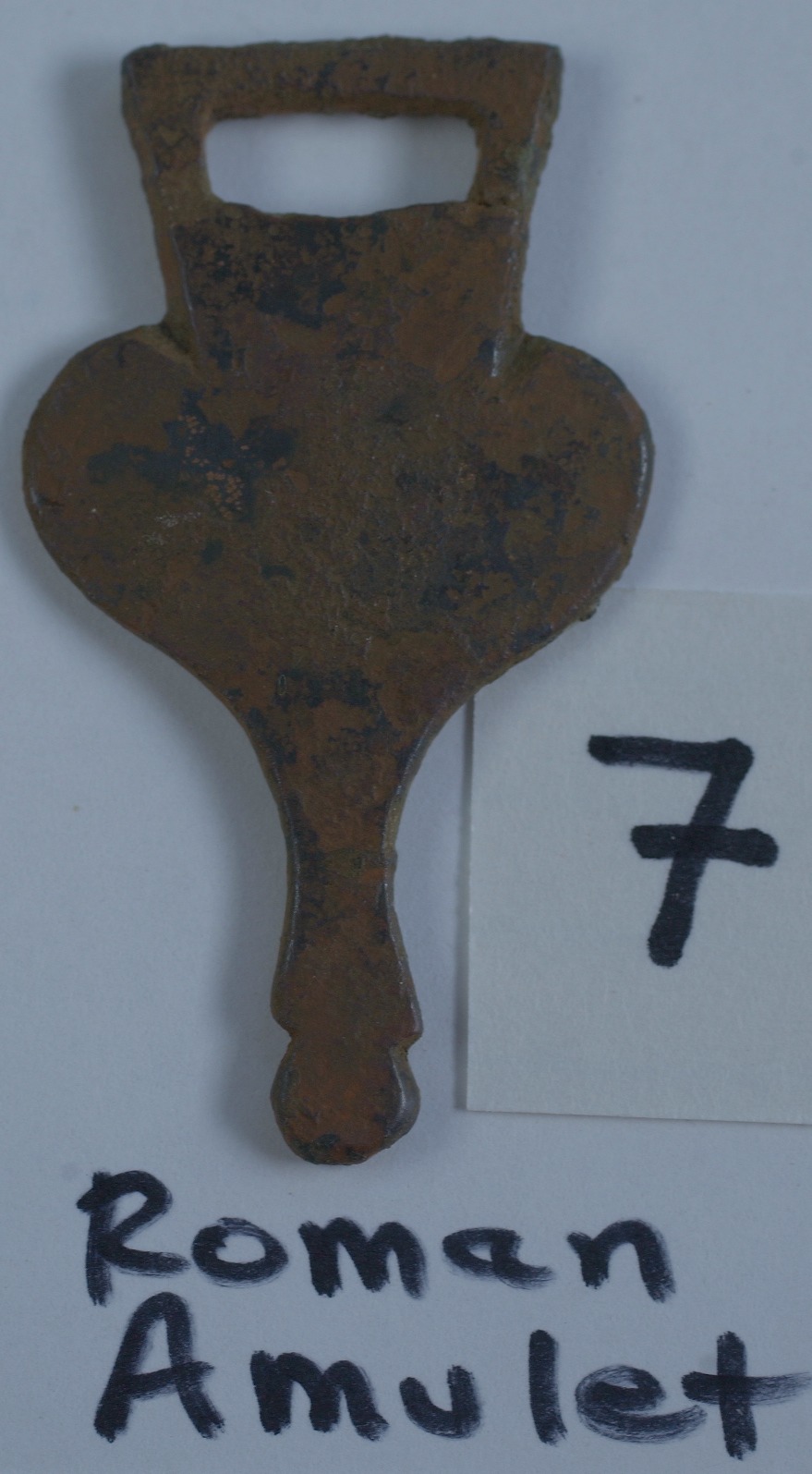
item #7. A Roman Amulet. About 2 1/8 inches long, 1 3/16 inches wide, and 1/16 inches thick. This would make an excellent strap end.
Roman amulet 7


item #8. An Enameled Tudor Button. About 5/8 inches in diameter. The light patches on the flower are actually white enamel. The shank on the back of the original button is broken, but I will repair that in the casting.

Tudor enameled button 8


Don’t forget to vote! Two of these items will be cast in bronze, in my shop in November, and two people will win a FREE reproduction artifact.
Would You Know a Fertility Symbol if it Bit You? Part 2

So last time we discussed some of the most obvious fertility symbols. If you are offended by mater-of-fact discussions of body parts and sexuality, or you really don’t want to know about what some of our commonly used modern symbols meant in the old days, this would probably be a good place for you to stop reading.

**********************************************************

And then there are the slightly less obvious symbols of sexuality. I look back with amusement at the dishes that I grew up with as a child; my mother would probably have tossed them out if she realized the actual symbolism behind them. They were cheerful painted plates with large roosters in the middle. The rooster being a common fertility symbol throughout most of Europe and Asia, and one that the eastern Europeans and Slavs were particularly fond of. Modernly most people would probably tell you that it was a good luck symbol. But think about it, have you ever watched a rooster in the barn yard jumping the hens? He is the ultimate symbol of the virile male, along with the bull of course, which was a very popular symbol of strength and fertility in groups as disparate as the Picts and the Minoans.

The Mano Fico or figa is a symbol for the female genitals – a fist with the thumb thrust between the index and middle fingers. This good luck symbol was used by the Etruscans and later the Romans. It can commonly be seen in Medieval Italian and Spanish portraits, particularly portraits of children and babies. The best and most efficacious amulets were carved from coral, which had additional protective qualities. This portrait of Anne of Austria as a child is an excellent example of the use of protective amulets in art, and includes a black figa on her belt.

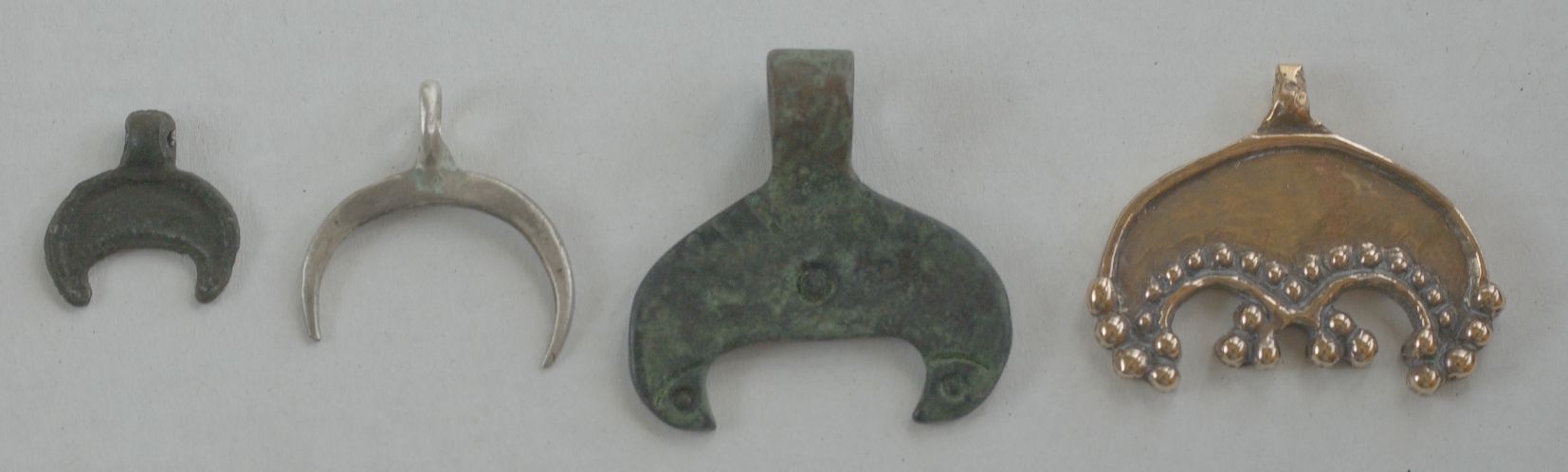
One of the most common shapes that we find in talismans all over Europe, the Middle East, and Asia is the crescent moon. This shape appears on seals that were used to print on clay tablets as long ago as 2300 BC, and even earlier than that in rock art. It is believed that the waxing and waning of the moon, along with the female menstrual cycles, the cycles of the tides, the movement of the sun, and the seasons were all tied together in ancient man’s perception of fertility, life, and death. We see the crescent used by groups as disparate as the Vikings, the Romans and the Hindus, just to mention a few. There are stylistic differences, but they are still all the crescent moon.

Here is an example of just some of the historical forms of the crescent moon. The two crescents on the left are both Roman, the next large crescent is Viking, and the far right crescent is Slavic. The Slavic crescent is a reproduction, but the others are all actual artifacts.crescents

And how about those Christian Fish that have become so popular in the last decade or so? Fish were a major fertility symbol in Egypt, and throughout the Mediterranean. If you place the fish head up, you get a vulva and uterus. Probably not what people were thinking of when they put those little fish on their cars.

The Maypole is a classic phallus. In Sweden you will see poles out in the countryside with a red top. The town signs in Bavaria often have a phallic element to the top of the pole, especially the ones that list businesses. What could be more important than fertility for your business?

Until recently, when people realized that birds could be killed by eating large quantities of uncooked rice, rice was commonly thrown at Christian weddings. This was done to insure the fertility of the union.

These are just a few of the more common historical fertility symbols that are found. There are thousands more. I hope that this brief discussion has made you curious about what other symbols you might be missing.

Would You Know a Fertility Symbol if it Bit You?

This topic might not be something that many of us think about much in our modern existence, but it is an important concept for those who study pre-1600 civilizations. And to be honest, it can be pretty interesting to investigate. There are probably literally thousands of different fertility symbols, but I feel that people should at least be aware of some of the more obvious ones and understand why they were so important. If you are offended by mater-of-fact discussions of body parts and sexuality, this would probably be a good place for you to stop reading.

Some fertility symbols, like goddesses, vulvae, and phalli are pretty obvious. It always makes me laugh when people ask about something that I am selling in my shop, and when I explain that it is a fertility symbol, they respond with something like “Oh, I don’t need any fertility in my life!” Really? You don’t want a raise at work, and un-expected gift, or a winning lottery ticket?

Modernly many people often think of fertility purely as animal reproduction, but in a culture based on natural resources, which most pre-1600’s cultures were, the best thing that could possibly happen was fertility. Without fertility there was no grain for people and animals, no fish to dry for the winter, no animal offspring, and starvation. In a pre-modern society there was no international aid organization to rescue your group if the crops failed.

And people understood where fertility came from – sex! So the exaggerated female form, the vulva, the penis, and testicles were natural representations of a desire for fertility. Good crops, a good sailing voyage, a good trading expedition, even a battle that was won, were all viewed as fertility.

The Roman legionnaires wore an interesting assortment of decorations that were shaped like penises and testicles on their gear. Some of them were very realistic and three-dimensional, but others were much simpler. This is an example of a Roman strap end.

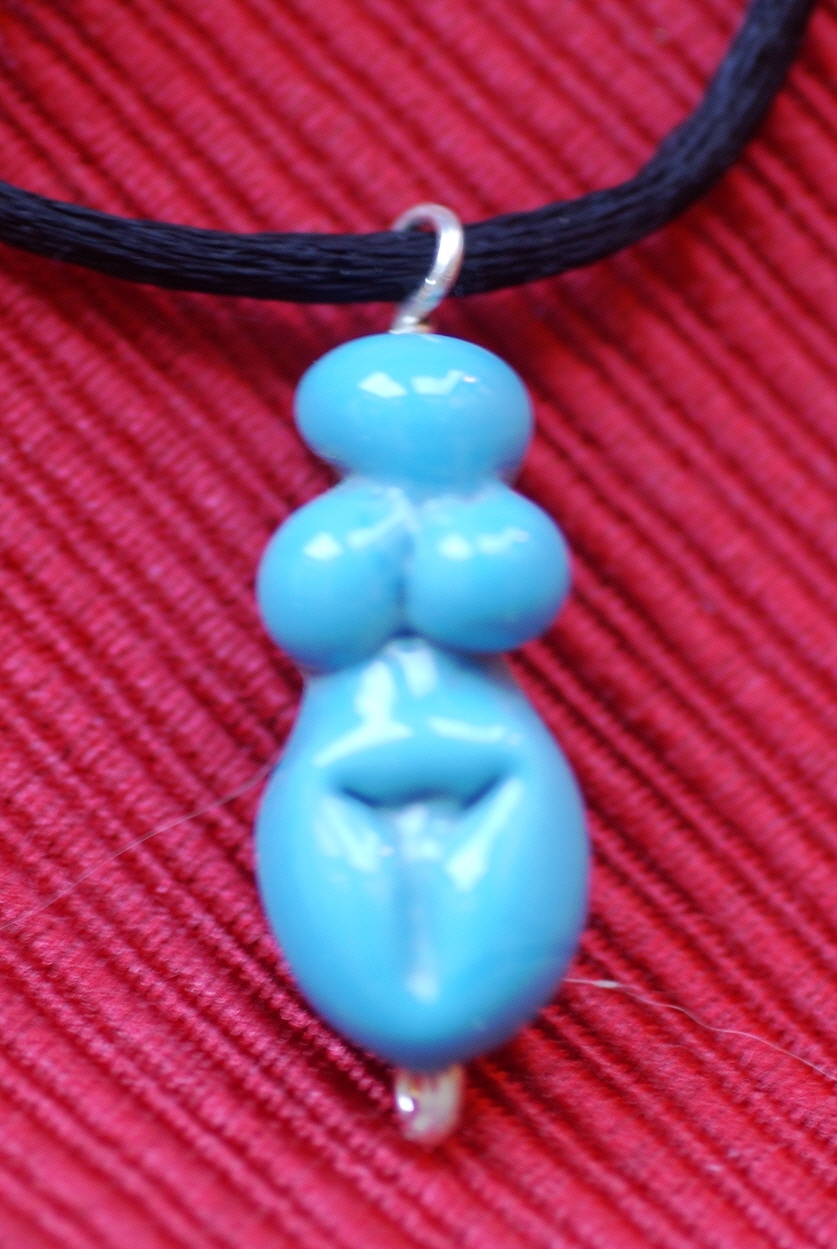
Roman Phallic pendantI am also perpetually amused by the “prude factor” in modern society. In a culture where everything from beer, to toothpaste, to cars, uses sex to sell their products, the matter of fact presence of a penis, or other sex organ totally freaks some people out. When I started making glass goddesses to sell in my shop, I actually had parents refuse to let their children in my shop because of the goddesses being there. A couple told me that they just didn’t want to have to explain them to their children. Now as this picture demonstrates, my goddesses are not exactly graphic content. I still sell them, along will any glass crosses, or phalli that I make, up on the counter, so that young children can’t easily see them.

etsy 76 close

So what else is out there that you might have missed? We will talk about that next time.