Event Strategies – Fun or Not?

The best SCA event that I have ever attended…Very Disappointed…

Well certainly these comments must be referring to two different events! Nope!

I often follow what is going on at events that I can’t attend because I am curious and I have friends there. And the variations in response to a recent event made me think about why folks were having such a different response, and what I might be able to do to give people a clue for happier future events.

All of the people that I was “following” are the sort who usually have a good time at events. They are not whiners, and they always find fun things to do at an assortment of events. But I was seeing some wildly different responses to the same event, and tracking down the issues was not initially straight forward. And then I realized what the biggest difference was – “hoteling it” vs. camping.

Now I have to admit, unless an event is happening at a hotel, I don’t usually prefer to “hotel it”. I like to get to an event, get my camp set up, and change into garb. I then stay in garb until it is time to break down and go home. At long events like Pennsic we almost always stay in garb when we go into town. We prefer the “immersion” approach to SCA camping.

So the people that I talked to were hoteling it, because they had flown to the event. When they arrived all they had to do was change into their garb and show up at the site. And they arrived on one of the first days of the event, when everyone else was in the process of setting up their camps and getting themselves organized for an extended camping event. So there was nothing to do. There were not a lot of things on the schedule to start with, and some of them were canceled because people had not arrived yet.

BIG CLUE! Check the event schedule. If you have any doubts about there being enough going on at the beginning of the event, then come a little later. If the schedules are not being published early enough for you to be sure what is on them, come a little later. Statistically there will be more happening in the middle and near the end of an event than at the very beginning. For instance, at past Pennsic Wars ordinary people were allowed on site on Saturday. A&S classes don’t start until Tuesday. So, if your main goal is to attend A&S classes, and you can only be there for a portion of the event, come later in the event. Now this may seem obvious, but if you are accustomed to mostly four or five day events, it may not be obvious. The shorter the event the more people tend to “hit the ground running”. Classes and activities start almost instantly, because if they don’t there will not be enough time for them.

Next Time: The Long Event Mindset

Pennsic Schedule

Lies My Docent Told Me: Part 4

So we have discussed improperly trained docents, bad labels, out of date digital collection entries, and clerical errors in digital entries. But where does this leave us as researchers?

Simply put, you have to educate yourself. The days of just accepting what we read in a book or see in a museum have to end. They really never should have existed, but before the internet researching really was a lot more difficult. It is our job as researchers to know at least the basic science behind the artifacts that we are looking at, so that scientifically based errors will jump out at us. and it is also our job to know as much as we possibly can about a culture so that mistakes relating to cultural artifacts will stand out. And believe me, I do know how difficult this is. When I am in the shop I often get questions about some fairly obscure cultures, and sometimes I really can’t be very helpful, but I don’t make up answers.

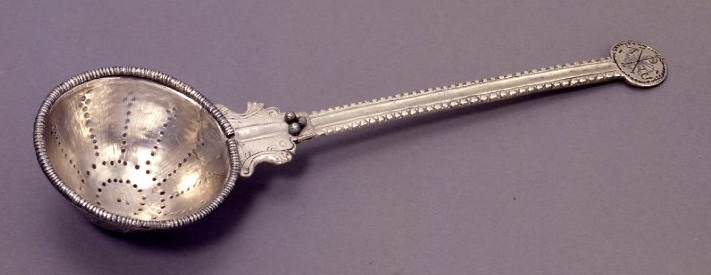
An excellent example of why you should try to know as much as you can about a culture and its neighbors comes from several articles that I had run across many years ago. They were all excited about a female Anglo Saxon grave in England. There were whisperings of magic, you know, the standard “high priestess” stuff that we usually see in Russian news articles from Siberia. Well, let me say that there are generally no specific items that instantly made the grave anything other than a high status grave. The single exception to this that I am aware of is the presence of an iron staff in Scandinavian graves. That is legitimately thought to be something of extreme significance. But getting back to our Anglo Saxon woman. She was buried with a “magic spoon and a crystal ball”. Now she really was buried with a crystal ball – literally a piece of rock crystal in the shape of a ball – as I recall it was about 1 1/4 inches in diameter and held in a crude silver suspension loop. These crystal balls were traded all over Europe and would definitely have been a prized possession. Could they have been used for magic? Sure, why not? But it is not something that we have anything factual about. But the clincher was the spoon – obviously used for magical rites. Umm, maybe, but if you had any knowledge of Roman culture you would have instantly recognized it as a wine strainer – designed to keep the chunks from the bottom of the wine container out of your glass. The Anglo-Saxon’s used them, too, and in fact there are a couple of wine strainer spoons with Christian words and symbols on them. In fact here is a picture from the British Museum of a nice wine strainer with a chi rho and the link to the artifact record.

Chi Rho wine strainer

Aside from education, you really have to keep good records of the research that you are doing. A lot of folks are now using Pinterest as a way of organizing photographs of artifacts that they find and want to keep a record of, but there are other ways to save information, including plain old Word documents. My oldest research is located in physical file folders in a filing cabinet, but most of my newer work is organized in Word documents in folders. Starting in November of 2014 I did a eleven part blog series called “Researching on the Cheap”. The series covered all of the tricks and hints that I could think of at the time to help people research online, and keep track of their results. Here is a link to the first blog in the series. If you feel that knowing how to do better research would be helpful, I highly recommend that you read the series.

I hope that this blog inspires you to question, and then seek correct answers. That is the best that any of us can do.

Carrying Coals to Newcastle!

“Carrying Coals to Newcastle.” Exactly what do I mean by that? Well, it may be a slightly obscure reference for many, but Newcastle was a major coal producing area of England. Therefore trying to import and sell coal there would have been a futile effort. But back to that in a moment.

For those who have known me for a while, my interest in the accurate reproduction of pieces of period jewelry and accessories comes as no great surprise. I have always been interested in history, and with a Masters in Anthropology with a specialization in Archaeology, accuracy seemed like a natural thing. I know that my art teachers were often confounded by my unusual questions and projects. Fortunately for me they were mostly concerned with me learning specific techniques and not with what I actually made. And many years later I am still working on adding new, and very interesting, items to my shop collection.

Since I actually make my living making historically accurate items that people want, I obviously listen to my customers about what they would like to see in my shop. Sometimes that feedback is very direct, emails, and people who actually walk into my shop and make requests. Other times people “vote” with their wallets, and I have to admit some of those “votes” over the years have really made me smile.

And some of that “voting with their wallets” is why hubby and I have discussed “Carrying Coals to Newcastle”. It would never have occurred to either of us that the items that I sell might not be available in the countries in which they were originally made. One of the first of those sales was the lady from Sweden who purchased my reproduction of a key from the Swedish National Museum. As a reenactor she wanted a key that was as close as possible to the original one in the museum. All she could find in Sweden was “charm” sized keys. Mine is within a millimeter of the size of the original.

Etsy 29

And then there was the gentleman from Norway who bought one of my plain cast silver Thor’s hammers. He wanted a plain, solid silver Thor’s hammer, and had not been able to find one.

And the lady from Greece who purchased a batch of my brass fibulae and was totally delighted when she received them – Carrying Fibulae to Athens?

And the dozens of batches of dress pins that I have shipped all over Europe, including to a British TV production studio. Really? No one there makes these?

At Potrero War, a gentleman that I see at several events every year informed me that he loves my stuff, but that he is always amazed at how little stock I have in my shop. Really? I will admit, it is not your typical crowded and cluttered shop, but that made me wonder. Just how many separate items do I usually have in my shop (not counting backstock)? And because it was a new shop layout, and I had taken good pictures, I was able to count! Over 523 separate items, with a pair counted as one, and ranging in size from individual bronze buttons to knights chains, and Viking swags to Medieval spindle whorls, and with absolutely no attempt made to count the hundreds of glass topped veil pins. That will just have to be good enough…for now.