Chains Part 6

Last time we talked about chain links that start out as figure 8s, and I said that my next area of focus would be on a capital letter B. Before I do that I want to share a picture of some links that I couldn’t find last week in time for the blog. These were purchased from an old collection of metal detector finds from the Balkans. They are supposed to be Medieval, which is plausible. The most poorly crafted chain in the batch is actually the forth down from the top. The links look like they were cut with a chisel (there is at least one double strike) and no attempt was made to make the ends of the links square. It reminds us that not all “old” craftsmanship was good (but that is still no excuse for lousy modern craftsmanship).
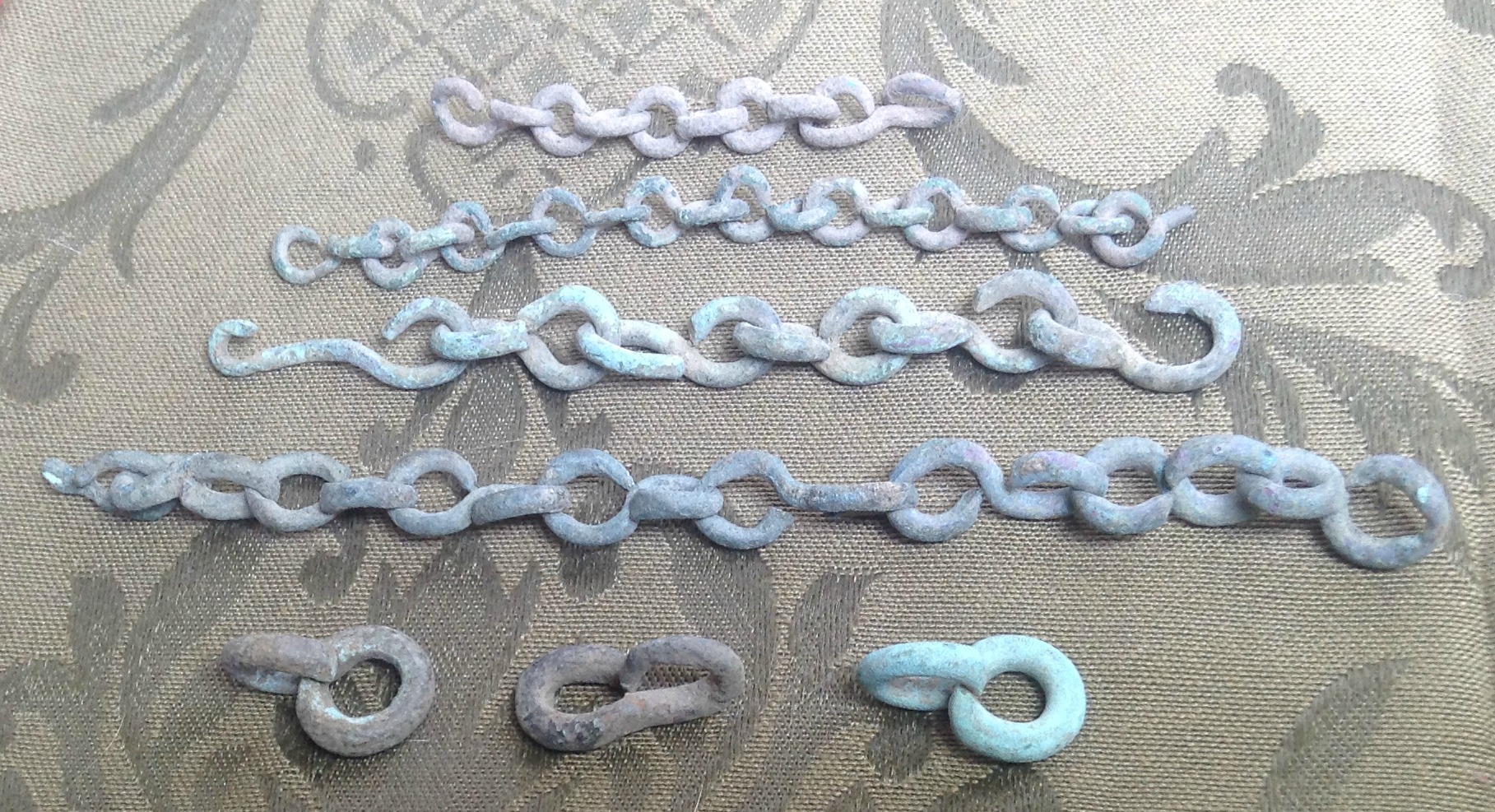
old twisted 8 links

I admit that another week of research on the topic of link forms has changed my mind a little. I have talked about this before. One of the dangers of continuing to do research in digital archives all over Europe, while writing blogs, is that sometimes you change your mind. A thing is not exactly what you thought it was. So in this case “B” is for bent.

Now “bent” may seem a bit obtuse, but imagine that you have made half of one of those last figure eight links that we talked about, and then instead of making the other half, you simply bent the remaining wire down in a gentle arch until it reached the bottom end of the formed bottom of the eight… confused? Here is a photo of some links to clarify. The top picture shows the links from straight down, and the bottom picture shows them from the side so that you can see how 3D they are. The figure eight link is the one that I mentioned. The link to the right of that shows what I mean by only making half of the figure 8, then the middle link shows the beginning of the bending process, and the forth link from the left shows the completed link. The link all the way to the right is the same link form flipped on to its side so that you can see the half circle clearly. Better?
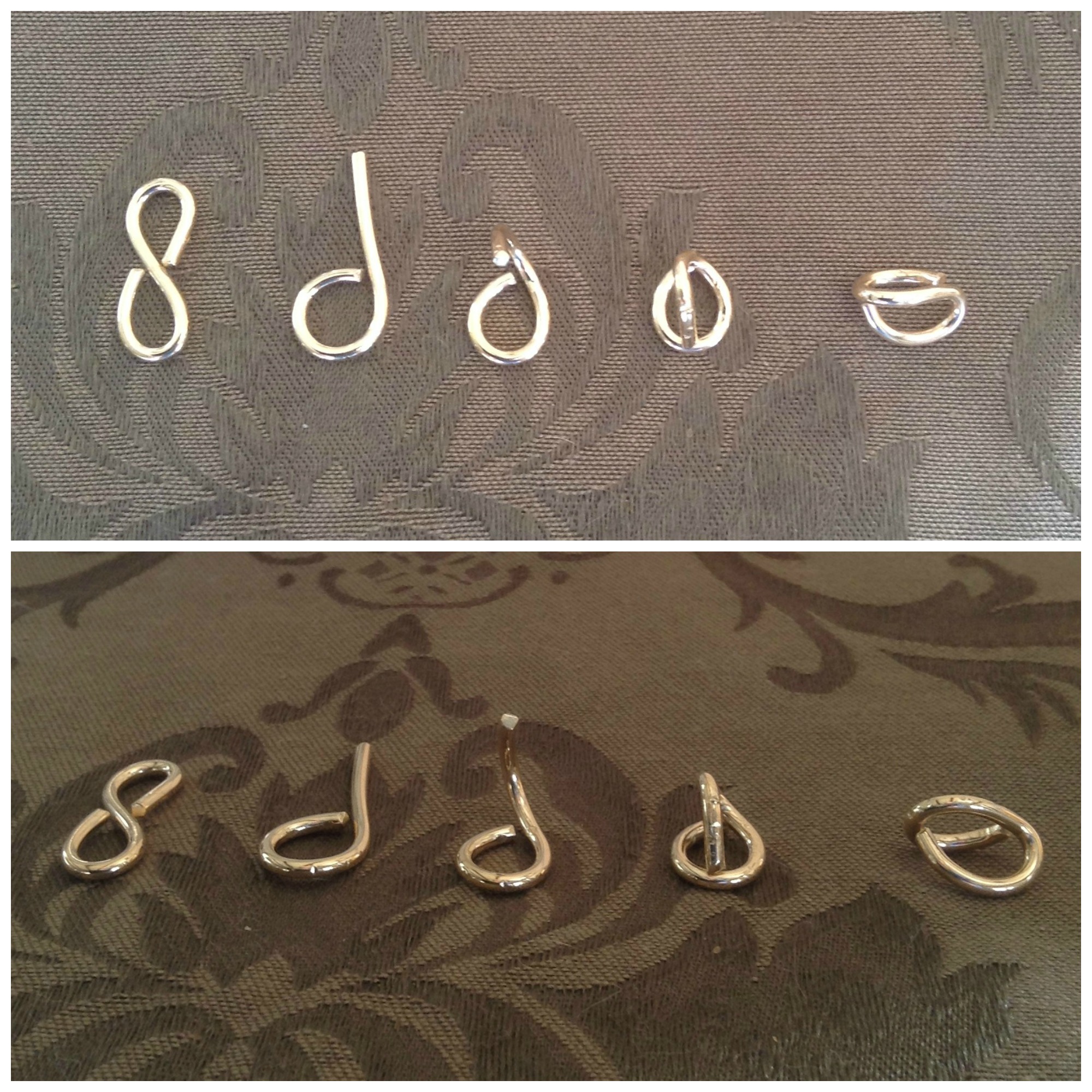
bent link collage

Take a look at the chains on this chatelaine at the British Museum. This 7th century Merovingian piece has three identical chains hanging from it. But if you look at the last link on the bottom of the center chain you can see exactly the form that I am talking about. It is half of an eight with the other end of the wire bent to form a half circle.

Now I think that this link form was one of the ones that really confused me when I first looked at it about five or six years ago. So I went in search of other similar links in other areas of Europe. I like to see how pervasive a form is, and how long we seem to find the form. Is it a local fad, or do we find it in a lot of places? I found several chains with the ‘bent” links in the Swedish National Museum, four from Gotland and one from Öland, and all from the Viking Age. I was trying to locate the museum’s technical definition of the Viking Age, since not everyone uses the same exact dates, but I couldn’t find it, so we will go with A.D. 793–1066. This picture has three pieces of chain, from the island of Gotland. If you click on the small picture it will bring up a bigger one. The top piece is a simple two in one link pattern, but the bottom two are both the “bent” links. The middle chain is particularly nice because the last two links on the left side are both slightly open, which allows you to see exactly how they were formed and put together.

I was still looking for a few more examples from other places in Europe, I am sure that there are more, it is just a matter of spending enough hours going through digital archives. At the last minute I found this piece from Germany in the Metropolitan Museum of Art. It is a Censor for burning incense, dating to the 12th Century. This close-up shows the form of the links really nicely.

And Next Time: A couple of other unusual, but not uncommon, link forms.
The Treasury 2nd Opinion Poll & Giveaway!

Back at the end of July we did our first opinion poll and reproduction artifact giveaway at The Treasury. We all had so much fun talking about the artifacts and what people would like to see happen that we decided to do it again. But this time it will be even bigger. So here are the rules.

  1. Take a look at the eight pictures and descriptions below.
  2. Choose two items: your first choice and your second choice for the items that you would like to see reproduced and available in the shop at The Treasury.
  3. Send me an email at eirny@eirny.com with the number of the two items that you want. Make it obvious which is which by saying something like first: # and   second: #
  4. The poll will remain open until October 31st. At that time I will count up all of the entries from the shop and from email, and your votes will have chosen two items. A winner will be drawn from each group of people who voted for the winning items. That winner will receive a reproduction of the original artifact for FREE.

And here are pictures and brief descriptions of the artifacts. If you have specific questions about any of the items, please contact me at eirny@eirny.com

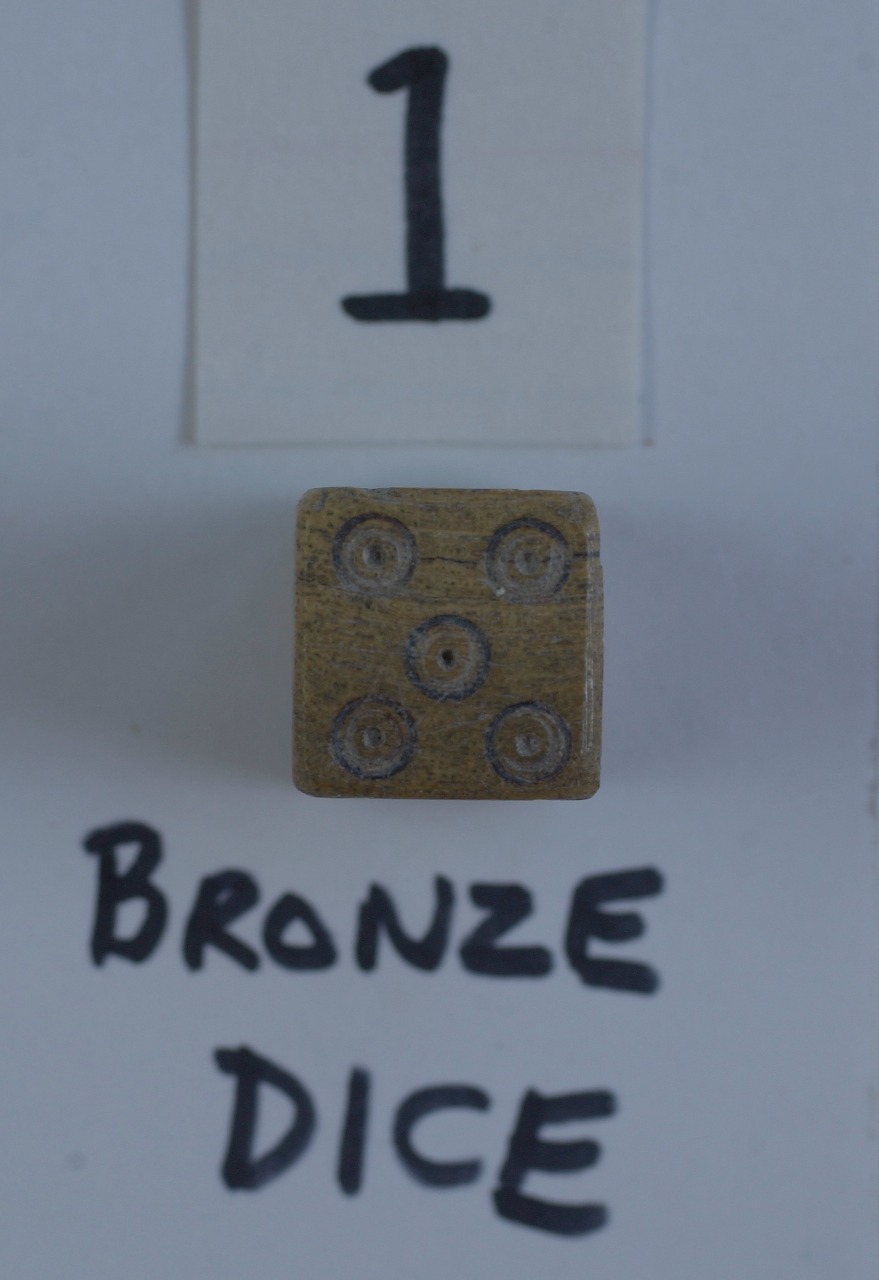
item # 1. A Bronze Dice. About 14 mm on a side.

Dice 1


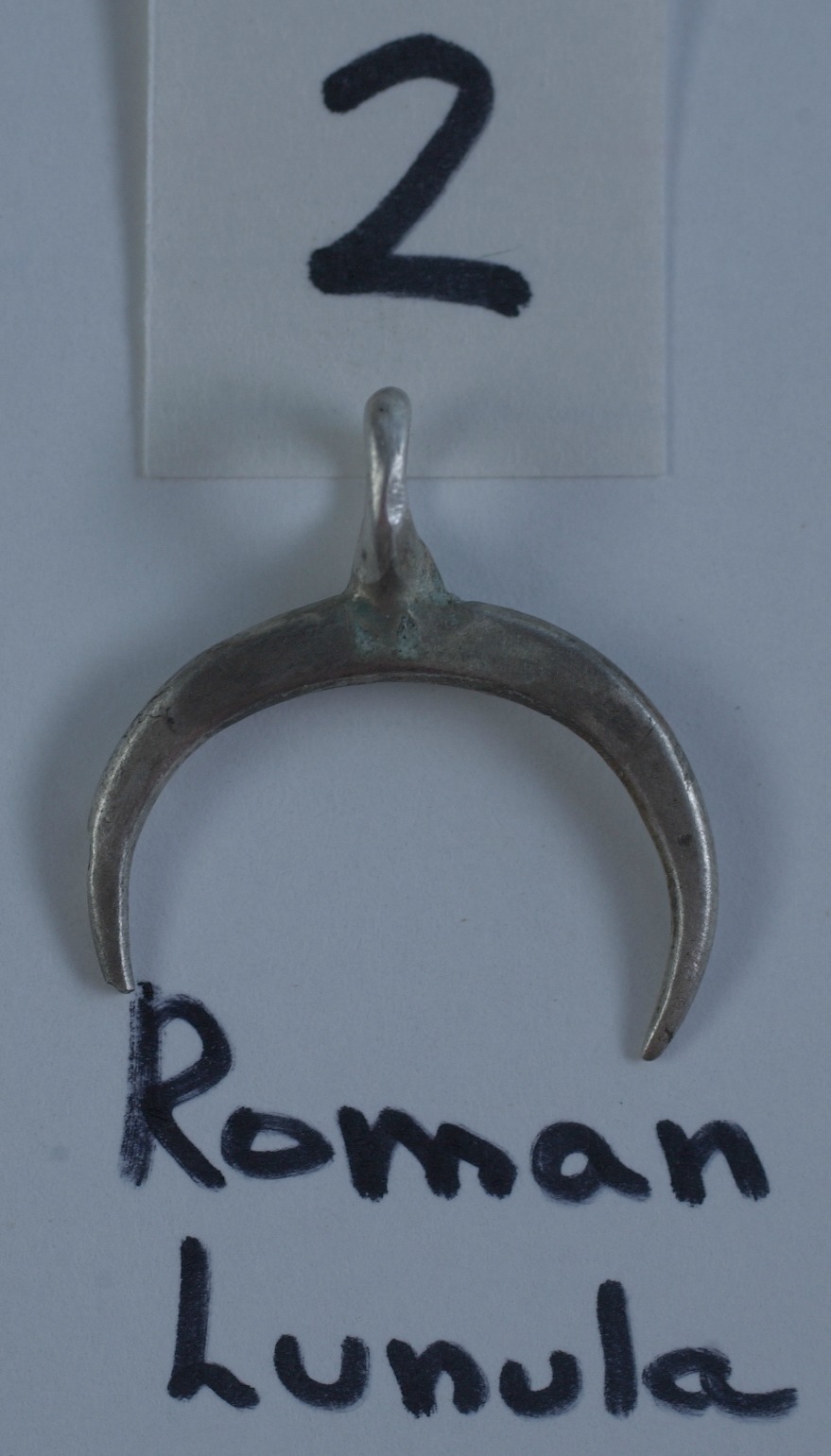
item #2. A Roman Lunula. About an inch wide by an inch tall. This artifact has been repaired, which is why it is a bit crooked. But I will fix that before I cast it.

Roman Lunula 2


item #3. Celtic Toggle. About 1 1/2 inches long. The round part of the toggle is about 1 1/8 inches in diameter. The toggle is about 1/2 inch high.

Celtic Toggle 3


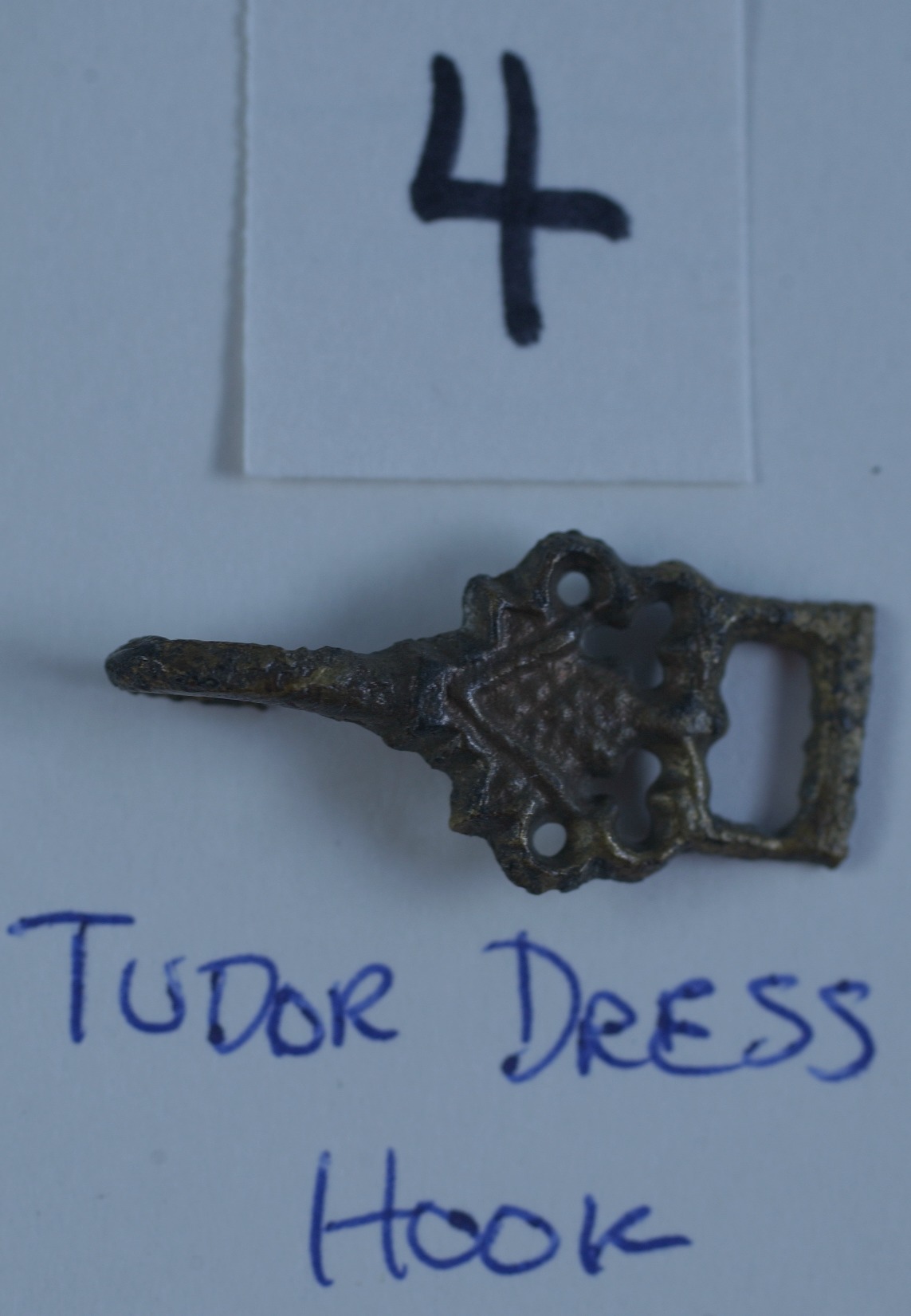
item #4. Tudor Dress Hook. About 1 1/4 inches wide and  a little less than 5/8 inches tall. This is a sharp hook and is not meant to be used with an eye.

Tudor Dress Hook 4


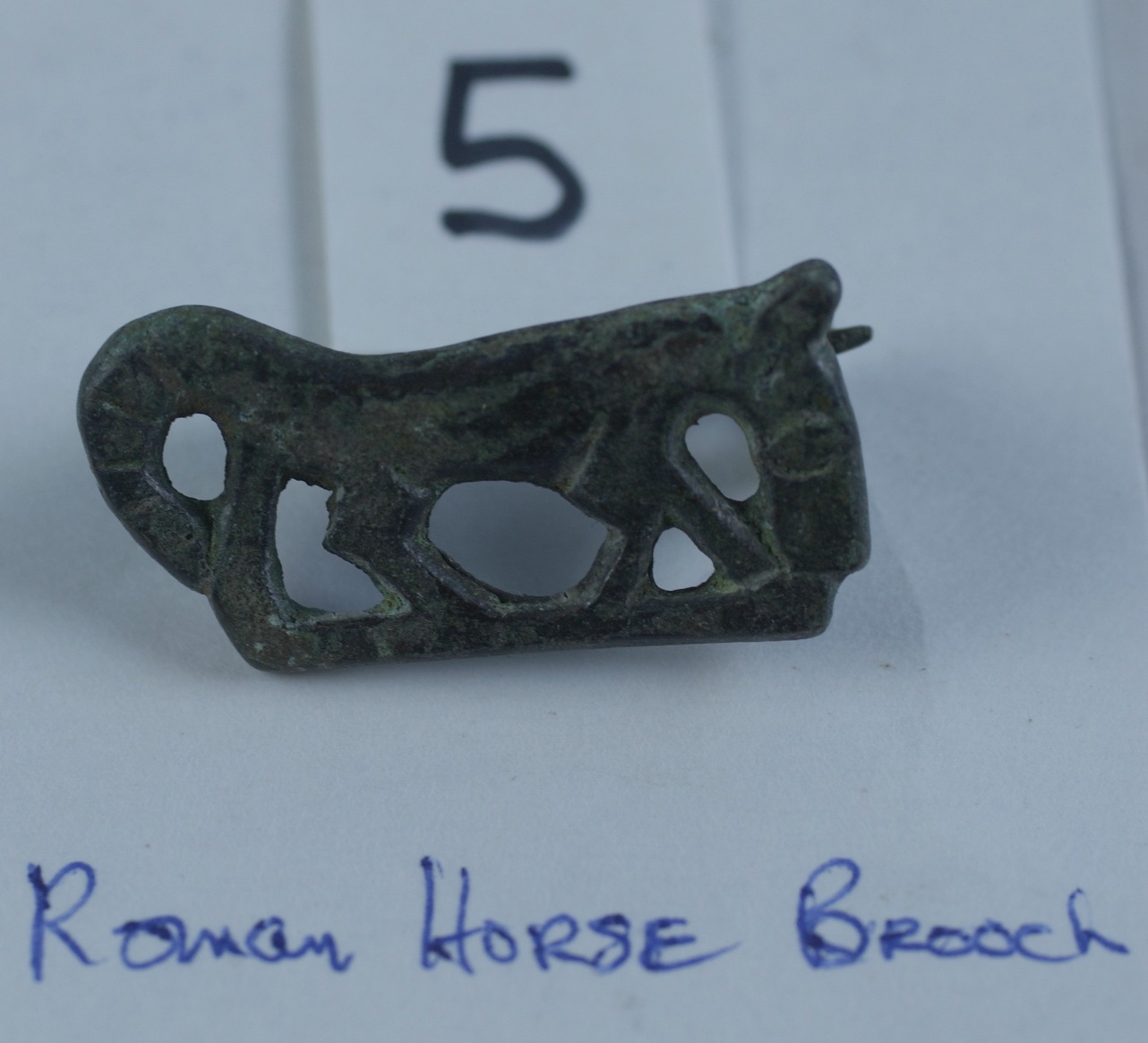
item #5. Roman Horse Brooch. About 1 1/2 inches wide and 1/2 inch tall , and 1/2 inch thick.

Roman Horse Brooch 5


item #6. A Roman Amulet. About 1 5/8 inches long and 3/8 in diameter at its widest. The horn like projections at the top are actually a broken loop. I will repair the loop in the cast piece so that it can be hung the way it was intended to be.

Roman Amulet 6


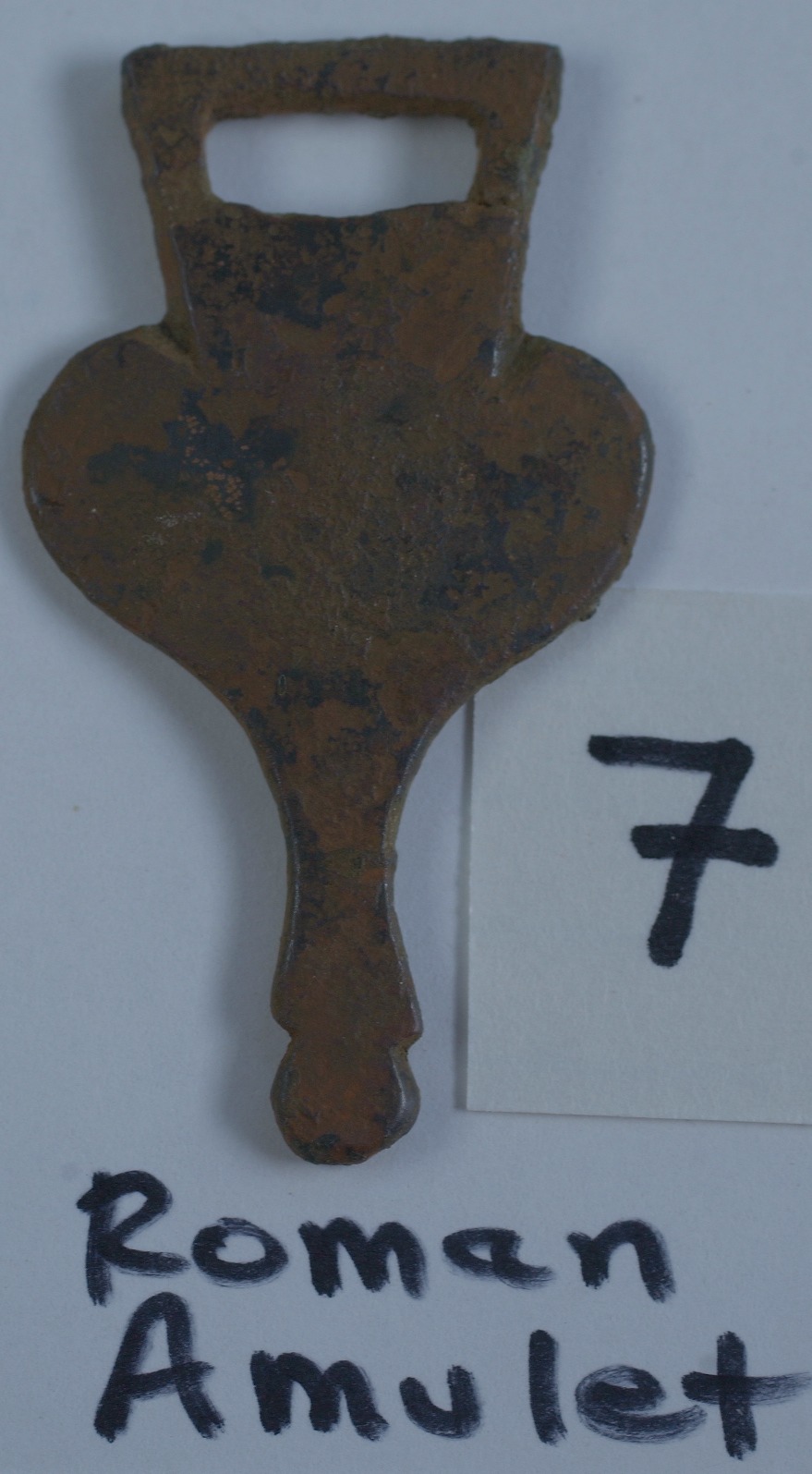
item #7. A Roman Amulet. About 2 1/8 inches long, 1 3/16 inches wide, and 1/16 inches thick. This would make an excellent strap end.

Roman amulet 7


item #8. An Enameled Tudor Button. About 5/8 inches in diameter. The light patches on the flower are actually white enamel. The shank on the back of the original button is broken, but I will repair that in the casting.

Tudor enameled button 8


Don’t forget to vote! Two of these items will be cast in bronze, in my shop in November, and two people will win a FREE reproduction artifact.

Would You Know a Fertility Symbol if it Bit You? Part 2

So last time we discussed some of the most obvious fertility symbols. If you are offended by mater-of-fact discussions of body parts and sexuality, or you really don’t want to know about what some of our commonly used modern symbols meant in the old days, this would probably be a good place for you to stop reading.

**********************************************************

And then there are the slightly less obvious symbols of sexuality. I look back with amusement at the dishes that I grew up with as a child; my mother would probably have tossed them out if she realized the actual symbolism behind them. They were cheerful painted plates with large roosters in the middle. The rooster being a common fertility symbol throughout most of Europe and Asia, and one that the eastern Europeans and Slavs were particularly fond of. Modernly most people would probably tell you that it was a good luck symbol. But think about it, have you ever watched a rooster in the barn yard jumping the hens? He is the ultimate symbol of the virile male, along with the bull of course, which was a very popular symbol of strength and fertility in groups as disparate as the Picts and the Minoans.

The Mano Fico or figa is a symbol for the female genitals – a fist with the thumb thrust between the index and middle fingers. This good luck symbol was used by the Etruscans and later the Romans. It can commonly be seen in Medieval Italian and Spanish portraits, particularly portraits of children and babies. The best and most efficacious amulets were carved from coral, which had additional protective qualities. This portrait of Anne of Austria as a child is an excellent example of the use of protective amulets in art, and includes a black figa on her belt.

One of the most common shapes that we find in talismans all over Europe, the Middle East, and Asia is the crescent moon. This shape appears on seals that were used to print on clay tablets as long ago as 2300 BC, and even earlier than that in rock art. It is believed that the waxing and waning of the moon, along with the female menstrual cycles, the cycles of the tides, the movement of the sun, and the seasons were all tied together in ancient man’s perception of fertility, life, and death. We see the crescent used by groups as disparate as the Vikings, the Romans and the Hindus, just to mention a few. There are stylistic differences, but they are still all the crescent moon.

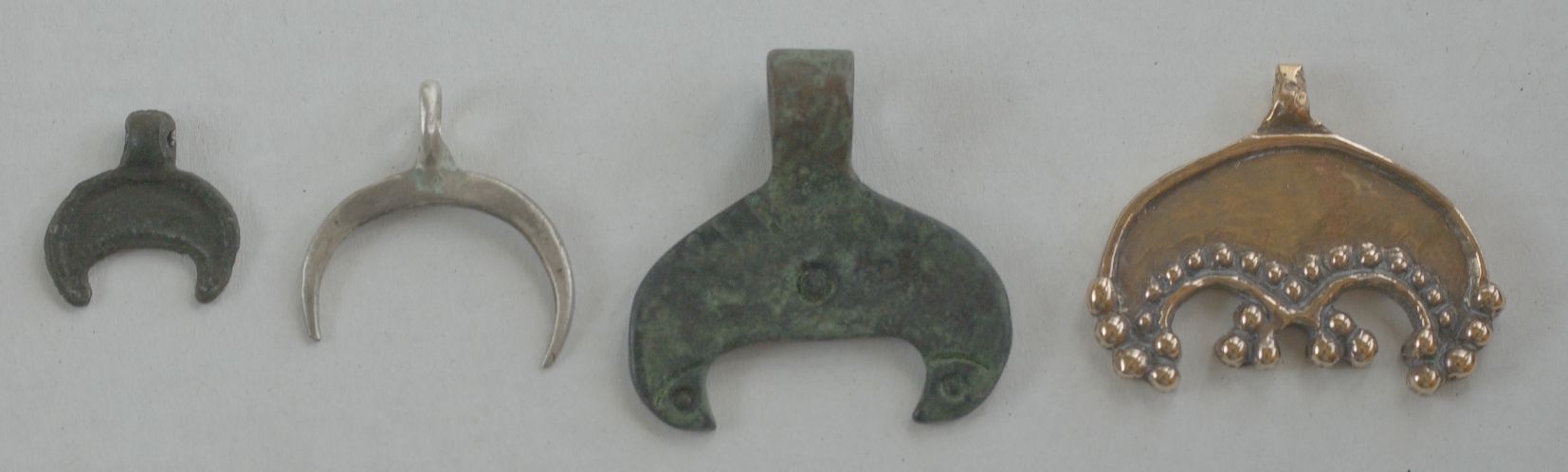
Here is an example of just some of the historical forms of the crescent moon. The two crescents on the left are both Roman, the next large crescent is Viking, and the far right crescent is Slavic. The Slavic crescent is a reproduction, but the others are all actual artifacts.crescents

And how about those Christian Fish that have become so popular in the last decade or so? Fish were a major fertility symbol in Egypt, and throughout the Mediterranean. If you place the fish head up, you get a vulva and uterus. Probably not what people were thinking of when they put those little fish on their cars.

The Maypole is a classic phallus. In Sweden you will see poles out in the countryside with a red top. The town signs in Bavaria often have a phallic element to the top of the pole, especially the ones that list businesses. What could be more important than fertility for your business?

Until recently, when people realized that birds could be killed by eating large quantities of uncooked rice, rice was commonly thrown at Christian weddings. This was done to insure the fertility of the union.

These are just a few of the more common historical fertility symbols that are found. There are thousands more. I hope that this brief discussion has made you curious about what other symbols you might be missing.