
Eating Well When You Camp

About a dozen blogs ago I wrote an article on canning cookies. Well, having just returned from a weekend camping trip today, the issues of camp food, convenience, sanitation and comfort are all uppermost in my mind.

The trip was a success. A comfortable, convenient, yummy, success. We ate six meals on site, plus yummy snacks, and no one spent a huge amount of time in the kitchen. How? Planning! Let’s look at what we had and then discuss why we had it.

Friday lunch was chicken salad, cold cuts and cheese, homemade and store bought cookies, and plenty of drinks.

Friday dinner was a simple barbeque: burgers with all the fixings, an industrial sized container of purchased potato salad from a discount store and a big sheet cake (birthday) for one of our members. And of course lots of cookies and drinks.

Saturday Breakfast was pancakes, with syrup and butter, bacon, omelets, granola and yogurt, and of course birthday cake, and drinks.

Saturday lunch was more chicken salad, cookies, and drinks.

Saturday dinner was pulled pork BBQ in sauce, with rolls, cookies, and cake and drinks.

Sunday breakfast was pancakes, granola and yogurt, muffins, the last of the birthday cake, and drinks.

Now, I admit that I had absolutely nothing to do with the production of most this food. It was made by two other families, that volunteered to take care of me at the event so that I could do my job there. I supplemented what they provided with a few items of my own. But the techniques are ones that I use all the time when I am doing the cooking.

So, analyzing what we ate. The chicken salad was mine. I cooked the chicken, made the salad at home, boxed it up in waterproof containers and tossed it in the cooler with lots of ice. The salad is made with diced apples, walnuts, chopped Craisins, mayonnaise, sour cream, and chopped chicken. I always make sure that the chicken is handled VERY carefully, cooked well, chilled immediately and only made into salad once it is cold. The cold boxes of chicken salad go in a pile of ice. The waterproof containers ensure that it will be salad and not “soup”. Ice from a cooler is often NOT clean so it is very important to keep the melted ice water out of all food items. When you buy containers for use in your cooler make sure that they say “waterproof”. Most normal containers will leak. Sterilite makes a set of containers with snap top lids that ARE waterproof and come in a large number of sizes. Always be sure that your boxes are properly maintained – no cracks, damaged seals, etc.
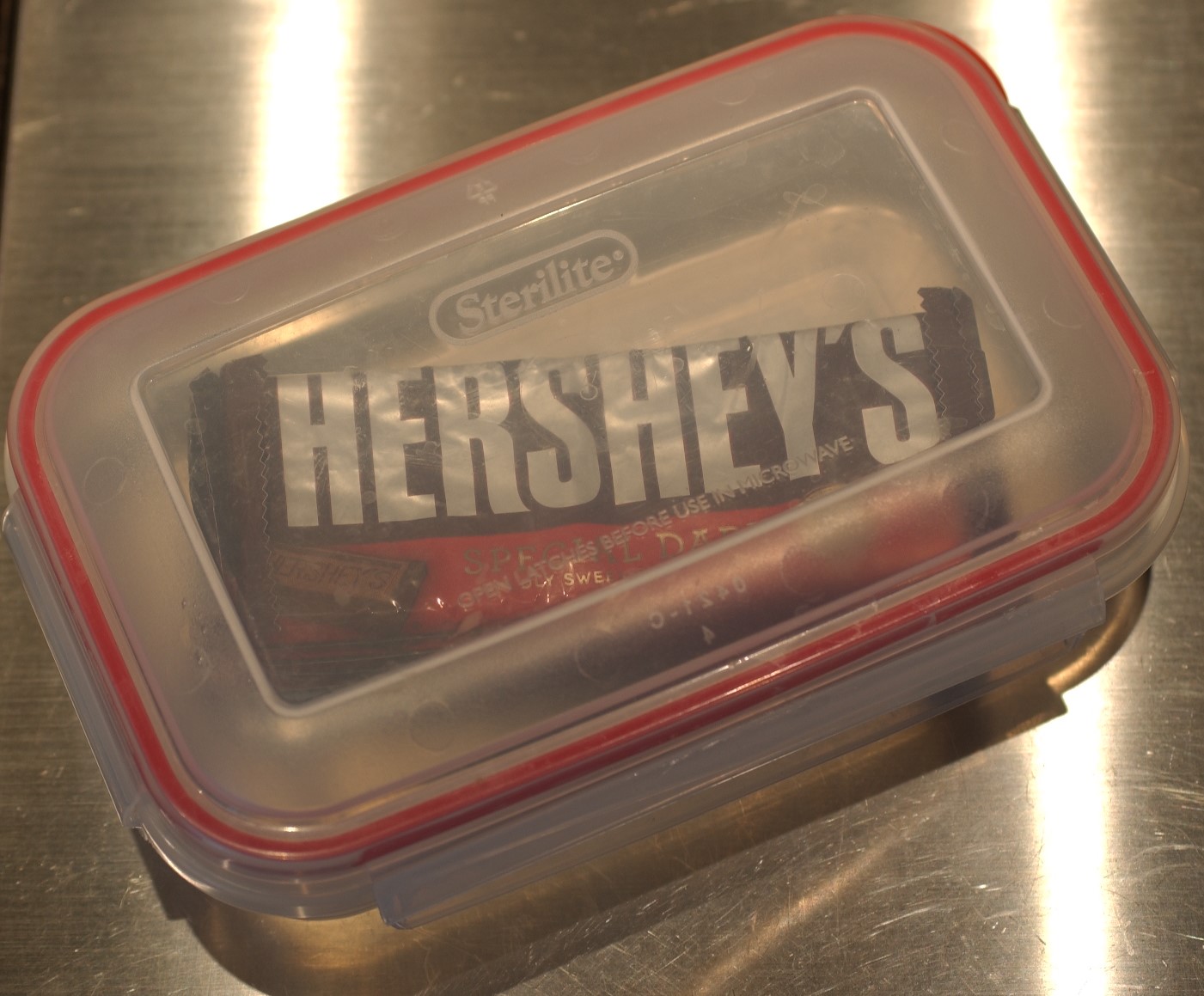
Snap Top

Let’s talk about drinks for a minute. You will see me mention that over and over. I live in Arizona. Drinking lots of fluid is an important part of staying healthy. My most important drink is water. I will also carry lemonade, iced tea, V-8, fruit juice, and occasionally a soda. Yes, I carry alcoholic beverages, but I don’t even count them as part of my regular intake because some of them can actually help you become dehydrated. I almost never go any distance from camp without a bottle of water, and yes I do the same thing in Pennsylvania or Mississippi, too. Camping is thirsty work.

Next time: Why the BBQ on Friday Night?

Eating Well When You Camp: Canning Cookies

We have been camping for a very long time. For the last seven years we have been going to events as merchants. One of the biggest challenges is cooking meals while running a shop. So how do we get good, home cooked meals without spending a lot of time cooking at war? We cook at home.

Today’s blog is about the ultimate cheat. Canning cookies.

Now that may sound totally wacky, but it actually works beautifully. We had the idea several years ago when we cooked for a Medieval feast and produced a ridiculous number of extra cookies, called Shrewsbury Cakes. The original recipe, from “A Delightful Daily Exercise for Ladies and Gentlewomen, by John Murrell (1617), states “you may keep them halfe a yeare  but new baked are best.” Well, OK. So if they were keeping them for a long time “back then”, we should be able to do the same thing today.

Going back to our general knowledge of food and food storage, we were aware that oxygen, heat, bacteria, and bugs are the biggest dangers for most food storage.

We own a vacuum sealer that we use for freezing the veggies from our garden. The sealer comes with a special attachment that allows you to vacuum wide-mouth canning jars. The jars keep the cookies from being crushed and they keep the cookies fresh.

This picture shows my basic set-up – ready to go!

canningcookies1

First you need the wide mouth canning jars. They MUST be large mouth unless your vacuum sealer has an attachment that will allow you to vacuum other sizes.

The jars must be clean AND COMPLETELY DRY. You do NOT want to add moisture into the cookies.

Place your canning jar lids in a pot of hot water. I usually put my pan on simmer and when it starts to bubble I turn it off. The water keeps the lids hot until I need the lids. This heat softens the built in gasket on the lids and allows them to seal securely to the jars.

Pack the cookies carefully into the jars, being sure that they do not stick up above the top edge of the jar. Make sure that there are NO crumbs on the top edge of the jar – crumbs will prevent the jar lid from sealing correctly.

Pick up a hot jar lid (I have a special lid lifter with a magnet on the end that allows me to avoid burning my fingers), dry the inside of the lid CAREFULLY with a CLEAN paper towel and put the lid on the top of the jar. Place the vacuum sealer attachment on the jar, attach the vacuum line, and follow the instructions for your machine to vacuum seal the jar.

Here is a picture of my vacuum machine in action.

canningcookies2

When you are done, the jar lid should be “stuck” in place on the jar. Put a twist band onto the jar to keep the jar lid in place, and label.

And the final results!

canningcookies3

I actually don’t know how long cookies will last when canned. Mine have never lasted more than six months, because we ate them. Shrewsbury cakes are actually a type of shortbread, which is a VERY stable type of cookie, but I have also canned oatmeal raisin and chocolate chip cookies. Experiment with your own recipes to see what works best for you. Drier cookies, generally work better than high moisture cookies. DO NOT store your jars in the sun – this will cause moisture to come out of the cookies and promote spoilage.

I hope that this blog gives you some ideas about how you can have better quality food for camping events, or even just keep cookies “in stock” at home.


When is the Last Time You Had Something to Drink?

When you are camping with friends, what is the most common greeting that you give them? Well, should you ever camp with or around our household, the most common greeting will be “When is the last time that you had something to drink? And when was the last time that you peed?” Now this may not sound very polite to the average modern person, but to the camper dealing with larger amounts of heavy labor than they usually engage in, and those dealing with warm outside temperatures, these are very important questions. It is easy to just be working along, chatting with friends and setting up camp, and forget to drink. And even if you are drinking a considerable amount of liquid, if you don’t have to pee then your body is probably sweating the water out instead of “sending it through”.

In my every day existence I am a fairly heavy drinker of water. We live somewhere that can be quite warm and dry in the summer, and since we are off the grid, we do not have air conditioning. I also engage in a fair amount of heavy labor, as well as warm activities, such as metal casting.

In the winter we keep a cool house (we both grew up in New England and prefer cooler houses), so some percentage of time I drink hot liquids, like tea or hot chocolate. I learned a long time ago that some of my desire for “munchies” was actually a bodily call for more fluids, so drinking non-caloric liquids like water and tea (I drink mine black) solves this problem. It also forces me to get up from my chair periodically when I am writing or doing research to use the facilities.

I rarely drink sodas. They make me thirsty and I do not need the amazing number of calories that a normal soda contains. I am allergic to nutra-sweet (Aspartame) in all of its forms, and I don’t like the taste of most alcohol sugars or artificial sweeteners – they taste very “chemical” to me. This means that any soda that I drink has to be “sugared” (in most cases it is actually corn syrup). I usually save my soda use for during camp set-up when I have simply run out of steam and need a pick-me-up to be able to finish the project.

What about “sports drinks”? Medical science tells us that many of these drinks are really not very good for us – too much salt and sugar, and totally unnecessary for your average sedentary urban dweller. But we always carry some when we camp. The “wisdom” that we learned as newbies in the SCA was that if Gatorade tastes good then you need it!

In addition to liquids, it is important to consider how much salt is in your diet. The average American diet contains waaay more salt than most medical professionals recommend that we consume, but when I know that I am going to be dealing with heat and hard work I often choose snacks like salted nuts or pretzels. I sweat a lot, and I am aware of that fact. If you are leaving salt rings on your shirts you need to consider a salty snack.

I hope this brief missive helps remind you of the importance of drinking liquids the next time that you are camping or working hard.