Memento Mori: Reflections on Mortality

This article was originally written as a handout for those wishing to understand more of the details of the Memento Mori in Medieval Europe.

*************************************************************

“Memento Mori” is a Latin phrase that is translated as “Remember you are mortal” or “Remember you will die.” It is used to refer to art, including jewelry, paintings, literature, and musical compositions which focus on the concept of mortality. The phrase appears to have originated during the classical period in Rome. Roman generals parading in victory through Rome were reminded by a slave that they were mortal and could fall from grace at any time. (If you are a Mel Brooks fan you may remember this scene from the movie History of the World, Part I.)

In the Middle Ages, the large number of deaths caused by the Black Death (Bubonic Plague) and wars inspired a Cult of Death that was often visible in jewelry and art work. This art almost always includes a skull, a skeleton, or a coffin. Tombstones often included a skull or sometimes a complete skeleton. This was supposed to remind friends and family members that they would die someday, too, and should therefore live their lives in a fashion that was good for their souls. Virtuous living would ensure a place in heaven instead of an eternity in hell.

Another interesting manifestation of the Memento Mori is the use of natural materials to represent blood. For instance, heliotrope cameos have naturally occurring red flecks in the stone. These flecks were used to represent blood in images of Christ with a crown of thorns. This material became very popular with Italian Renaissance cameo carvers.

Commonly used pieces of jewelry, such as Rosaries, rings, and pendants are among the types of jewelry found in Memento Mori. The pendants were usually worn on long chains, but they could also be pinned to a lady’s bodice or sleeve. Men also wore pendants pinned to their clothing or their hats. One of the most famous pieces of this type of jewelry is the Tor Abbey Jewel from England. This pendant includes a complete enameled gold skeleton in an enameled coffin. Rosaries using skulls as “counters” – either “Aves” or “Our Fathers”, or having a single skull as a pendant were also popular. Some elaborately carved wooden Rosaries included entire scenes in their “Our Fathers”. These scenes were hidden inside “beads” which could be opened to reveal the scene within.

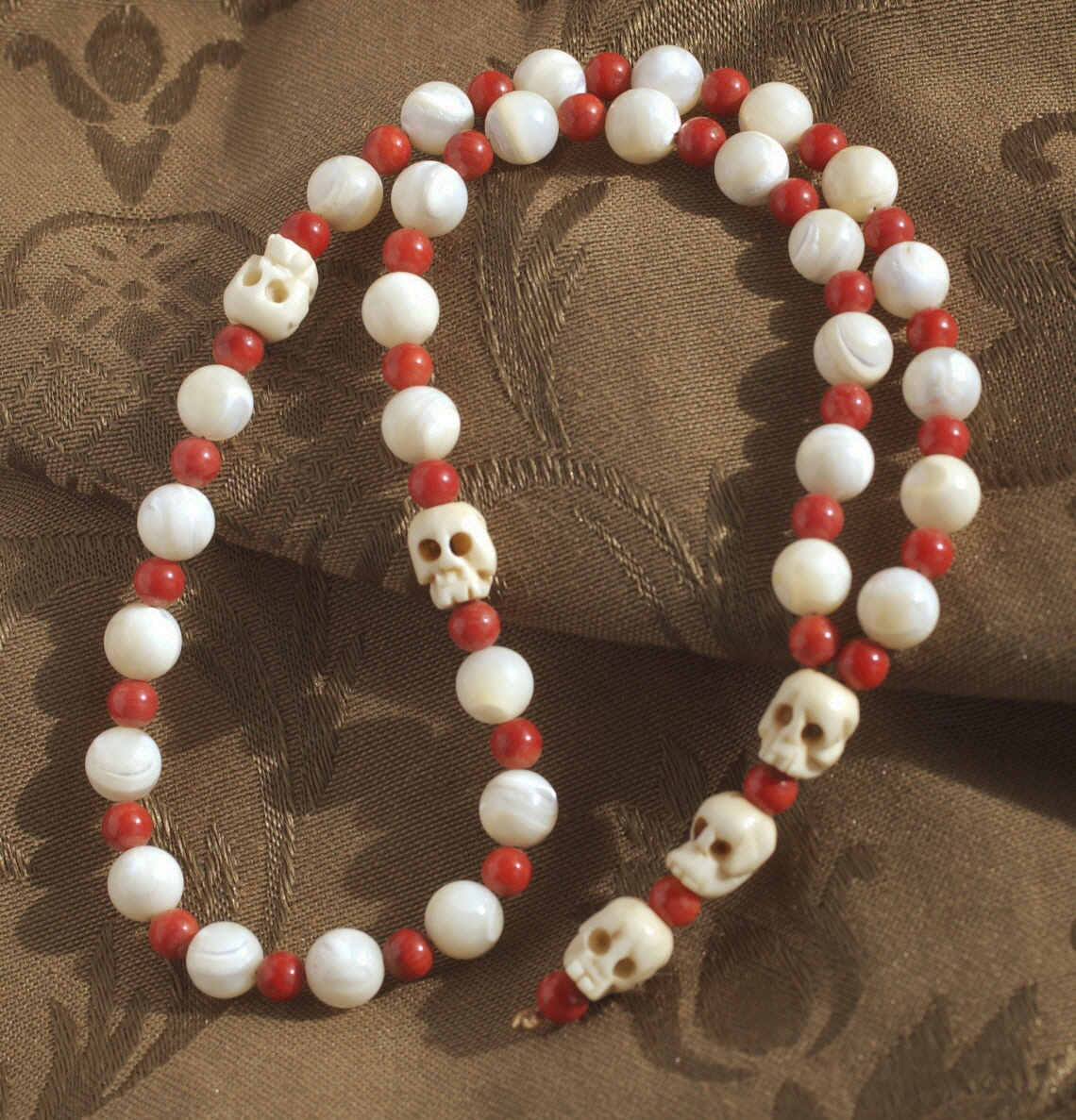
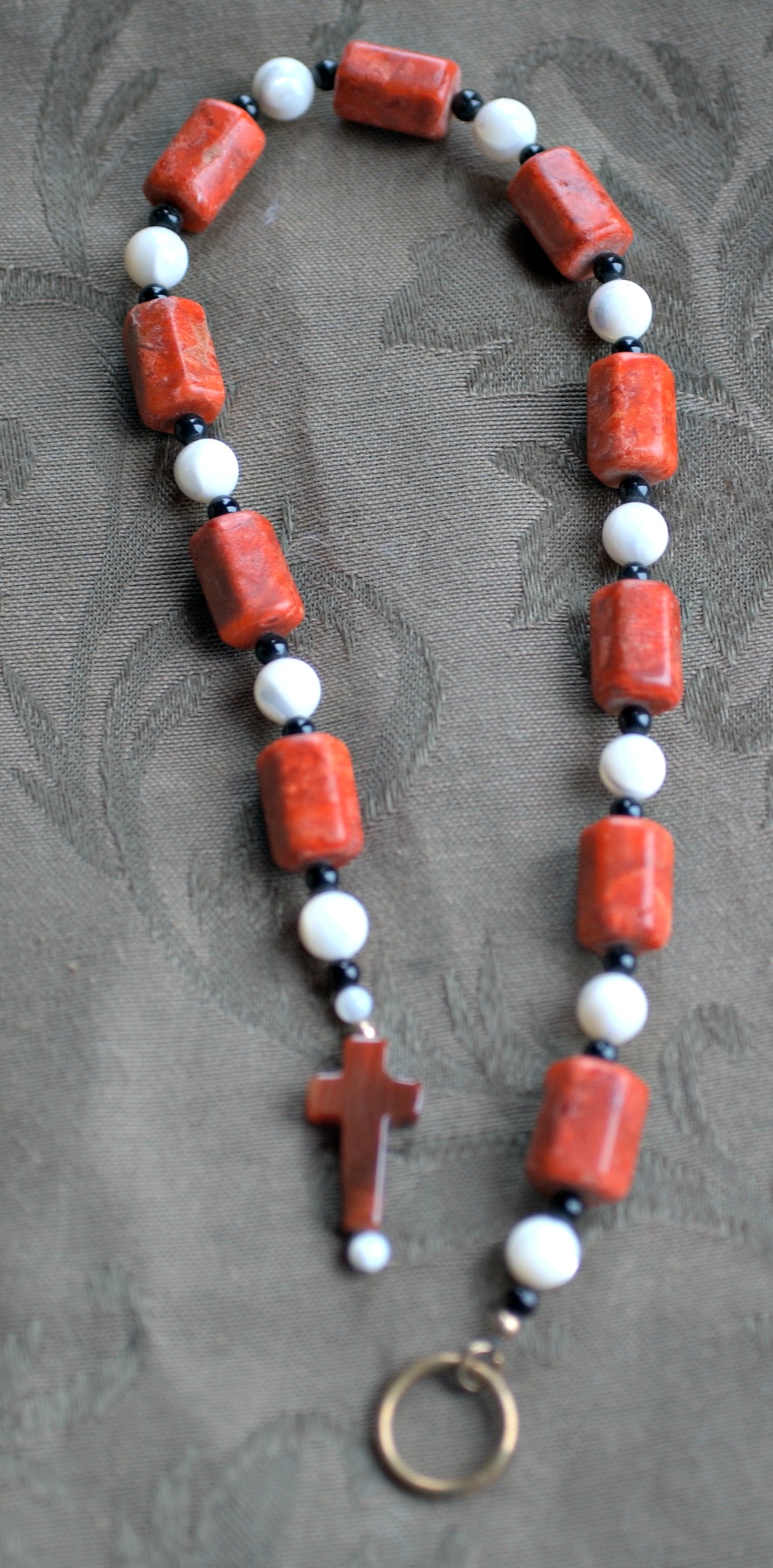
Here are a couple of examples of Memento Mori style Rosaries. First we have a three decade Mother of Pearl and Coral Rosary with white bone skulls.

Etsy 155


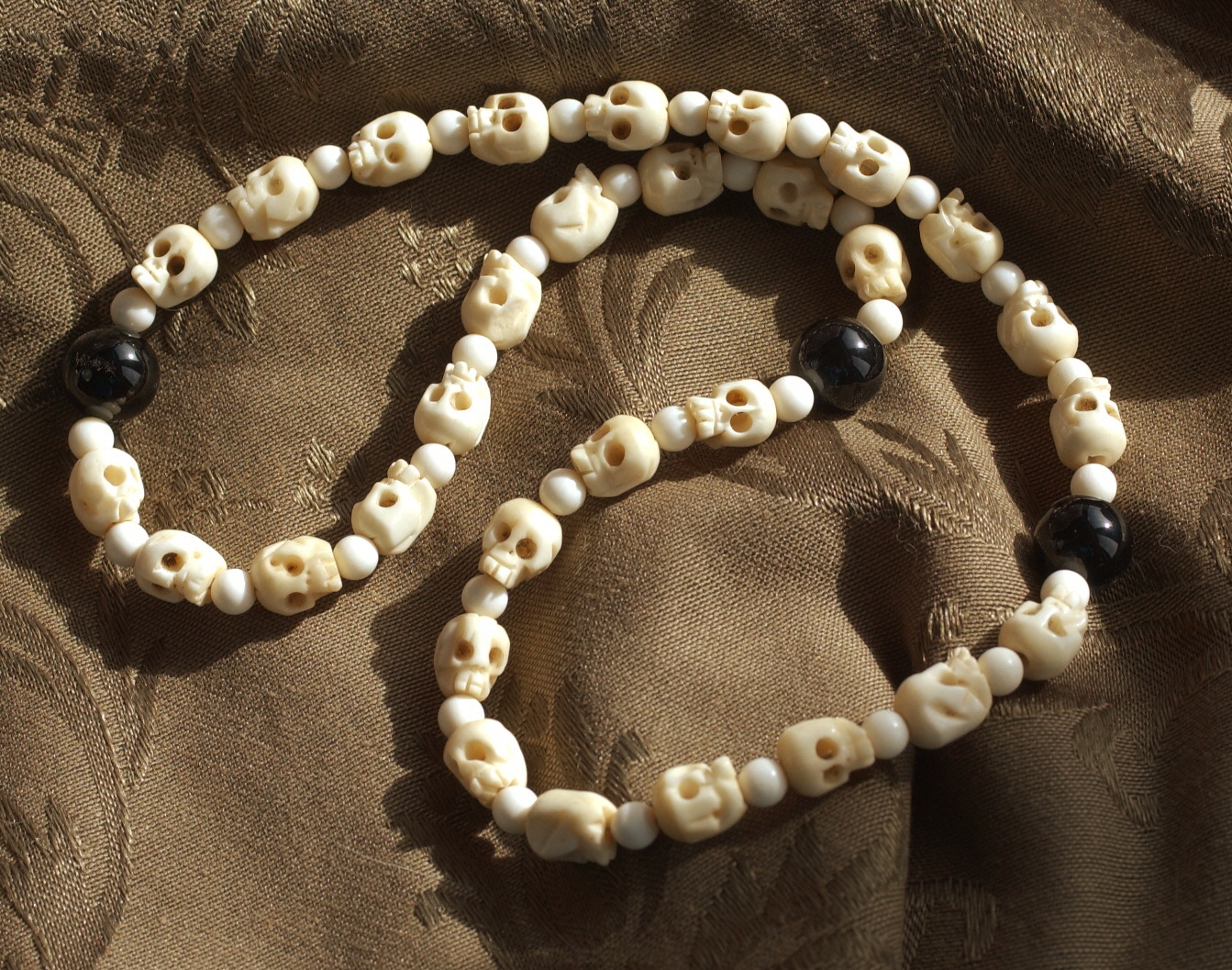
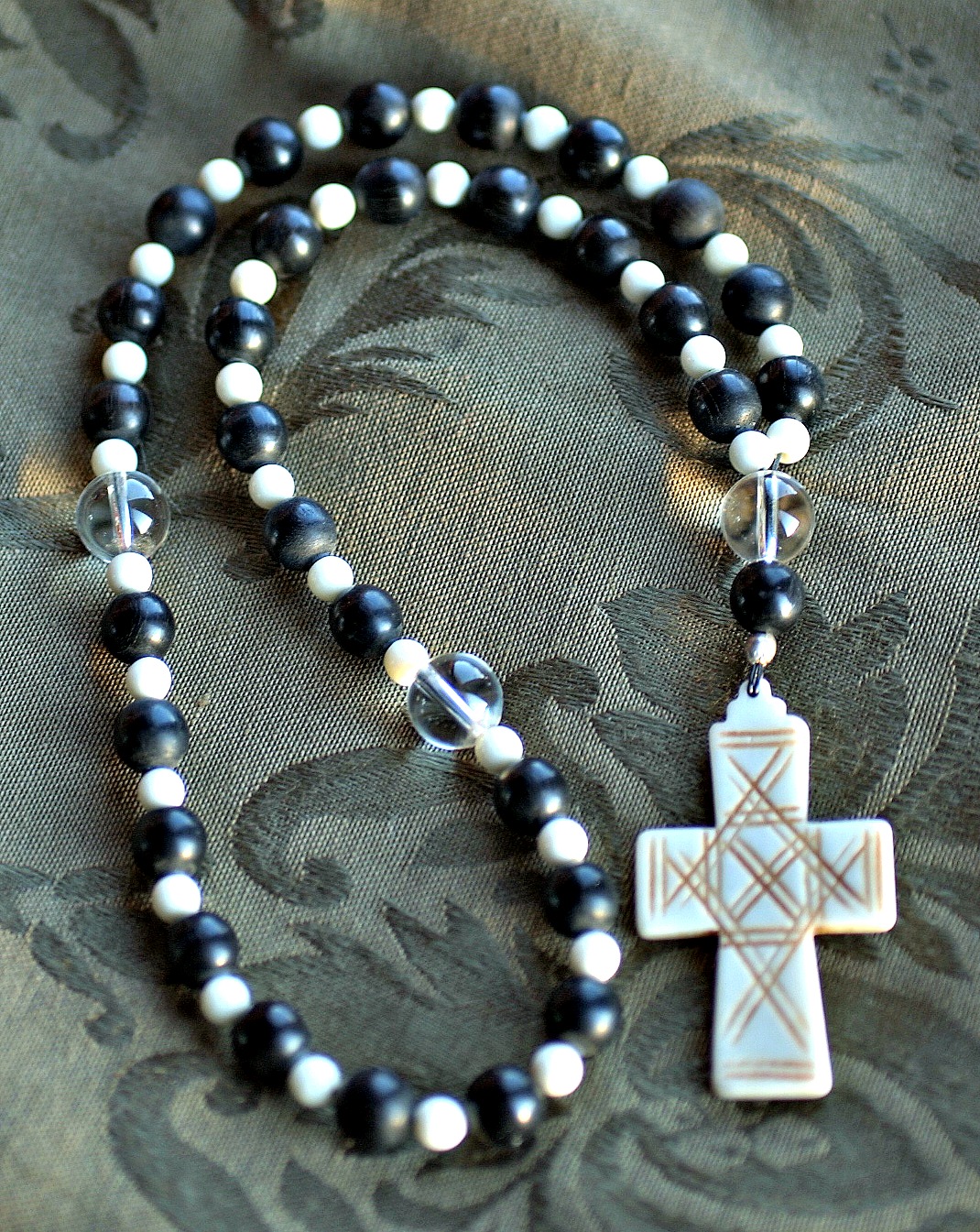
This three decade Rosary uses white bone skulls for the Aves and Black Onyx Beads for the Our Fathers.

Etsy 156

Funeral or Mourning Jewelry is sometimes included in the concept of Memento Mori, but this jewelry is usually focused on a particular individual. This form of jewelry became particularly popular in the late 1700’s. A lock of the dead individual’s hair was sometimes included in the jewelry. During later periods, most notably the Victorian Age, hair jewelry became an important art form of its own.


Medieval Feasts – Setting the Scene

Feasts are often held in locations that are chosen for convenience – the cost, the quality of the kitchen and parking availability are often of much greater concern than the décor of the location. One of our Medieval group’s favorite locations for larger events is the local National Guard Armory. The cement floor is indestructible enough for armored martial arts combat, there is a decent commercial kitchen available, the bathroom facilities are enough for a fairly large feast, and there is adequate parking around the building. But…the walls are white cement block, with bulletin boards, and permanently attached pictures of commanding generals and government officials. We are permitted to remove the ¾ life-size freestanding recruiting posters of female MPs with rifles and perfect eye makeup, but much of the remaining décor is immovable and far from Medieval. So what could we do?

I was fortunate, in my early years in the Society for Creative Anarchronism, a Medieval reenactment group, to have been present for the transformation of a room. The site was a High School in New England. The classroom had white cement block walls, ugly industrial drop ceilings, linoleum floors and a stack of desks and chairs. The room, ironically enough, was a theatre arts classroom, and I like to think that they would have been fascinated by the transformation that occurred. Chairs and tables were pushed to the end of the room and free-standing partitions made of wooden poles in stands and painter’s canvas walls were installed, creating a room within a room. The canvas walls had been decorated with paintings in the form of reproductions of illuminated manuscript pictures. The floors were covered with Persian rugs. A hidden boom box provided soft renditions of Medieval music and the final touch – candle lanterns, allowed the drop ceiling to disappear into the darkness. It was a stunning vignette created, almost as it would have been on a real stage.

Because of my experience with room transformation I knew what we could do to improve the décor at the Armory. So I gathered my volunteers and the process began. First I located copies of Medieval woodcuts and other Medieval pictures that were public domain. We purchased the nicest medium weight painters’ tarps that we could locate. The tarps were taped to the wall in our home workshop, and a digital projector was used to project pictures onto the canvas. I then traced the pictures with black magic markers. The canvases were then passed off to other people, who painted the pictures, adding color and dimension to my lines. Three canvases were completed with authentic Medieval pictures and one of our members painted a collection of mythological beasts on another. Another one of our members offered the use of a “fake brick wall” – simple bricks printed on plastic sheets. The “brick wall” was placed behind the head table and bedecked with the banners belonging to our group and our neighboring group.

M3361S-3034


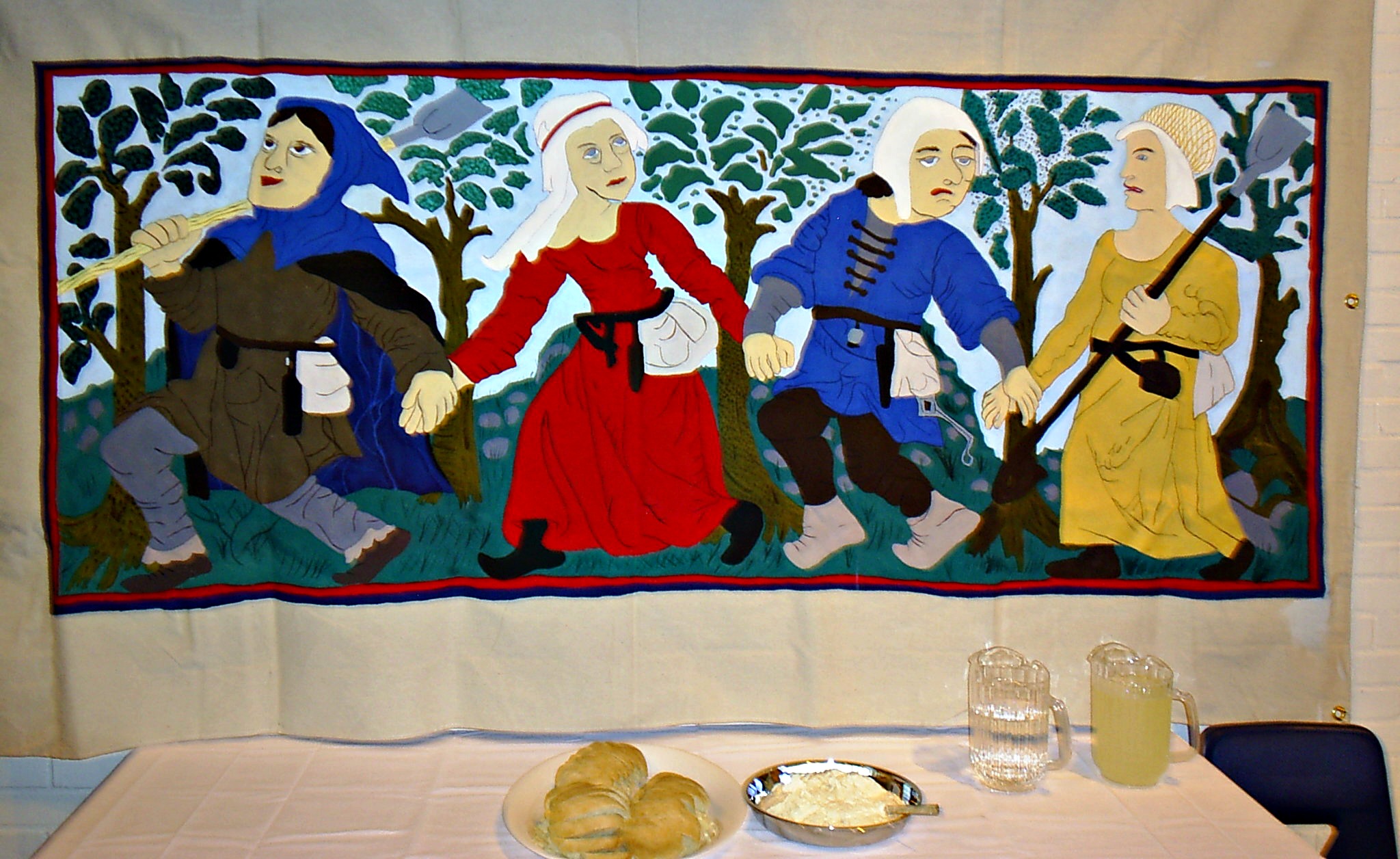
We then used the painted canvas walls to cover the most annoying décor. The dancing peasants covered the wall immediately above the snack and dessert table. If you are wondering what is one the table the answer is a tray of homemade bread, a bowl of homemade soft cheese, a pitcher of ice water, and a pitcher of homemade lemonade.

M3361S-3034

The Italian Musicians covered a bulletin board.

M3361S-3034

Mother Nature and the Harvesters bedecked another wall.

M3361S-3034

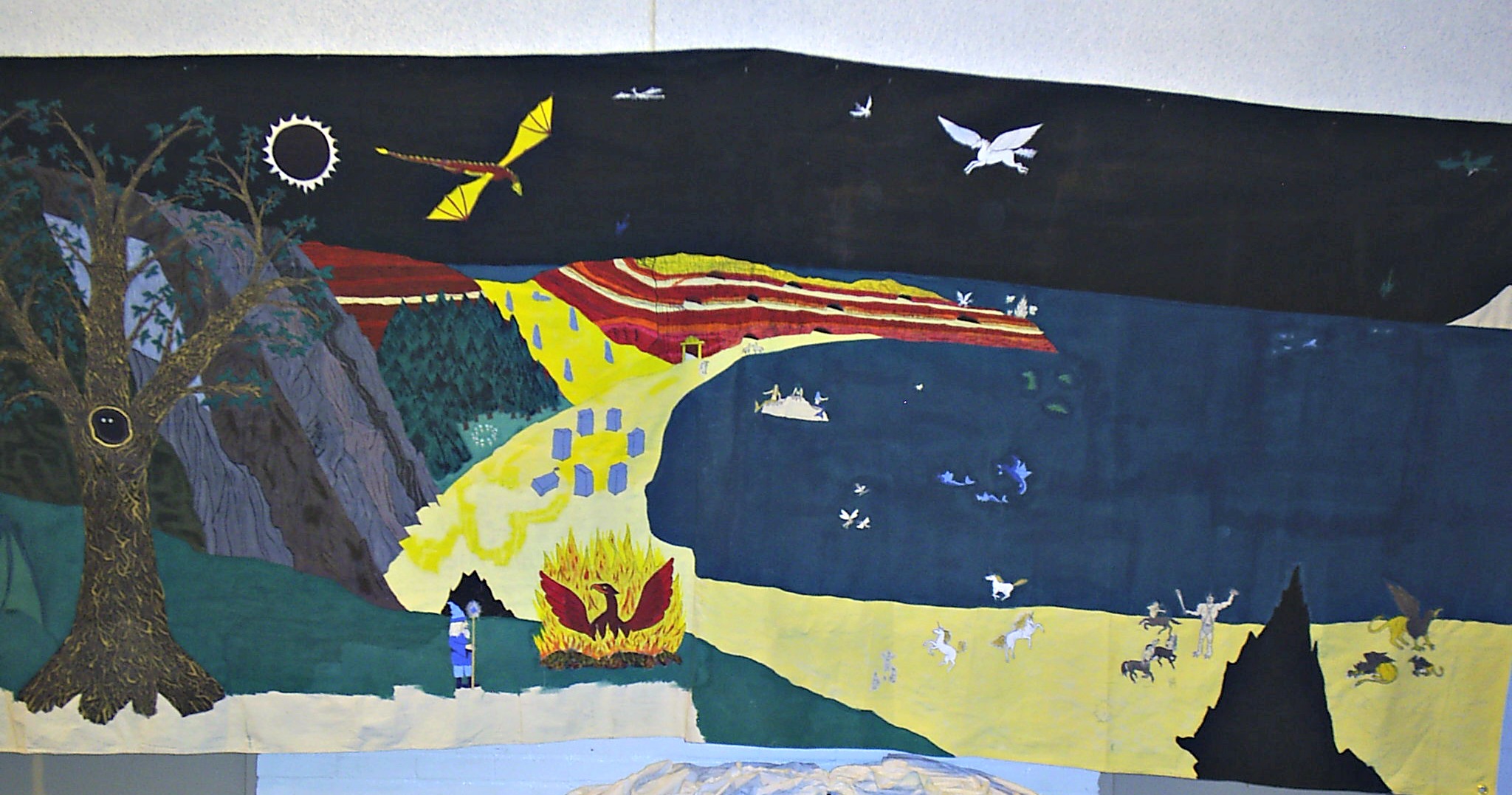
And a collection of mythological beasts covered another bulletin board.

M3361S-3034

Our goal is to eventually have enough canvas panels to cover as much of the walls as we want to. One of my next projects will be to choose cooking and hunting scenes to add to the collection. Many of the tapestries that I saw in museums in Europe contained hunting scenes and there are some excellent cooking scenes in the Lutrell Psalter. I am also considering some architectural panels – canvas panels with castle walls and arched doorways painted on them.


Prayer Beads – a Summary of Their Use Prior to 1600

I originally wrote this article as a handout for reenactors specializing in pre-1600 personas. It focuses on the time frame of the Middle Ages and is intended as a brief reference for aiding in persona development and costuming. In cultures where religious behavior is an important part of your participation in the society, understanding what sort of religious equipment your persona would have owned, displayed, and used is an important part of developing and dressing your persona. I have since written a much more detailed book “Prayer Beads for My Persona – Part 1: Christianity”, but this article remains a good basic resource.

*************************************************

Prayer Beads have been used through the centuries by most major religions. The use of counting devices seems to appear whenever a religion decides to use the repetition of prayers as part of their rites. Prayer beads simplify the process of counting and remembering prayers, and they have the advantage of being portable.

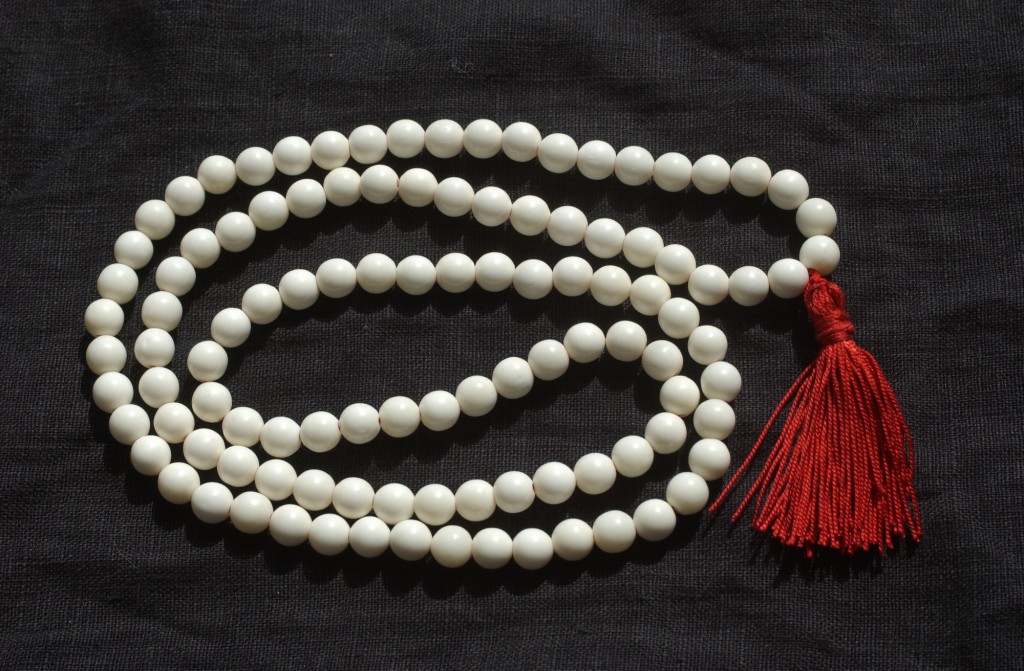
Hindus may have been the first major religion to use prayer beads, known as mala, as early as 8BC. Modernly there are two major branches of Hinduism, Shaivism and Vishnuism. Shaivists, who are devotees of the god Siva, carry strings of 32 to 108 beads, made from the seeds of a specific plant. Vishnu mala usually have 108 carved wooden beads made from the sacred basil shrub.

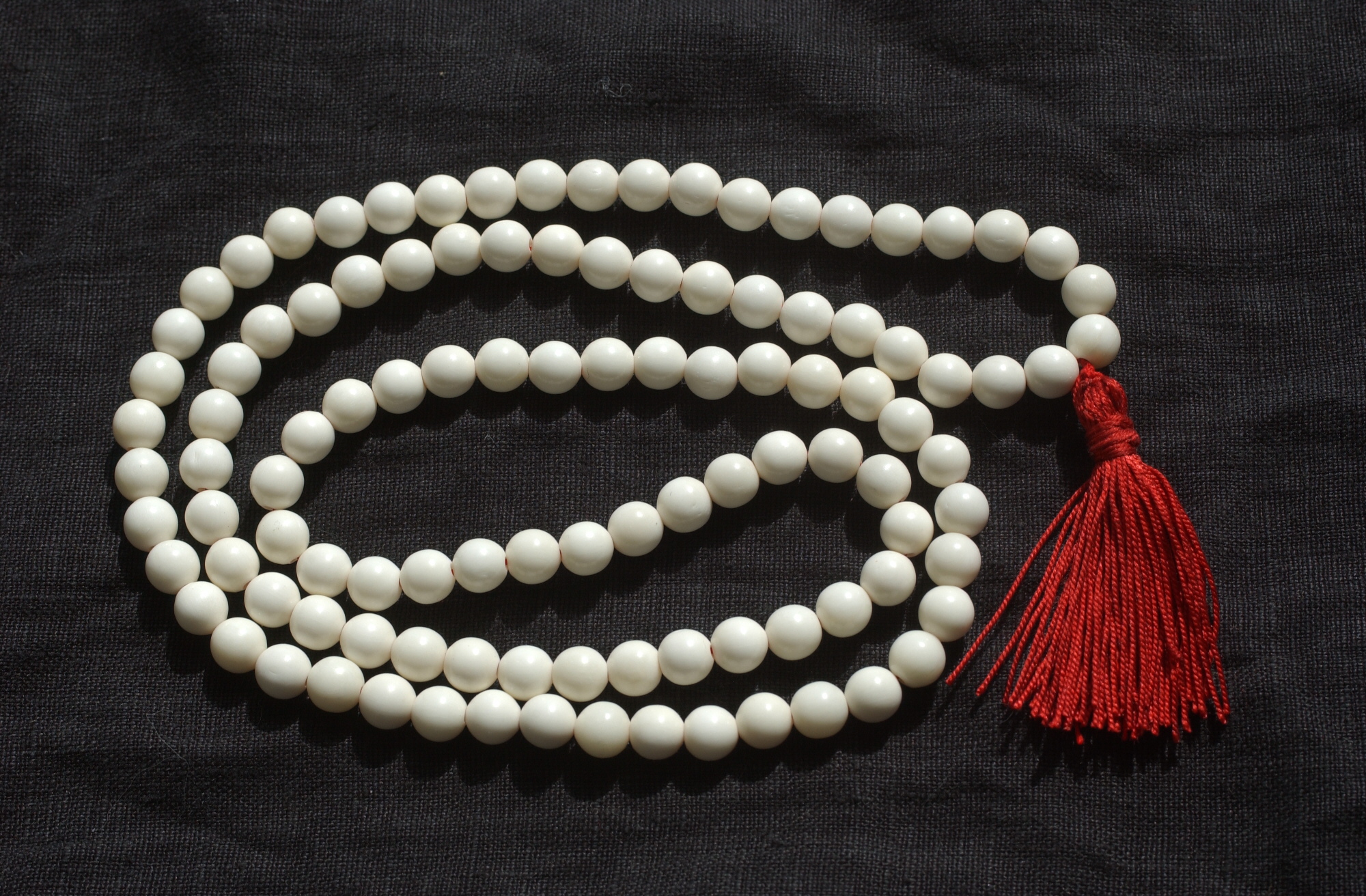
Buddhist prayer beads are also called mala, and usually consist of strands of 108 beads, one for each of the impurities or lies that one must overcome in order to achieve Nirvana. The long malas are usually only worn by monks, ordinary people usually wear only 30 or 40 beads. The beads were originally made from the wood or seeds of the sacred Bodhi tree, but as Buddhism spread throughout Tibet, China, Korea and Japan, new materials such as bone, amber and semi-precious stones became common.

The basic mala.Etsy 31
The Catholic Church used Paternosters, modernly called a Rosary. The name comes from the “our Father” portion of the prayer. The Paternoster appears to have existed since at least 1000 AD, but specialized versions may date much earlier. The basic unit of the modern Paternoster is the decade – 10 smaller Ave beads and one larger Paternoster bead. Variations of 5 and 7 beads are also known. Some religious orders had specialized forms of paternosters with specific special beads to represent special prayers.

Each bead in the Paternoster represents a prayer. In the Middle Ages the Rosary was said in Latin. The prayer for each “Ave” bead was:

Ave Maria, gratia plena. Dominus tecum. Benedicta tu in mulieribus, et benedictus fructus ventris tui Jesus.Sancta Maria, Mater Dei, ora pro nobis peccatoribus, nunc et in hora mortis nostrae. Amen.

Which, when translated to English reads:

Hail Mary, full of grace, the Lord is with thee; blessed art thou among women, and blessed is the fruit of thy womb, Jesus. Holy Mary, Mother of God, pray for us sinners, now and at the hour of our death. Amen.

The prayer for each “Paternoster” bead was:

Pater noster, qui es in caelis, sanctificetur Nomen tuum. Adveniat regnum tuum. Fiat voluntas tua, sicut in caelo et in terra. Panem nostrum quotidianum da nobis hodie, et dimitte nobis debita nostra sicut et nos dimittimus debitoribus nostris. Et ne nos inducas in tentationem, sed libera nos a malo. Amen.

In English it reads:

Our Father, who art in heaven, hallowed be thy name; thy kingdom come; thy will be done on earth as it is in heaven. Give us this day our daily bread; and forgive us our trespasses as we forgive those who trespass against us; and lead us not into temptation, but deliver us from evil. Amen.

Sumptuary Laws, prohibiting the ostentatious display of wealth appeared in Europe as early as the 1200’s. An elegant solution to this challenge was the “Paternoster”.

“Prayer Beads become fashionable religious jewellery, worn hanging from a girdle, around the neck, wrist arm, or sometimes being fastened by a brooch to the breast.” page 120, Before the Mast: Life and Death Aboard the Mary Rose

The Paternoster beads were made of a wide variety of materials including: coral, amber, jet, crystal, chalcedony, lapis, silver, blue glass, wood, tin, shell, bone, and horn. The Mary Rose shipwreck, which occurred in July of 1545, provides us with at least 8 Paternosters. The materials used to make the Paternosters were often believed to have magical properties, adding to the “magic” of the Paternoster.

As a side note – Ave Maria Gratia Plena was used as a protective incantation during the Middle Ages. The initials – AMGP were frequently engraved or stamped on jewelry, and other items, as a source of added protection.

The two most common forms of Paternosters in Europe are the Tenner and the Three Decade. The Tenner (called the Zehner in German speaking areas) is a simple strand of 10 Aves with a Paternoster (sometimes called a Gaud), a tassel, or a cross at the end, and sometimes a ring for suspension, or a tassel at the other end.
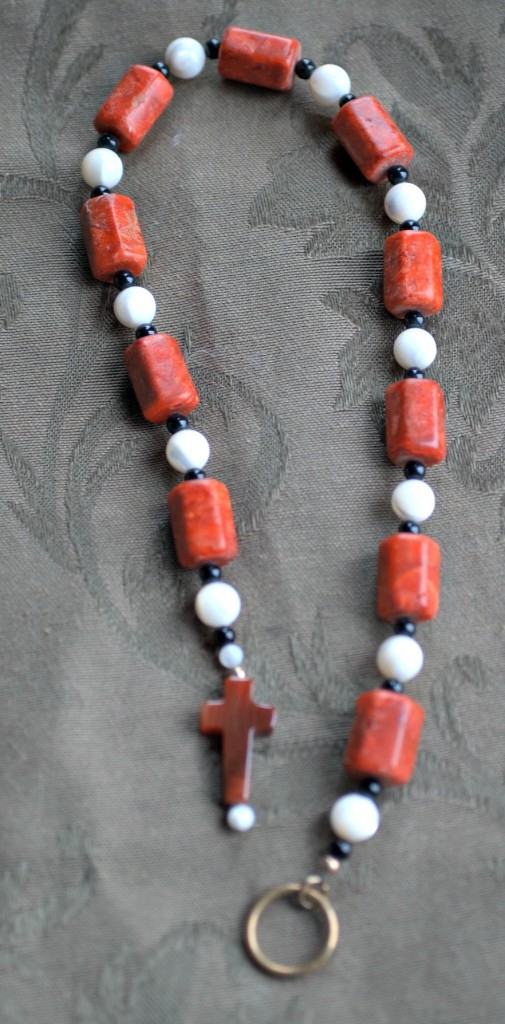
Etsy 125


The Three Decade Paternoster is simply three groups of 10 Ave beads separated by Paternoster beads. The early Paternosters usually ended with a tassel. Later versions sometimes ended with a cross. Crucifixes were rare on Paternosters until after 1600. The materials that Paternosters were made from varied greatly by social class.

Etsy 126

Islam – Men, women and children frequently wore talismans, such as the eye bead, to protect them from the evil eye. The “job” of praying was largely assigned to men, and therefore women rarely had prayer beads.

Here is an example of a simple eye bead necklace.
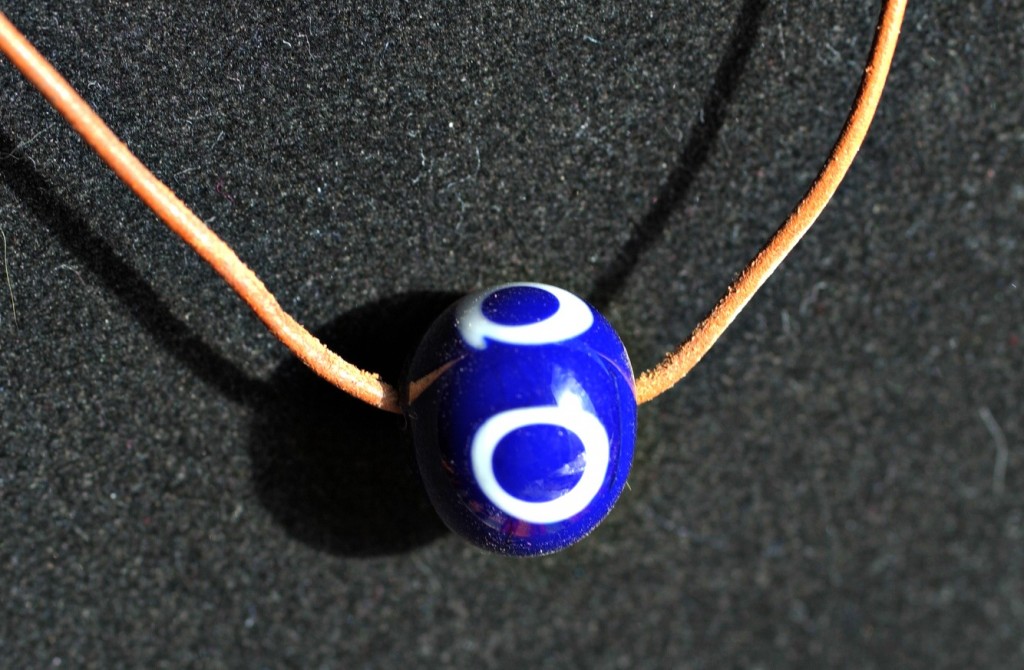
eye bead necklace

There are two predominant forms of prayer beads used in Islam, The Subha and the Tesbih. The Subha was a string of either 39 or 99 prayer beads which are used to enumerate the 99 names or attributes of God. The strand of 99 beads is usually divided in thirds by a slightly larger bead and includes an elongated terminal bead. This form of prayer beads was used predominantly in North Africa and the Arabian Peninsula. The Tesbih is a strand of 33  beads, usually adorned with an elongated bead and a tassel. This form of prayer bead strand was used predominantly in Persia and Turkey.

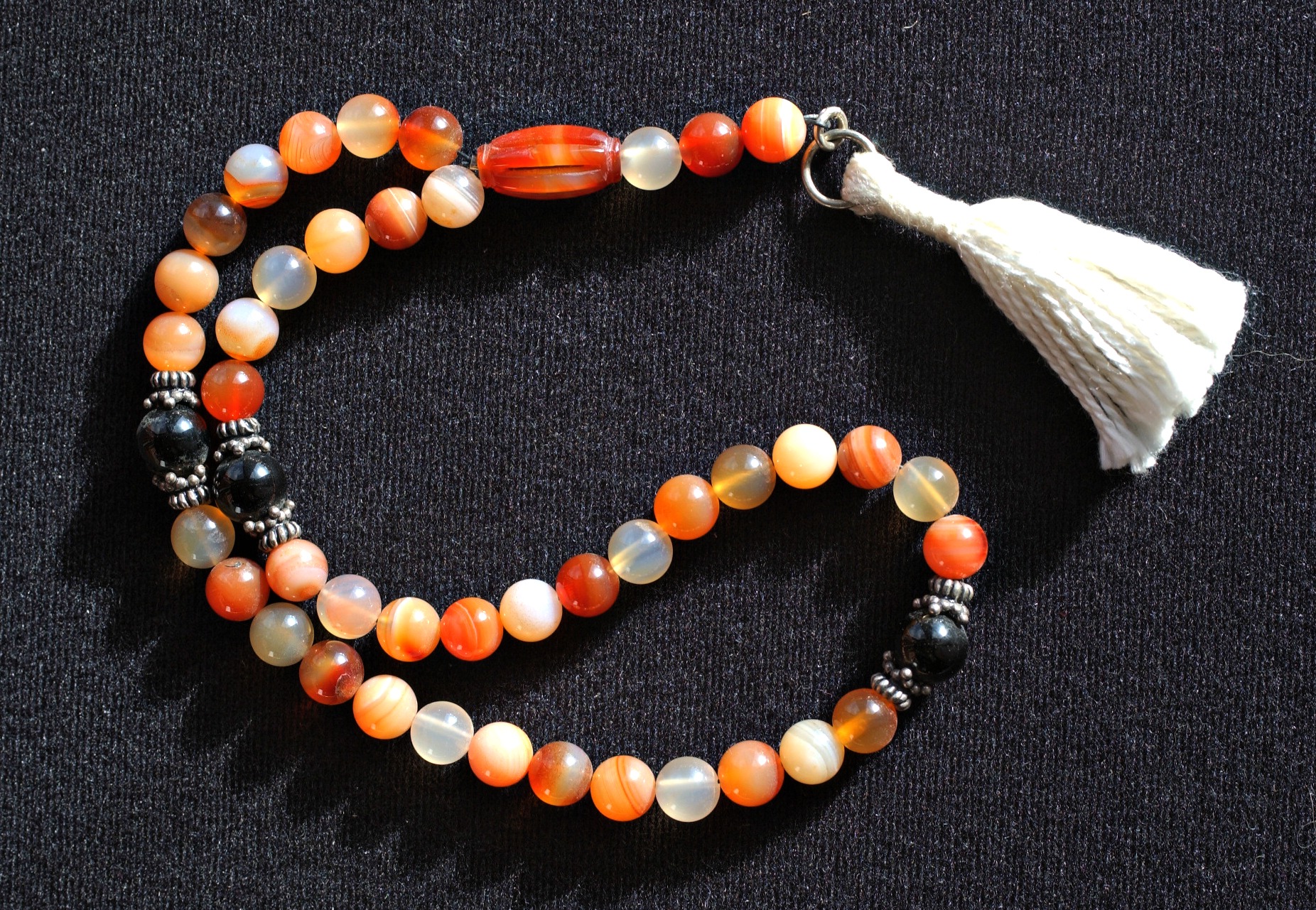
Here is an example of a nicer than average (a little fancy) Subha.
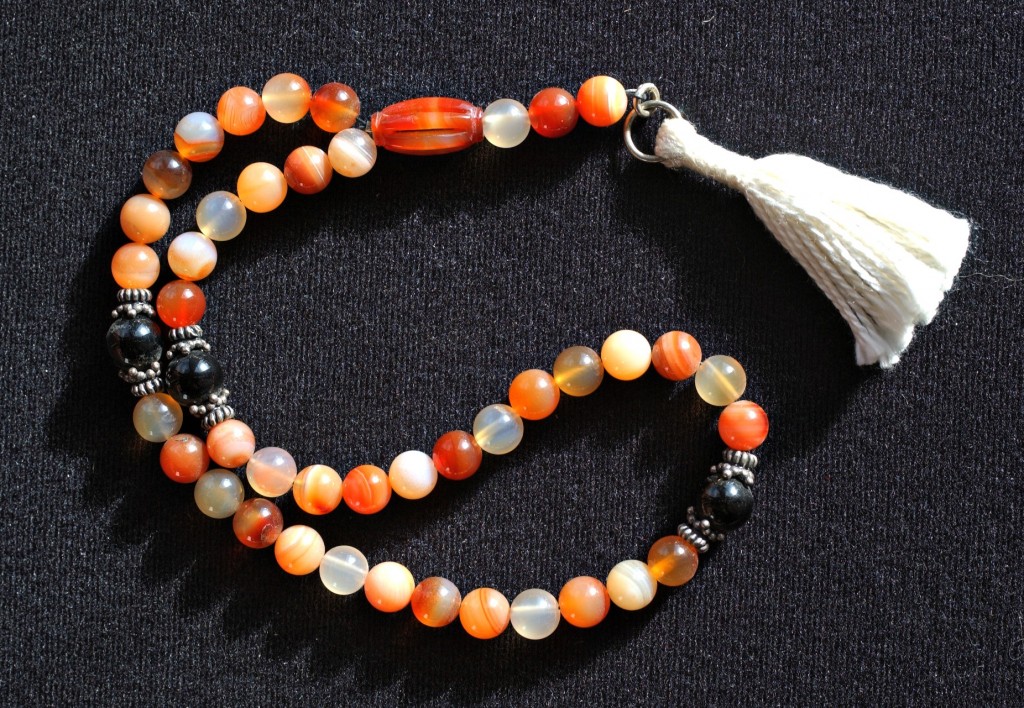
Subha ready to go

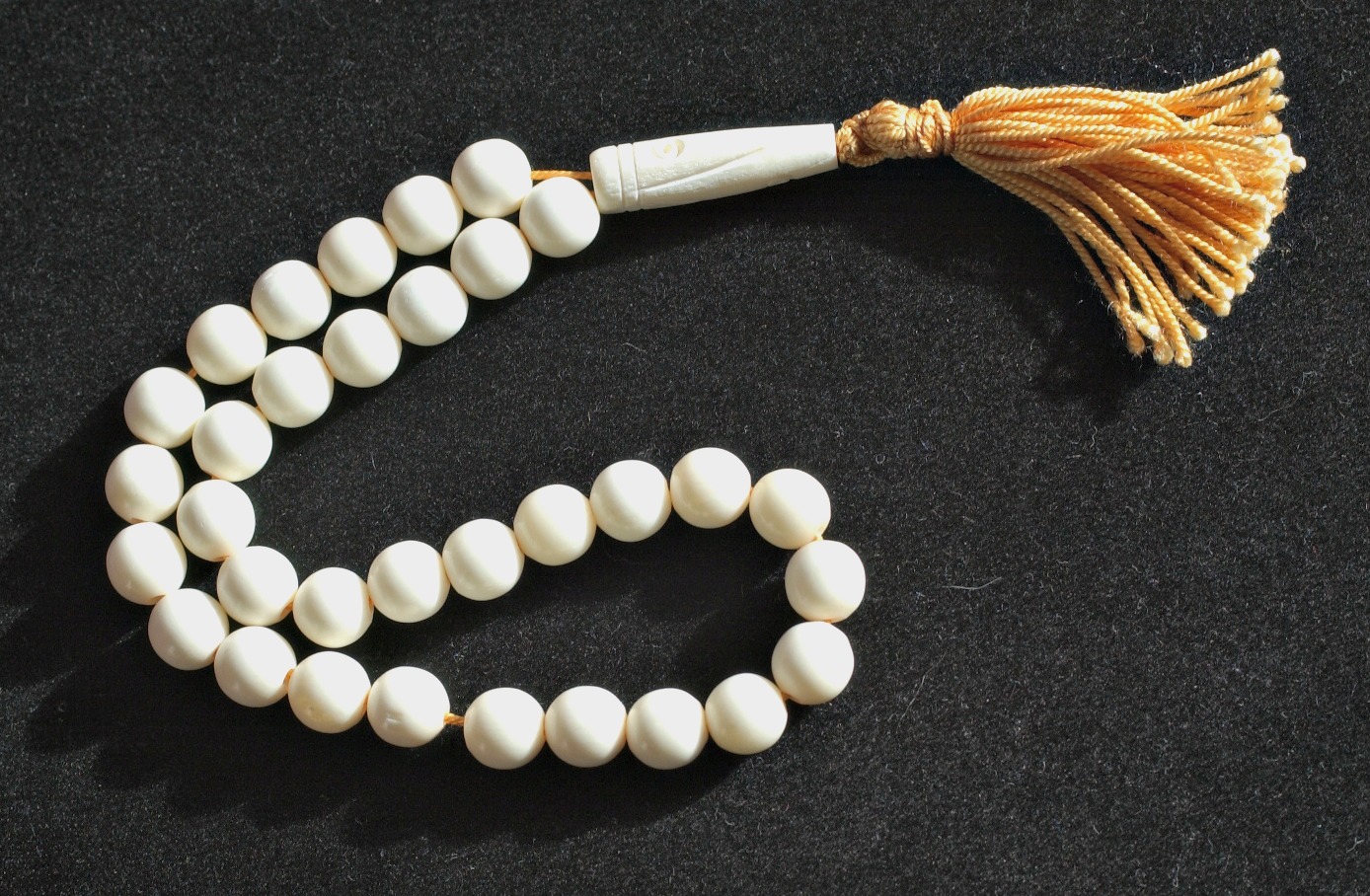
And here is an example of a typical Tespih.

tespih ready to go

I hope that this brief summary of Prayer Beads used during the Middle Ages is helpful to you in your development of a more historically accurate portrayal of your persona.