Macro Photography for Jewelry and 3D Art: Part 2- Understanding the Basics – Light

M3361S-3034

Lighting can make or break a photograph. Jewelry, or sculpture with a shiny finish, is particularly difficult to photograph because of its reflective surfaces and colors. Specular lighting (direct bright lights or flash) creates hard shadows. The stones in a jewelry setting will look OK, but the metal will wash out. The correct type of light source is a diffuse source. The interplay of shadow and shape creates texture, therefore the details must be preserved or the texture is lost.

The color of the light is also a consideration. For instance old fashioned fluorescent lights often give a yellow colored light. If you purchase lights be certain to understand what sort of light they will put out. I have had success with both daylight and pure white bulbs. Halogen lights are often color corrected. A lens filter can sometimes be used to correct for the type of light, but every piece of glass between the object and the digital recording sensors or film results in a degradation of image quality, so the use of filters should be kept to a minimum. Post-production color adjustment is another option, but I try to minimize my use of this technique. For professionals the best source of light has traditionally been a set of focusable Tungsten based lights. Most good quality digital cameras will have the option to change between types of light sources with the push of a button. In cameras using film you must change the type of film or add a lens filter. My personal preference is natural indirect light.

There are some really amazing lighting products on the market. They are often made of fabrics that are extremely heat resistant and the correct color so that the color of the piece being photographed will not be altered. Remember reflected light will be the color of what it is bouncing off. An assortment of dome tents and domes can be used to diffuse the light. If you choose a dome or dome tent without a bottom the item can be staged and then the dome can be lowered over it. The lights are placed on the outside of the tent or dome. The camera lens can be put into the dome through an opening for taking the photographs and some systems even have an additional opening so that an additional light can be used for accents.

Anyone that looks at my jewelry photos will see that I often use different color backgrounds. This is a personal preference and one that some people will not agree with. I do not do high-end glamor jewelry photography. The majority of my work is art jewelry or pieces of historical reproduction jewelry and dress accessories. The current trend that Etsy and some other sites have for washed out gray backgrounds does NOT suit a lot of the work that I do. If you are supplying pictures to an art show or publication you need to be aware of what type of photography they prefer. Do they want to see your necklace or sculpture in a natural setting, on or with a model, or on a totally neutral background.

I have had a couple of questions in the past year about shooting jewelry against a black background. Metal will reflect the color of whatever it is sitting on, so shooting it on black allows it to really pop. In addition, Photoshop and other programs allow you to remove the black background if you need to for a show requirement. With the background gone it gives you the opportunity to place your photo on a variety of backgrounds to see what the artistic effect would be.

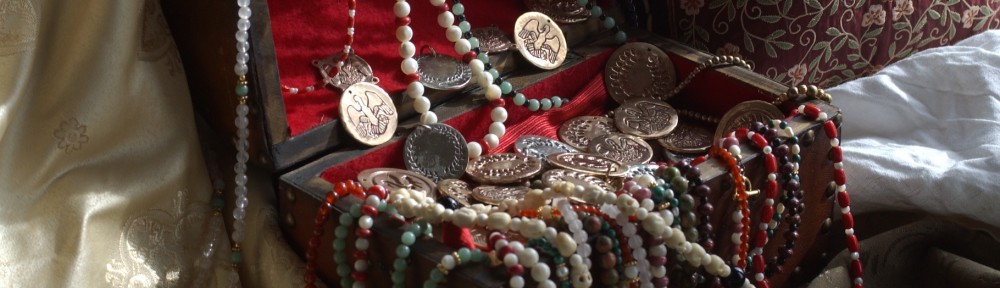
I should mention that the picture of the flower hat pin at the beginning of this blog was taken with a cheapy camera at an art show. The big trick? The photo was taken inside a white tent, so the light was very even and allowed all the details of the flower to show clearly.

Next – Part 3: Post Production Manipulation and Salvation
Macro Photography for Jewelry and 3D Art – Part 1: Understanding the Basics – Lenses and Cameras

M3361S-3034

I deal with jewelry photography on almost a daily basis. Websites, Art Show applications, and advertising all require good photographs.

The most critical element in photography is the quality of the lens. Bad glass means a bad image. Photography is “writing with light”, and the lens is what does the writing. The type of photography that we need for close-ups of jewelry and small sculpture is called Macro photography. Many good lenses have a Macro setting, but these usually produce a picture of the item that is 1:4, that is ¼ of the actual size of the item. The ideal situation, which usually requires a specialized Macro lens, is 1:1. This allows the item to be blown up larger and retain more detail because more detail was recorded in the beginning of the process.

One of the most important points to remember is that a digital zoom is just cropping the image – it is not adding more information to the photo. An optical zoom actually adds more information to the image and provides the best image quality.

What about using my point and shoot camera that only has a built-in lens?

Well, cameras are divided into two types, based on their method of focusing: Single Lens Reflex Cameras (SLRs), and range finder cameras. SLRs focus directly through the actual lens of the camera, while range finder cameras focus through a small rangefinder. Either type of camera may be used for Macro photography, but it is much more difficult to accurately control the focus with a rangefinder. It is important to remember that the part of the picture that is in focus is shallower with Macro photography than with regular photography. This means that parts of a piece are going to be out of focus to some greater or lesser extent. The photo must therefore be focused in such a way that the most important parts of the piece are in focus. If you are working with a digital rangefinder camera you can check the focus of the photo on the screen or dump the photo to the computer to double-check the focus.

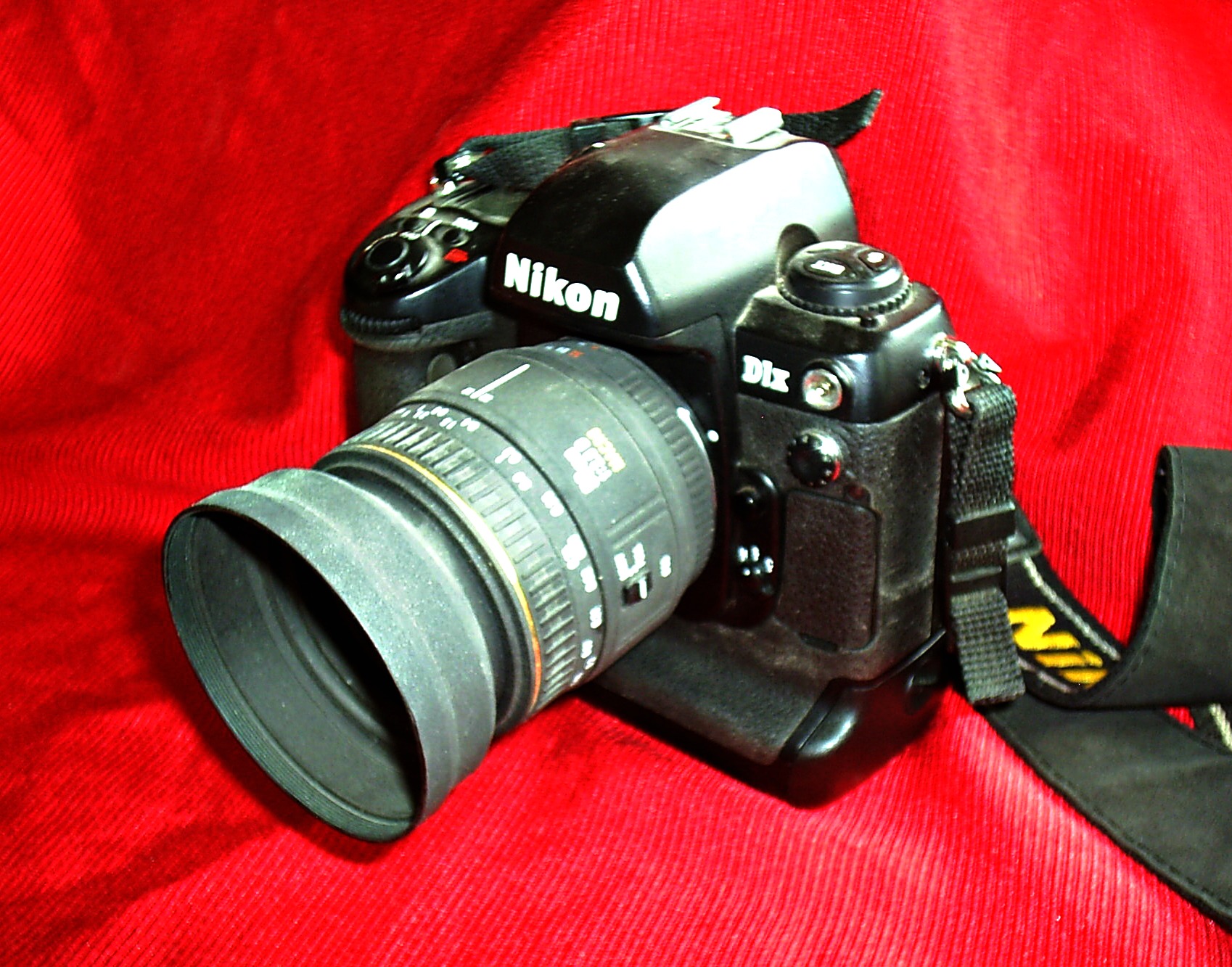
I have done many successful jewelry and nature photos with a cheapy point and shoot camera, but it is simply easier to be able to accurately adjust the focus to emphasize the portion of the object that you want emphasized.The picture of my Nikon at the top of the article was taken with my cheapy camera. It took a couple of tries to get a picture this good, and I do NOT consider it to be great, but I only have one good camera, so…

The type of film that was being used in your camera used to be a serious issue. It still is if you are using a very high end SLR or Medium Format Camera, but for most of us, our cameras are now digital. In the old days, when we were using film, the ability of the film to record detail was determined by what was called the “grain size”. The actual physical size of the clusters of molecules on the film set the limitations of how much information the film could record.

You may wonder how “fancy” a digital camera has to be in order to do good jewelry photographs. A 5 mega pixel camera is fine for up to an 8”x10” print or web work. You only need a camera with 5-8 mega pixels if you are doing pictures 11×17 and larger. Check the instructions that come with your camera. Even a lot of “point and shoot” cameras now have the ability to take different quality photos. The more information that your camera records, the more detail you will have in your photo.

Next time – Part 2 – How to illuminate your jewelry for the best pictures

A Viking Antler Comb – an A&S Project and a Learning Experience

antler combother side

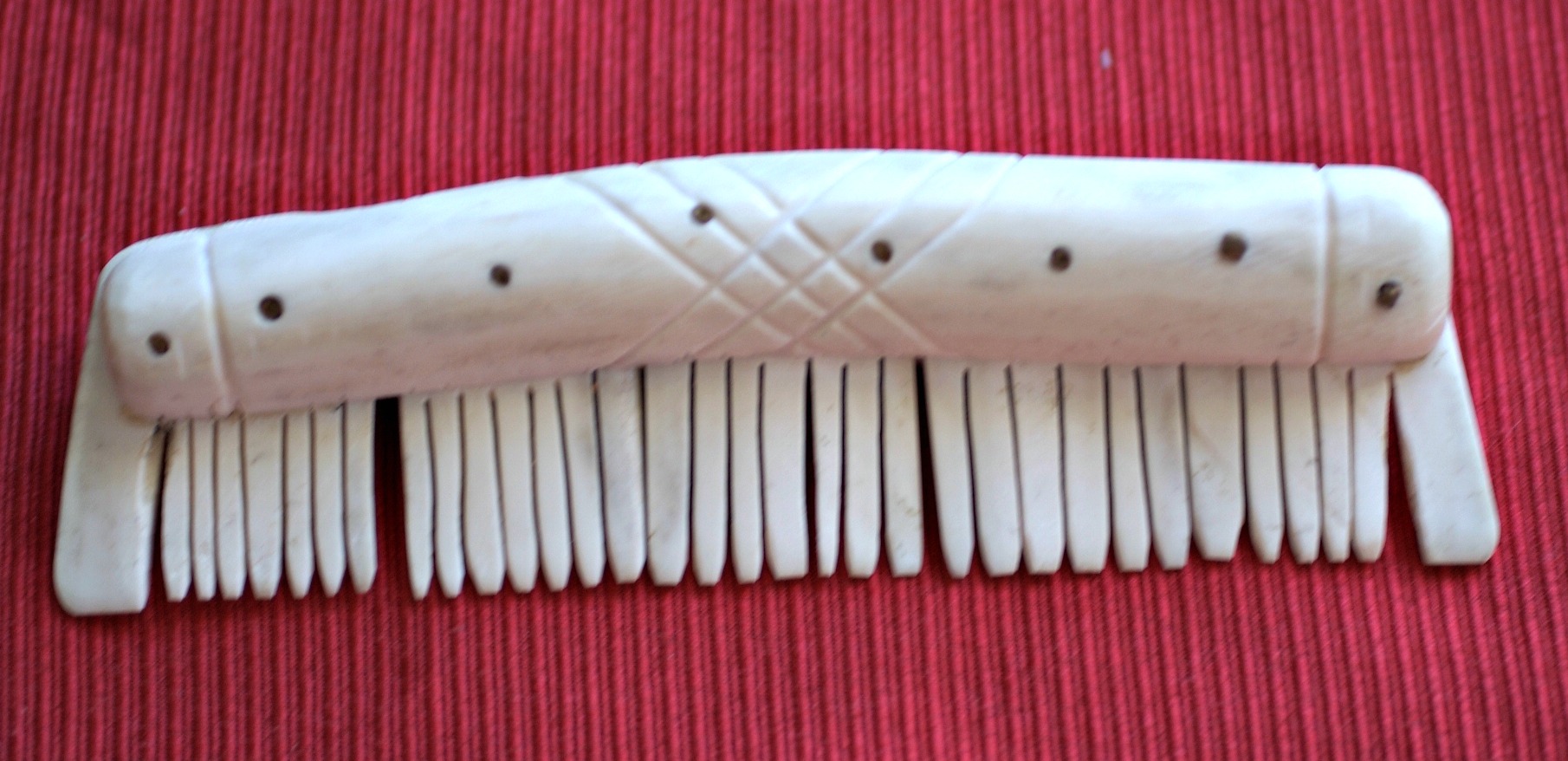
Antler combs are one of the most commonly found Viking artifacts. Antler was preferred over bone because of its greater strength and ability to withstand bending without breaking teeth. For my project I used Red Deer antler, purchased at the Pennsic War. Red Deer Antlers, are known to be one of the most commonly used types of antler for comb making. Most of the combs found in Viking age sites are single sided. The historic combs were riveted together using iron or copper alloy rivets. My comb was riveted together using handmade yellow brass (copper alloy) rivets.

Comb production was widespread during the Viking age. In some areas, such as Jorvik (York, England) the production appears to have been by nonspecialized workers, and varied greatly in quality, while in other areas, such as Ribe, Denmark, the comb-makers appear to be professional craftsmen, producing beautiful combs of great uniformity and quality. I have had the good fortune to personally see many combs at the York City Museum, The Ashmolean Museum in Oxford, and the Museum of London. Seeing these combs inspired me to try to actually make one myself. Some of my favorite combs, stylistically speaking, were in York.

The most common forms of carved decoration found on combs are geometric patterns of lines and circles. The style of the comb that I made is characteristic of those commonly found in York. Many York combs have wider protective teeth on their outside edge. Most of the combs from York are decorated with geometric line patterns, so I decorated my comb with patterns of lines

My comb was made using the techniques detailed in several archaeological resources. The basic process is: cut the antler into sheets, cut the sheets into plates for teeth and the comb back, shape the comb back, insert the teeth plates in the comb back, drill and rivet the comb together, saw the comb teeth, shape the comb teeth, decorate the comb, and polish the comb.

slices of antler

This picture shows the initial sheet (large flat piece of antler) and some of the shorter pieces that were cut for the teeth. The “dots” on the piece on the right are rivets. This was a practice piece to figure out how to rivet the antler without splitting it.

I made the rivets by annealing brass wire, cutting it to the approximate length, and peening a head onto the wire. The rivet was then placed in the pre-drilled hole in the antler, trimmed to the required length, and filed flat on the end. I then used a punch and hammer to spread the remaining end of the wire and complete the riveting process. The rivet was then filed to eliminate sharp edges.

I used only hand tools for this project. I used a saw, drill, knife, files, and sandpaper, for forming the antler. The rivets were made using a torch (for annealing the rivet metal), a hammer, punch, wire cutter, and file. I also used a dust mask (bone and antler dust is a health hazard), a vise for holding the antler while I sawed it, and a piece of leather to help hold the antler (and protect my skin), both in my hand and in the vise.

antler comb

This is a picture of the back side of the comb. In this type of comb the decoration is essentially the same on both sides. I can tell the difference because the rivets line up better on the “front”. The comb is about 5 3/4″ long by 1 3/4 wide.

I was quite impressed by the amount of sheer muscle power that was needed to complete this project. I have completed many projects that required large numbers of hours, but none that required more physical stamina. Sawing the antler by hand was an amazingly tedious and strenuous project. I had never worked with antler before, only bone and horn. My comb is definitely on the clunky side, but I learned a lot about Viking Age comb production. And best of all, the comb really does work!