Camp Beds – Sleeping Beauty or the Princess and the Pea? – Part 2: Something Soft to Sleep On -Purchased Solutions

So now that we have looked at purchased bed solutions, let’s talk about what goes on top before you do.

The basic categories are air mattresses, inflatable pads (commonly used by back packers), foam pads and mattresses. There are also exotic items like feather beds, and any number of combinations of these things.

So what have I tried? Well the obvious choice as a beginning camper was an air mattress.

English: An air matress for use as a guest bed.

English: An air matress for use as a guest bed. (Photo credit: Wikipedia)

We got the “high quality” flocked version. The advantage to this type of air mattress over the super cheap ones is that the flocking will help keep you from sliding off during the night – especially if you have a slick sleeping bag cover. We discovered that the air mattress, assuming that it did not lose air, was OK in hot weather, but in cold weather you could freeze your a@# off! Putting a survival blanket under the air mattress will usually solve this problem. We have used an extra sleeping bag under us, and also a feather bed under us. My favorite was the feather bed – it was comfortable no matter what the temperatures.

Our next upgrade was a queen sized futon. The sheer weight and bulk of the mattress simply became too difficult to deal with in the long run. After a couple of sprains my partner and I started looking for something more portable and not as heavy.

The next “step” for us was the folding foam pads that can be used for “guest beds”. One of our friends uses them with great success. We had trouble finding good ones and settled for some mail order versions. They are a little larger than I would prefer – they create a king-sized bed, and they are moderately comfortable. Ever searching for something more comfortable, we have tried adding a foam bed topper to the top of the mats and also a feather bed. I like the feather bed best (but then I said that last time!).

Our next step was a discovery that we made at a recent camping event. Our truck had broken down and therefore our bedding and tent were not available. Some friends let us borrow their tent and bed because they had one more night paid for in a local hotel. Wow! And I mean WOW! They have a high-tech 4” thick memory foam mattress on their bed. I wasn’t really sure about it when I first laid down, but it really was super comfy. Now, I should mention that I normally wake up several times a night from “pressure pain” in my hips, but not on that bed. I see a 4” memory foam mattress in my future!

English: Memory foam. The picture is taken by ...

English: Memory foam. The picture is taken by pressing my hand in the foam and releasing it. Nederlands: Traagschuim. De foto is gemaakt door mijn hand enige tijd in het schuim te drukken en daarna los te laten. (Photo credit: Wikipedia)

Once again you need to make adjustments according to your personal needs, budget and capabilities. I actually really enjoyed our old futon mattress, but the weight and bulk became too difficult  to handle. To quote Tim Gunn, “Make it work!” Use whatever combination of mattresses and toppers works for you!

Next time: Camp Beds – Sleeping Beauty or the Princess and the Pea? – Part 3:  – Getting off of the Ground – Homemade and Crafted Solutions

Enhanced by Zemanta

Camp Beds – Sleeping Beauty or the Princess and the Pea? – Part 1: Getting off of the Ground – Purchased Solutions

Trail Camp


When I was considerably younger I thought nothing of spending my weekend camping, eating food from cans and sleeping on an air mattress on rocky ground. Now that I have a few more years under my belt, the prospect of crawling up off of an air mattress in the morning, or even worse, for a 2 o’clock potty run, is not a pleasant one. In addition to this basic issue of comfort, I now often camp for a week or more at a time. Things that were tolerable for two nights, just won’t cut it for a ten day campout. So how can we fix this issue? Simple – sleep in a bed.


The “bed” solution breaks down into two basic categories – something you buy or something you make, with an interesting range in between. It also involves two parts, the thing that holds you up off the ground and a soft thing to lay on.


I have seen some amazing bed solutions over the years, some of which were excellent, and some of which are waaay more than I am interested in dealing with. Hopefully I can give you some ideas that will solve your sleep comfort issues. You need to look objectively at what you are capable of transporting and carrying. Do you have a truck, or a sedan, or a bad back? What is your budget? Some cots and frames can cost hundreds of dollars, and some less than $70. Do you own something that you can repurpose? Think about it…


I know folks who truck an entire futon frame, complete with queen sized futon to events. While this may sound outrageous, some of the modern metal framed futon sofas are not that heavy, but they can take up a LOT of packing room unless you want to take them apart.


One of my friends actually uses a lightweight version of one of those fold-in-half rollaway beds, like they have at hotels. He makes up the bed, complete with sheets, blankets and pillow, closes it, and puts it in the back of his pickup truck. When he arrives, all he has to do is set up his tent, put his bed inside, and he is ready to go to bed. This is a particularly practical approach if you are prone to coming in late at night  – going to bed is quick and easy.


The camp cot is another solution. It has the advantage of getting you off of the ground, and is usually quite light. Camp cots come in all ranges of complexity, from super light-

camp at the beach

camp at the beach (Photo credit: muhawi001)


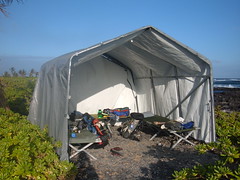
weight back pack versions to ridgid frame “base-camp” versions. My personal interest is in the “base camp” comfort versions (seen along both walls of this “garage tent”).


Cots come in several basic sizes – single, full, and queen are fairly common. You also need to consider weight limits. Cots have recommended weight limits and exceeding those limits can sometimes result in a sudden crash landing. I recommend spending some time on sites like www.Cabelas.com   www.REI.com    www.Walmart.com   www.Target.com  Some of the best prices that I found were actually at Target. Read the fine print and the reviews, and then if possible go look at one in person before you buy.


Next time: Camp Beds – Sleeping Beauty or the Princess and the Pea? – Part 2:  – Something Soft to Sleep On – Purchased Solutions


Enhanced by Zemanta

Macro Photography for Jewelry and 3D Art – Part 3: Post Production Manipulation and Salvation

So you have your camera and a decent lens, you set up the shot with good lighting, and you think you have it. You download the pictures to your computer and start going through them. UGH! It happens to all of us. The focus is good, but the color is not quite right or the piece is slightly overexposed. So do you start over, or do you use a little software magic?

Evaluate the picture. Is the focus good? Did you get the things that you need in the picture? Would it be easy to reshoot the pictures or would it be a major process? Are you on a deadline?

If the quality of the photo is good, except for a little bit of “off” color, or slight over exposure, I would go for the software. Now there are some truly amazing software packages out there, and some of them have serious price tags and require a considerable amount of training and skill. But there is another option- free online software packages. My personal favorite is www.picmonkey.com

This package allows you to adjust exposure, shadows, highlights, color temperature, and more. If you want to make posters you can even add words to your picture. And of course you can crop your pictures.

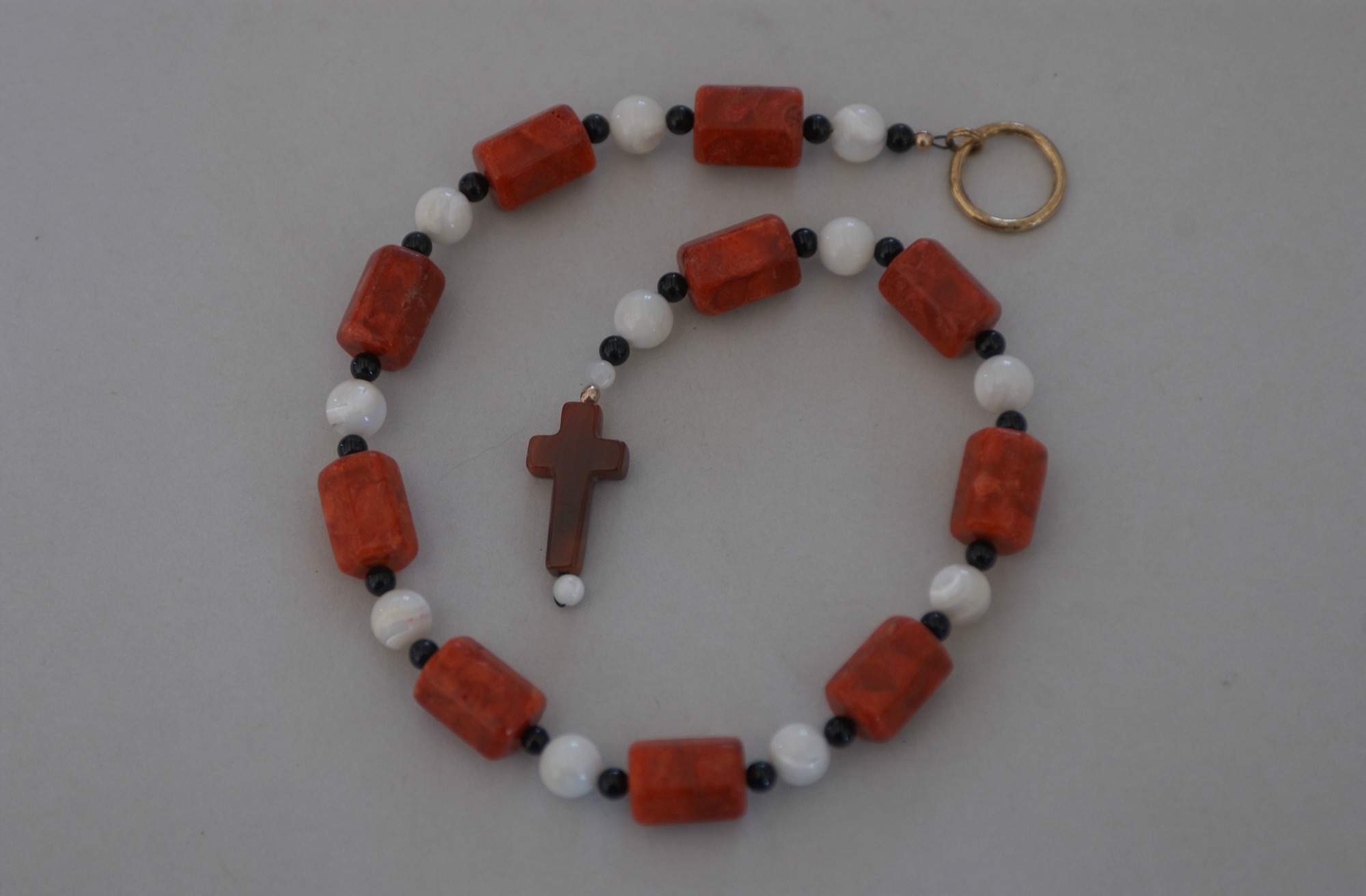
rosary 1

This is the raw picture as it came from the camera. You upload it to picmonkey, hit the auto adjust button, crop the picture, and this is what you get.

rosary 3

Much better, but then use the sliders in the exposure area to adjust the highlights and exposure and the results are this.

rosary 4

Not bad for just a couple of buttons! My preference of course would be to get it right in the first place, but sometimes that just doesn’t happen that way. On a couple of occasions I had to finish putting something up on my website in the evening because I was leaving for an event in the morning. No time for retakes, especially not using natural light, but “software to the rescue” and the project was done in time.

Sometimes, you need some special effects – a collage for a facebook cover photo or a picture with blurred edges for a specific ad or poster. Software will do that for you, too. When I first learned to use a 35mm camera over 30 years ago, we did the blurred edges on a picture with a lens filter. The other option that we had was to use filters during the developing process. Neither of these techniques was as versatile as using a simple software program. Picmonkey allows you to decide how wide the blurry area will be and how opaque it will be. Your blurry area can be black, white, or colored. That blurriness will often allow you to effectively eliminate an unwanted item in your picture without over-cropping the picture.

DSC_6401

Take this picture for example; it was taken to illustrate a “how to” article. If we crop it and use the software blurring filters this is what we can accomplish. It focuses the viewer’s attention on the item that you want them to see.

cropped and shaded bead

I hope that this blog gives you some ideas about how to salvage your less than perfect photos and turn them into stunning, illustrative images. Websites, blogs, and even books and brochures can benefit greatly from well thought out and presented photographs.