West Kingdom Golden Beltane Part 2

Last time we talked a little about some Indigo dyeing fun that I had at Golden Beltane, but the best part of that fun is yet to come. This link will take you to the blog page of Damask Raven. If you are looking for truly amazing REAL SILK, these folks have it. My husband bought me enough red silk gauze for a Roman palla (Thank you, honey!). These lovely folks were neighbors of mine at Golden Beltane and Katrina asked if she could dye some silk in my Indigo pot. There are before and after photos, and a video, which was taken by the Katrina’s husband. If you have never watched Indigo in action, you really have to see this. I have seen Indigo Dyeing a zillion times, and I never tire of watching the color change as the Indigo oxidizes.

As a side note, I would really like to encourage folks to try this themselves. Because my Indigo dye pot is usually used at camping events I chose to use a “modern” pot. No lye, not a lot of complex chemicals to balance, and I can easily refresh the pot at the event if the Indigo runs low. I carry three containers of chemicals with me – Thiorhea Dioxide, Washing Soda, and Pre-Reduced Indigo, plus extra water. I bought all of my supplies through Dharma Trading and I use their instructions. I also print out “after dyeing” instructions so that folks can properly set the dye at home. And no, the pot does not smell wonderful when you take off the lid, but it is not going to get you in trouble with your neighbors if you live in an apartment complex either. The hardest part is finding a deep, narrow container with a lid to store the Indigo Dye Pot in. If properly maintained a dye pot can last for years. My current pot is about five years old. It lives in my pantry, tightly closed, when I am not using it.

Indigo is a great choice if you want to have a dye pot that does not require a heat source and constant tending at an event. I have participated in and watched several natural dyeing sessions before. I chose Indigo because I wanted something simple to use that would have a high likelihood of success. Whenever I set up activities for events I try to chose things that people will be able to succeed at.  Their results do not have to be perfect, but they have to be good enough to not discourage them from trying again.

Indigo dye contains a substance called Indicum. Both Woad and Indigo, although they come from different plants, contain the same coloring substance.

But not everything at Golden Beltane was blue.
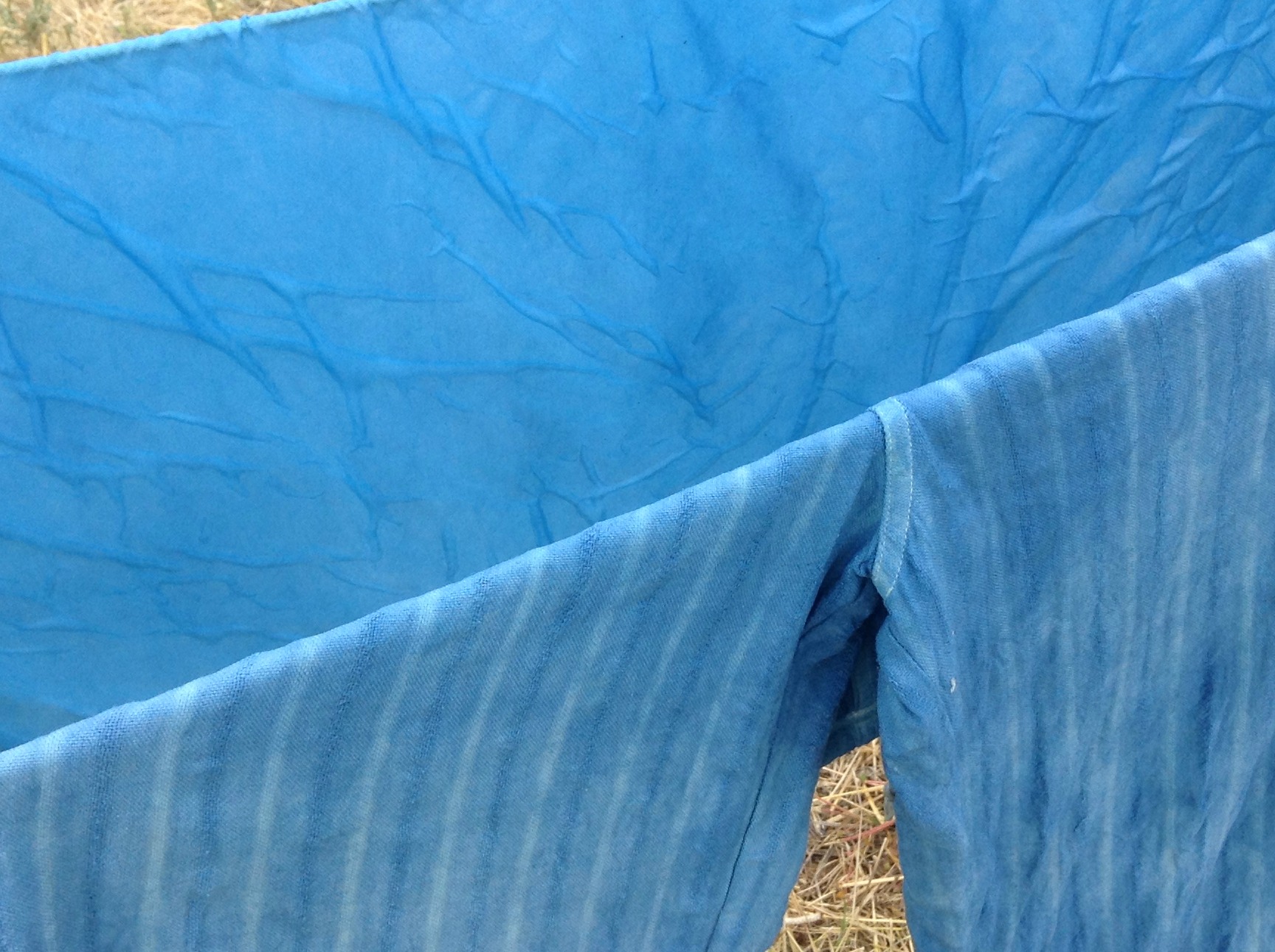
Indigo Clothesline


There where some amazingly cute goats in the main square.
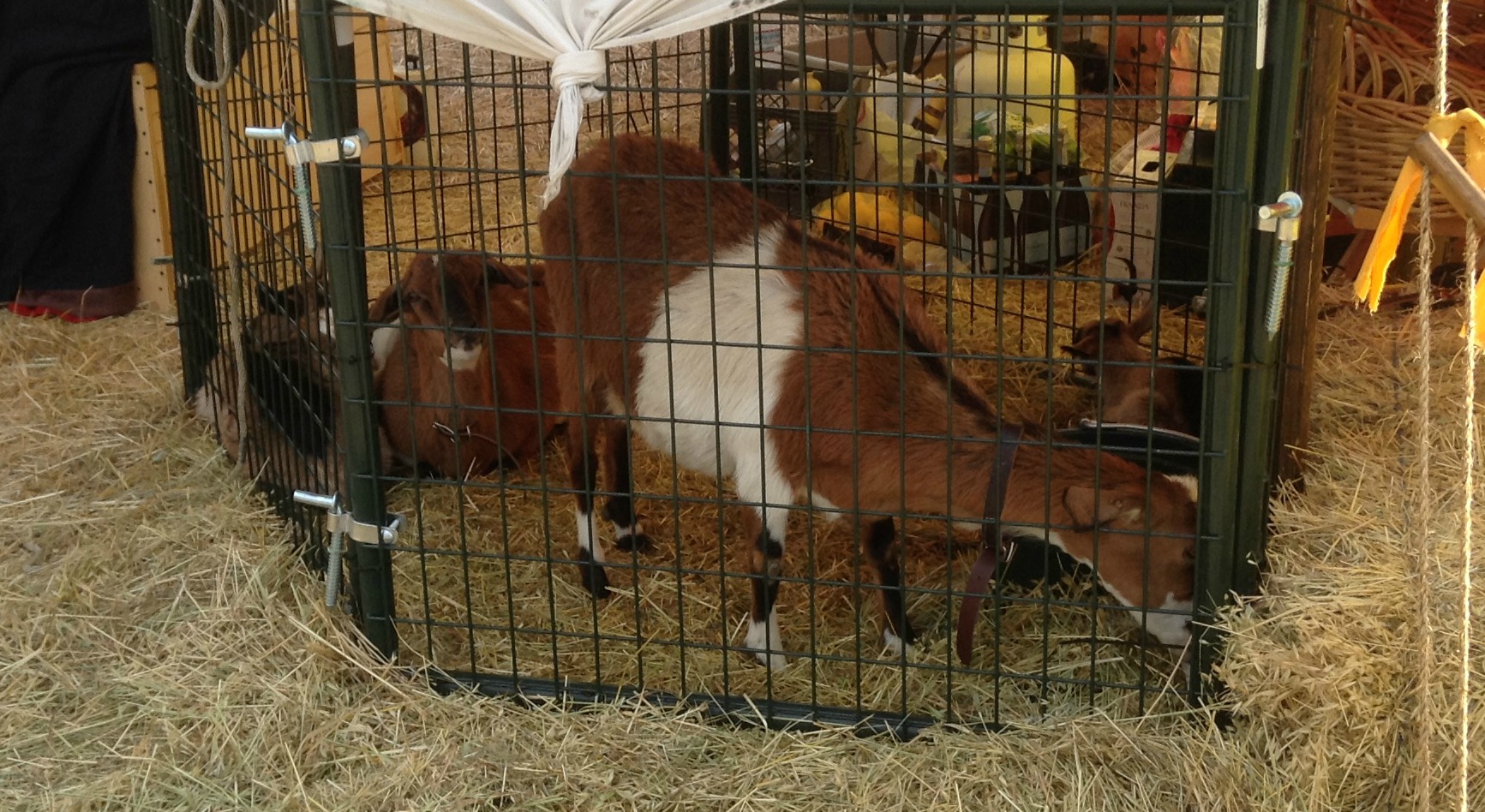
goats

And even a castle that belongs to our old Barony, Darkwood.

castle

Next Time: Lots of Noise and Quiet Moments

West Kingdom Golden Beltane – Part 1

At the beginning of 2014, March in fact, I wrote a blog about why I thought people should attend a “great war”. I talked about the wars that we have attended and why I personally think that everyone should try to attend one. Well, I have to add another event to my list of “the greats” – West Kingdom Golden Beltane.

So what made West Kingdom Golden Beltane amazing? Well the site was lovely – a broad grassy valley surrounded by high hills and rocky cliffs with patches of Live Oak Trees and Cottonwoods around the edges. And this certainly added to the ambience. But what really made it special was the people and what the people were doing. There were attendees from the original birthday party, people who had driven in from Canada to celebrate the anniversary of their beloved organization, local folks who only had an hour drive (mine was 14 hours), new folks who were still learning the ropes of camping and dressing in a period fashion on the weekends, old friends that I hadn’t seen in 10 years, others that I hadn’t seen in almost 17 years and lots more in between.

And what were we doing? All of the usual things that we do at big events, with a twist and maybe just a bit more enthusiasm than usual. There were the usual excellent collections of classes, demos, hardsuit, rapier, equestrian, and archery tourneys, all with a slight twist of course. How often does a newcomer get to fight a bout with someone who was at the first birthday party?

I was running my shop at the event, and unfortunately my hubby was only able to be there on the weekends, so that meant that teaching classes away from the shop was not a possibility. But I was determined to contribute in some small way to the enjoyment for people, so I taught “on demand” Knit Chain classes and I had my Indigo dye pot available for populace use.

Our neighbor’s generously allowed us to use the edge of their lot to set up the dye pot, and string up a clothesline. And just to get things rolling I pulled out some yarn that I had been wanting to dye, and did a first dip. Having done this sort of thing before at other events, and also advertised on the event site that I would be having the dye pot available for people to use, I expected that there would be some interest from the populace. Before I knew it I had several folks coming by to discuss their “problem clothing” – a tunic that had faded in the sun, white pants that wouldn’t stay clean, and several chemises that were either stained. And the result?

Indigo Clothes Line

My very own Indigo laundry line and a lot of happy people.

But least you think that only old fabric and some yarn received “a dip”, one of the merchants who was selling silk asked if she could try dyeing a yard. Of course I said yes, and the results were amazing.

Next time: West Kingdom Golden Beltane – Part 2 Lots More

The Way That I Cast : Lost Wax Process- Part 6

Last time I discussed the most basic casting set-up that I could think of, that was likely to create successful results. I also mentioned the biggest problem with this system – your model is destroyed in the process.

The biggest question about casting that you really need to ask yourself is “Is this something that I want to do just once, or twice, or is this something that I want to be able to continue to do for the foreseeable future?” And along with this question is another important issue – “Do I feel that I have to do all the parts of the casting process myself? Or can I “farm out” some, or most, of the process to a professional?”

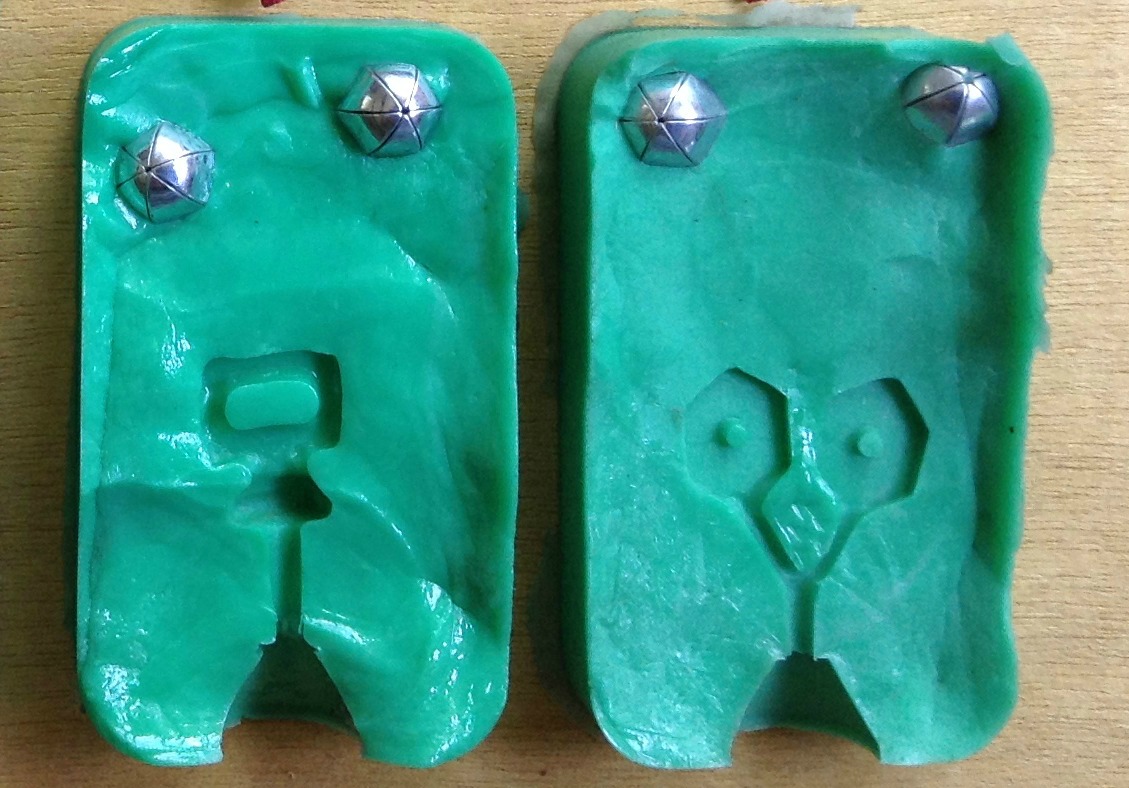
So what sort of options do we have? Well, the first thing that comes to mind is to solve the problem of destroying your model yourself. You can make a mold of the model so that you have the option of making copies of the model if you want to make more items, or if the casting process fails. There are a lot of very user-friendly Room Temperature Vulcanizing compounds out there that do not require any special equipment. I have more complex equipment, but I still often use RTV compounds to make molds. Here are a couple of my molds.

RTV molds

What if you really enjoy the idea of making the model, but you really are just not up to doing the casting yourself? Well there are reputable companies in the US that will take your model and cast it for you. They will generally want to make a mold of the model as insurance against a failed casting. You can arrange to receive the mold yourself, along with the cast piece, or have them archive the mold. Be sure to understand all of the costs, who owns the mold, and whether they archive it, or you get it back.

I do not recommend sending a model “offshore” to places like Pakistan or China. Factories in these areas usually specialize in large quantity production. They often own the molds, and you may not get your master back. Your legal recourse if you are not pleased with the results, is limited, and you will have to pay import fees. I do know people who have their business production done off-shore. The Pakistani company is casting bronze pieces and their minimum order is 1000 of the same pieces. I was not impressed with their quality. The Balinese company is casting silver. They will cast much smaller numbers of items, but still not ones and twos, and their quality is very good.

But back to getting work done in the US. As long as you understand the fees and rules you should be fine. Taking this to the extreme, there are shops that will do custom casting, from design to finish. The most technologically savvy shops will have computer design capabilities that will use 3D printers to create the original model. I have seen them in action, and it is amazing. Small shops may also be willing to do wax models and cast very limited quantities.

I hope that this blog gives you some ideas about your casting options.